

 Established 2016
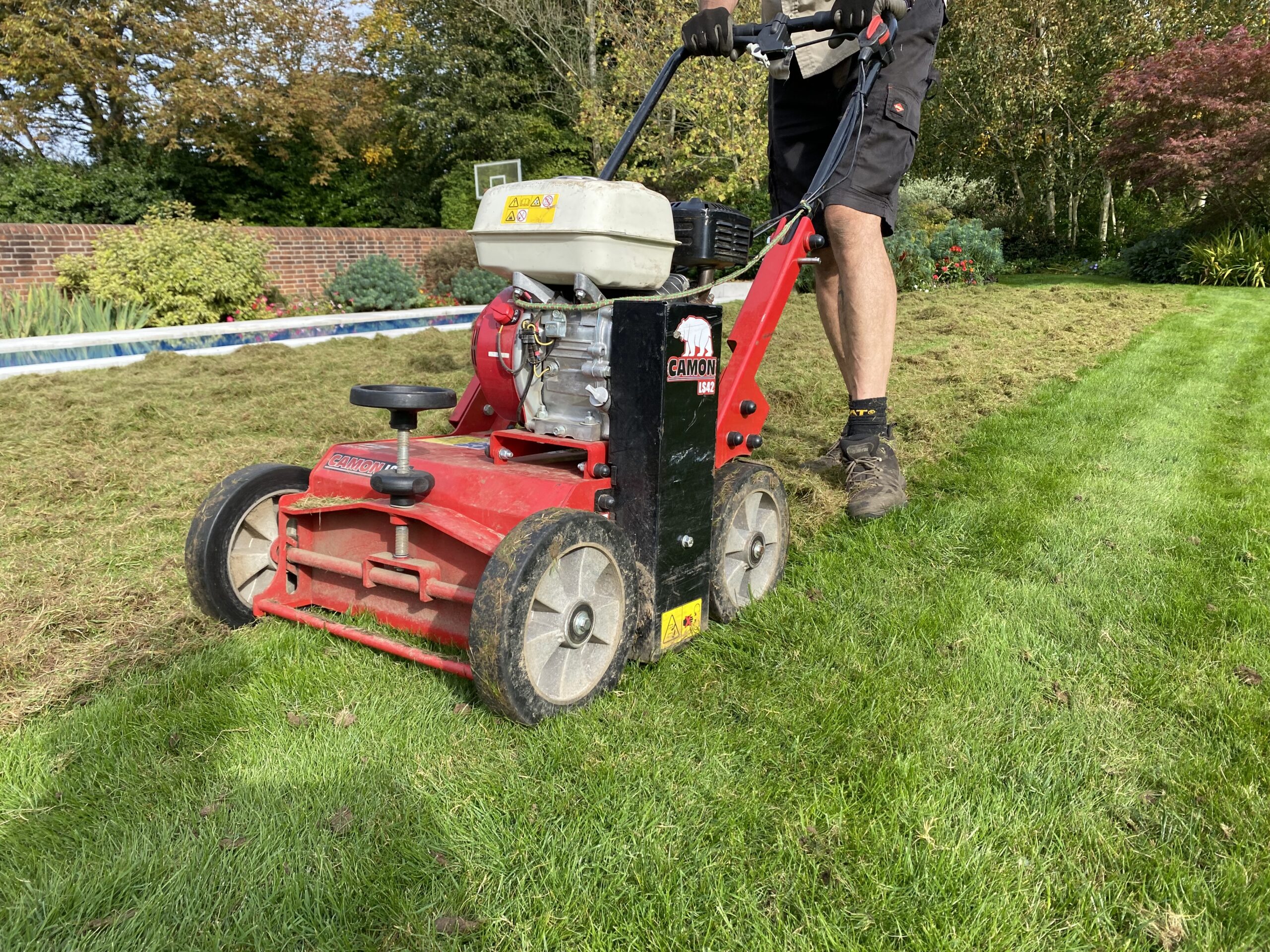
If you have never had a lawn scarified before, watching it happen for the first time is an unsettling experience. The machine tears aggressively through the surface, pulling up large quantities of fibrous material. By the time it has finished, the lawn looks considerably worse than it did before treatment: sparse, rough, and scraped. It takes a certain amount of trust in the process to leave it in that state and walk away.
🎧 Prefer to listen? Get the full guide in your ears
What Does Scarifying Actually Do to Your Lawn?
That trust is well placed. Scarifying is one of the most beneficial interventions available for an established UK lawn, and the alarming appearance immediately afterwards is both expected and temporary. Understanding what scarifying actually does, what it is removing and why that material was causing problems, and what changes in the lawn as a result, turns a process that looks destructive into one that makes complete sense.
This guide covers the mechanics of scarification, the specific problems it addresses, how to approach it correctly, and why the timing and method matter as much as the decision to do it at all.
What Scarifying Actually Removes
Scarifying removes thatch. Understanding what thatch is and what it does to a lawn is the foundation for understanding why scarification is beneficial.
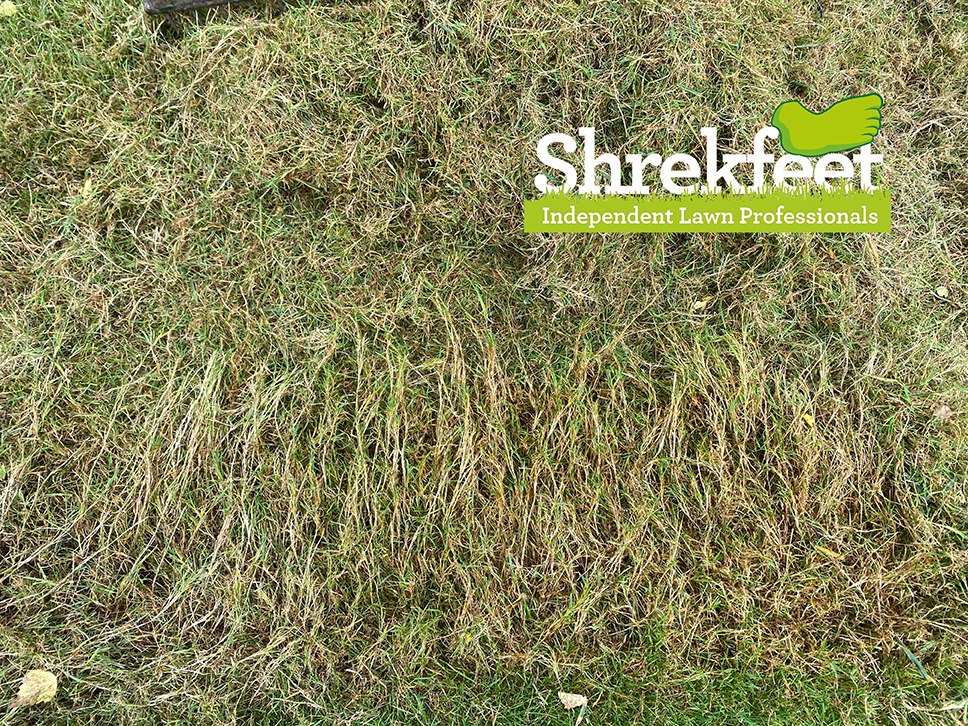
Thatch is the layer of dead and dying organic material that accumulates between the grass crowns and the soil surface. It is composed primarily of dead grass stems, roots, and leaf sheaths that have not decomposed fully. In small quantities, a layer up to about six millimetres, thatch provides a modest degree of insulation and cushioning with no significant negative effect on the grass. Once it passes roughly twelve millimetres in depth, it begins to actively work against the health of the lawn in several important ways.
A thick thatch layer intercepts rainfall and irrigation before it reaches the soil. Water is absorbed into the thatch and either evaporates from the surface or runs off sideways rather than penetrating to the root zone. The grass above it appears to receive water but the soil and root system beneath it remain dry. This is one of the reasons heavily thatched lawns show drought stress disproportionately quickly: the roots have no access to the water that is being absorbed by the layer above them.
Thatch also intercepts applied fertiliser. Granular nutrients fall into the thatch layer and are taken up by the organic material rather than dissolving and moving into the soil where the roots can access them. A lawn with a thick thatch layer responds poorly to feeding not because the product is wrong but because it is not reaching the grass roots.
Dense thatch limits air exchange at soil level, creates warm, humid conditions at the base of the grass, and provides the environment in which fungal disease spores flourish. Red thread, fusarium patch, and several other common UK turf diseases are significantly more active on thatchy lawns than on lawns with a clear, open surface. Reducing thatch is therefore both a physical improvement and a disease management strategy.
Finally, thick thatch prevents grass seed from making soil contact during overseeding. Seed broadcast onto thatch sits on the surface of the organic layer, cannot anchor into mineral soil, and fails to germinate reliably. This is why scarification must precede overseeding in any meaningful renovation programme.
How Scarifying Works
A scarifier uses either steel blades or spring-tine wires rotating at speed to cut through and tear out the thatch layer. The action is aggressive by design: it needs to penetrate and break up the matted organic material rather than simply combing the surface. The extracted material is pulled to the surface and can be collected in a box attachment or raked up and removed after the machine has completed its passes.
Blade scarifiers
Blade or verticutter-type scarifiers use rigid steel blades that slice vertically through the thatch layer. They are more aggressive than tine-based machines and are the tool of choice for heavy thatch removal and for lawns being renovated after extended periods of neglect. Blade scarifiers can be set to different cutting depths, allowing the operator to match the depth of cut to the depth of the thatch layer. Cutting too deep removes healthy grass crowns along with the thatch; cutting too shallow leaves significant thatch in place. Setting depth correctly is a judgement call based on the specific lawn being treated.
Spring-tine scarifiers
Spring-tine scarifiers use flexible metal tines that comb through the thatch, pulling it to the surface rather than cutting through it. They are less aggressive than blade machines and are appropriate for lawns with lighter thatch accumulation or for maintenance scarification on well-managed lawns. Consumer-grade powered rakes and many hire-grade scarifiers are spring-tine machines. For a lawn with significant thatch that is being properly renovated, a blade machine produces more thorough removal.
Number of passes and direction
On a lawn with moderate thatch, a single pass in one direction is often sufficient. On a lawn with heavy accumulation, two passes at right angles to each other, or even a third diagonal pass, removes considerably more material and produces a more thoroughly prepared surface. Multiple passes take more time and leave the lawn looking more severely disturbed in the short term, but produce a substantially better seedbed and more complete thatch removal. The lawn recovers from thorough scarification no more slowly than from a superficial pass, and the improvement in conditions for the grass is proportionally greater.
What Changes in the Lawn After Scarifying
The immediate appearance after scarification is striking and sometimes alarming. Large quantities of material have been removed and the lawn looks sparse, with bare soil visible in places and the remaining grass looking thin and rough. What has actually happened is that the lawn surface has been opened up. Where there was previously a dense mat of organic material preventing light, air, water, and nutrients from reaching soil level, there is now a receptive, open surface.
Over the following two to four weeks in autumn conditions, the existing grass recovers visibly. New leaf growth from the exposed crowns replaces the material that was removed. The lawn begins to look fuller and greener than it did before scarification. By four to six weeks after treatment, the improvement in density and colour compared to the pre-scarification state is typically very clear.
The longer-term changes are more significant than the short-term recovery. A lawn scarified and then overseeded in autumn enters the following spring with a higher plant density, a more open soil surface that responds better to feeding and rainfall, reduced disease pressure from the removal of the warm, damp thatch environment, and better root access to moisture and nutrients throughout the growing season.
When to Scarify
The primary window: autumn
Autumn is the primary scarification window for UK lawns, and September to October is the optimal period, with the work continuing into November in most years. Early September opens roughly six weeks when conditions for this work are as good as they get all year.
Scarifying in autumn removes the thatch that has accumulated through the growing season, prepares the surface for overseeding before the soil cools below the germination threshold, and allows the grass to recover through the remaining weeks of autumn growth before winter. The combination of aeration, scarification, overseeding and top dressing carried out from September produces the most significant year-on-year improvement of any single seasonal intervention.
Scarifying in autumn also removes the decaying material that provides the warm, humid microenvironment that fusarium patch requires. A lawn entering autumn with a clear, open surface carries considerably less disease risk through the wet months than one entering it with a dense thatch layer in place.
The secondary window: spring
Spring scarification, typically from the end of February through to the start of May, is appropriate for removing the thatch and moss that have built up over the winter months. Grass growth is beginning to accelerate at that point, and spring scarification should be lighter than the autumn renovation pass. The goal is relieving surface pressure ahead of the growing season rather than complete renovation.
When not to scarify
Avoid scarifying during periods of extreme heat, drought or when the lawn is under physiological pressure. A lawn that is already under stress from heat or lack of water will not recover from an intensive treatment, and the open surface simply dries out. Equally, avoid scarifying in the middle of winter, when the grass is not growing enough to recover and the bare surface sits open through the wettest months.
Do not scarify a lawn that was overseeded in the last six to eight weeks. New seedlings are not yet established deeply enough to survive scarification and will be removed along with the thatch.
How Deeply Should You Scarify?
The correct depth depends on the thatch depth of the specific lawn. The aim is to remove the problematic thatch layer without cutting into the healthy grass crowns below it. Cutting too deep removes living plant material unnecessarily and extends the recovery time. Cutting too shallow leaves significant thatch in place and delivers limited benefit.
A practical working scale is that a layer of six millimetres or less needs only a light pass. A layer of six to twelve millimetres is normal for an established lawn and needs a routine maintenance setting. Twelve to twenty millimetres requires a moderate setting. A layer exceeding twenty millimetres requires an aggressive approach, and on those lawns the removal is better staged across two seasons than attempted in one visit, because taking that much material out at once removes more cover than the lawn can replace before winter.
Professional operators assess thatch depth before beginning and adjust equipment depth accordingly. Consumer-grade scarifiers typically have limited depth adjustment, which is one reason professional scarification on a heavily thatched lawn produces materially better results than a homeowner using hired equipment.
Scarifying and Moss
Moss and scarification are closely related in UK lawn care practice, and the order of operations matters.
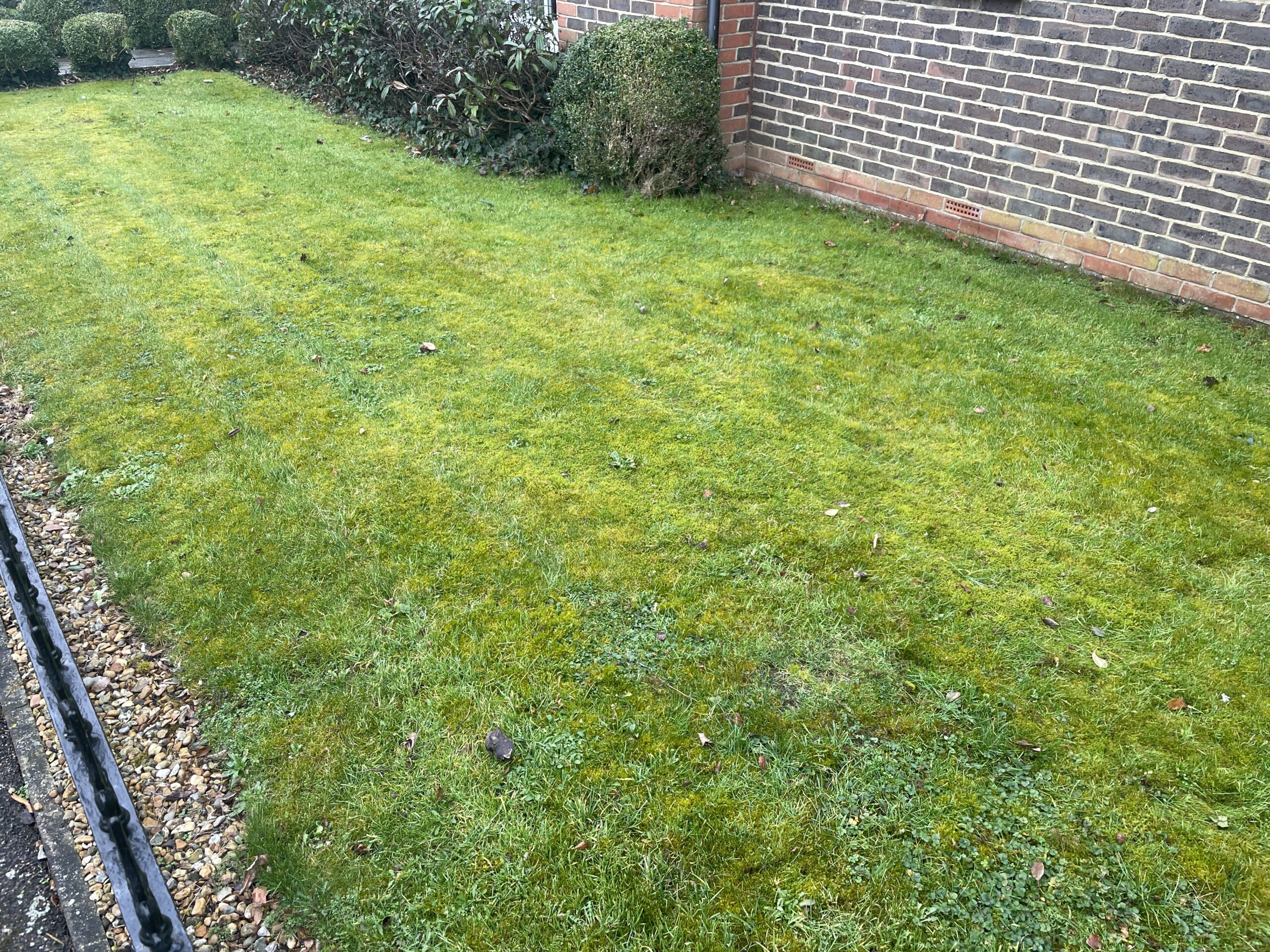
On a full renovation we scarify first and treat the residual moss afterwards, once the lawn has been cleared. Scarification lifts the bulk of the moss out mechanically, which is a great deal more effective than blackening a thick living mat and then having to drag it out anyway. Clearing the lawn properly after the machine has been through is part of the job rather than an afterthought, and the treatment then deals with what is left in the surface.
The treatment itself is iron sulphate, applied as a liquid with a wetting agent to help it penetrate. It kills moss by dehydrating it, and because iron is a nutrient the grass needs it also improves colour and hardens the plant against winter disease. It is a chemical treatment, and we would rather say so plainly than describe it as anything else.
On a lawn with significant moss, the full sequence of aeration, thorough scarification, clearing up, moss treatment, overseeding and top dressing from September produces the most complete transformation available within a single autumn programme. The combination addresses the moss, the thatch that encouraged moss growth, the compaction that may have contributed to moss establishment, and the thinning of the grass that allowed moss to colonise in the first place.
Where Scarification Sits in a Renovation
An autumn renovation covers four operations: aeration, scarification, overseeding and top dressing, with moss treatment and feeding around them.
Aeration comes first, relieving compaction while the surface is still intact so the tines reach full depth. Scarification follows, stripping the thatch and breaking up the aeration cores in the same pass, so you finish with one clean surface rather than a separate collection job. Some of that organic material drops into the open tine holes, which puts a food source down at root depth for the soil biology rather than leaving it on top where it would simply become thatch again.
Which tine goes into the aerator depends on the ground rather than a default setting. Hollow tines remove a core and are the strongest option on heavily compacted soil. Solid and chisel tines displace the soil instead, fracturing it around the channel and leaving a tidier surface. Slitting is a lighter treatment useful between deeper visits.
Overseeding and top dressing follow the mechanical work, with feeding once the seedlings are visibly up.
Why Professional Scarification Produces Better Results
The equipment used by professional lawn care companies is significantly more capable than consumer-grade or hire-grade scarifiers. Professional blade verticutters cut to precise, adjustable depths with consistent blade sharpness across the full cutting width. They remove more material per pass, penetrate more evenly across an uneven surface, and produce a more thoroughly prepared seedbed than machines designed for occasional domestic use.
Professional operators also make judgement calls about depth, direction, and number of passes based on the specific condition of the lawn being treated. On a lawn with varying thatch depth across different areas, adjusting the depth setting for each section produces better results than running one setting across the whole lawn.
At Shrekfeet, scarification is carried out as part of our autumn renovation programme, integrated with aeration, overseeding, top dressing, moss treatment and autumn feeding in the correct sequence for the specific condition of each lawn. Our City and Guilds trained technicians assess each lawn before beginning, set equipment correctly, and carry out the work to the standard that produces the visible transformation our customers see the following spring.
We have been established since 2016, we are independent and family owned rather than a franchise, and we cover Hampshire, West Sussex and West Surrey along with Berkshire and the Thames Valley. We hold BASIS Lawn Assured accreditation, work to the Amenity Standard, and are members of the UK Lawn Care Association.
Frequently Asked Questions
Yes, and faster than the appearance immediately afterwards suggests. The crowns that grass regrows from sit below the depth the blades reach, so what has been removed is dead and dying material rather than living lawn. In autumn conditions expect visible recovery within two to four weeks and a clear improvement in density and colour by four to six weeks, particularly where overseeding and feeding were carried out at the same visit.
Most lawns benefit from annual scarification in the right season, and lawns are unlikely to need it more than once in a year. How intensive that treatment needs to be depends on how quickly your lawn accumulates thatch, which varies with grass type, soil and management. A lawn scarified every year needs only a light pass. A lawn left for several years needs an intensive one and a much longer recovery.
On a small lawn with light thatch, yes. A hired machine will do a reasonable job. The two things that catch people out are depth setting, since consumer and hire machines have limited adjustment and the correct depth is a judgement call, and the volume of waste, which on a mossy lawn will not fit in a garden bin. Arrange disposal before you start rather than after.
Aerate first, then scarify. Relieving compaction while the surface is intact lets the tines reach full depth, and the scarification pass that follows lifts the thatch and breaks up the cores together, leaving one clean surface. It also drops organic material into the open holes, where it feeds soil biology at root depth instead of adding to the layer you have just removed.
No. Scarifying removes the moss that is there, and on a full renovation it removes the bulk of it mechanically before treatment deals with what remains. Moss returns unless the conditions that suited it change, which usually means shade, drainage, compaction, mowing height or nutrition. Overseeding the gaps afterwards is what stops moss simply recolonising the bare ground you have created.
On a lawn with a genuine thatch or moss problem, a great deal more than most people expect, often several large bags from a medium lawn. That volume is the point rather than a cause for concern. If a scarification leaves your lawn looking largely unchanged, either the lawn did not need it or the blades were set too shallow to reach the thatch.
Has your lawn never been properly scarified?
Our technicians cover Hampshire, West Sussex, West Surrey, Berkshire and the Thames Valley. We will assess the thatch depth, carry out scarification to the right depth and intensity, and integrate it with the full autumn renovation your lawn needs.




 Made with love by:
