
 Established 2016
Dogs can bring a lot of life to a garden, but they can also leave a lawn looking tired, patchy and uneven. If you have noticed brown patches, bare areas, muddy sections, weak grass or worn routes across the lawn, your dog may be part of the reason.
The frustrating part is that dog damage does not always look the same. In some gardens, it appears as small round scorch marks where the grass has turned yellow or brown. In others, the lawn becomes thin and muddy where the dog runs, plays or regularly walks. Some areas may recover on their own, while others keep getting worse, even after you have tried watering, feeding or scattering new seed.
This is because dog damage is rarely just one simple problem. The dog may be the trigger, but the condition of the lawn underneath often decides whether the grass can recover or whether the damage keeps coming back.
A healthy, thick lawn has a much better chance of coping with everyday use. A weak, compacted or thin lawn will struggle. Once the grass opens up, bare patches can appear, weeds and moss can move in, and the lawn can quickly start to look worse than expected.
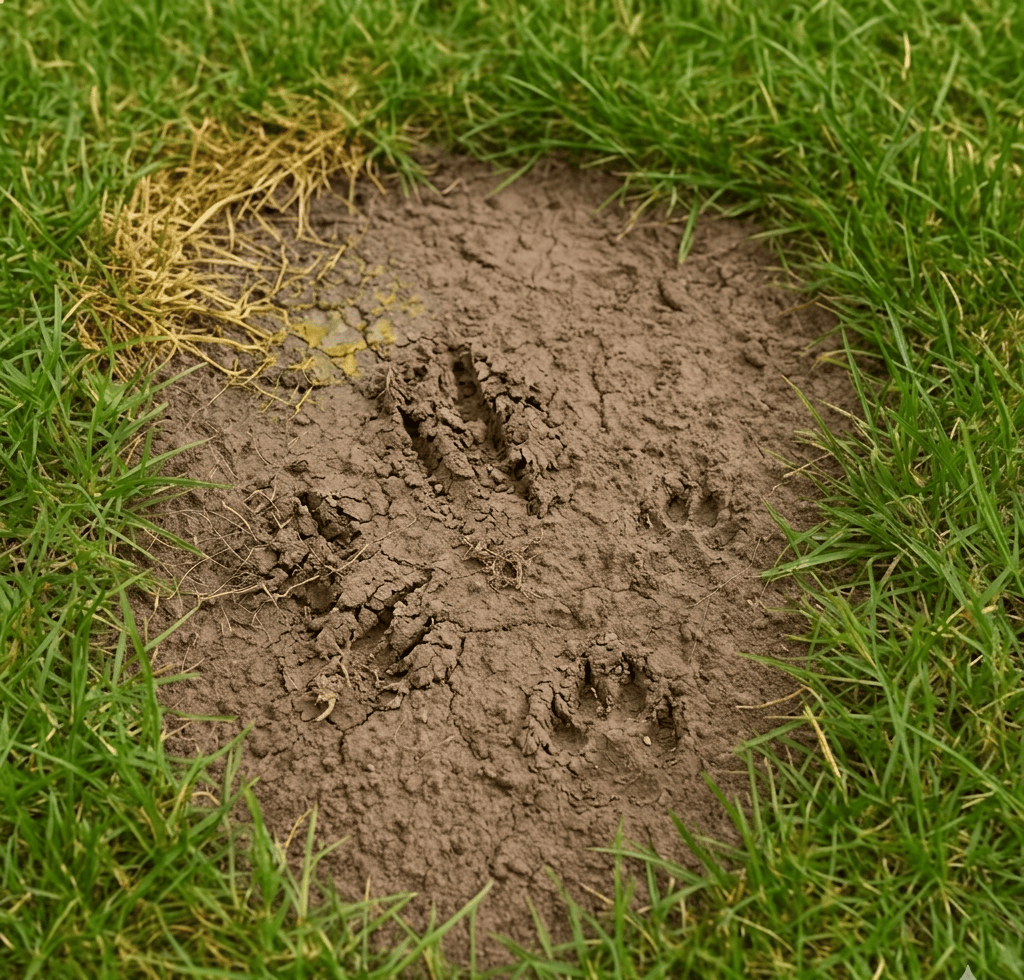
Why Do Dogs Damage Lawns?
The most common type of dog damage is urine scorch. Dog urine can be too strong for the grass, especially when it is concentrated in one area. Instead of feeding the lawn gently, it can overwhelm the grass and cause it to turn yellow, brown or even die back completely.
This often appears as round or irregular patches. Sometimes the outside edge of the patch looks greener than the middle. This is because the weaker concentration around the edge may act more like a feed, while the centre receives too much at once and becomes scorched.
However, urine is only part of the problem.
Dogs can also damage lawns through repeated use. If your dog follows the same route across the garden, runs in the same area, waits by the gate, plays in one corner or regularly uses the same toilet spot, the grass can become worn down. Over time, the soil underneath can become compacted, which makes it harder for air, water and nutrients to reach the roots.
Once the soil becomes hard and compacted, the grass struggles to grow back strongly. New seed may fail to establish, water may sit on the surface, and the lawn can become muddy in wet weather. This is when dog damage starts to become a wider lawn health issue rather than just a few marks on the grass.
Digging can also expose soil and weaken the surrounding grass. In shaded or damp areas, these exposed patches can become even harder to repair because the grass already has less light and warmth to help it recover.
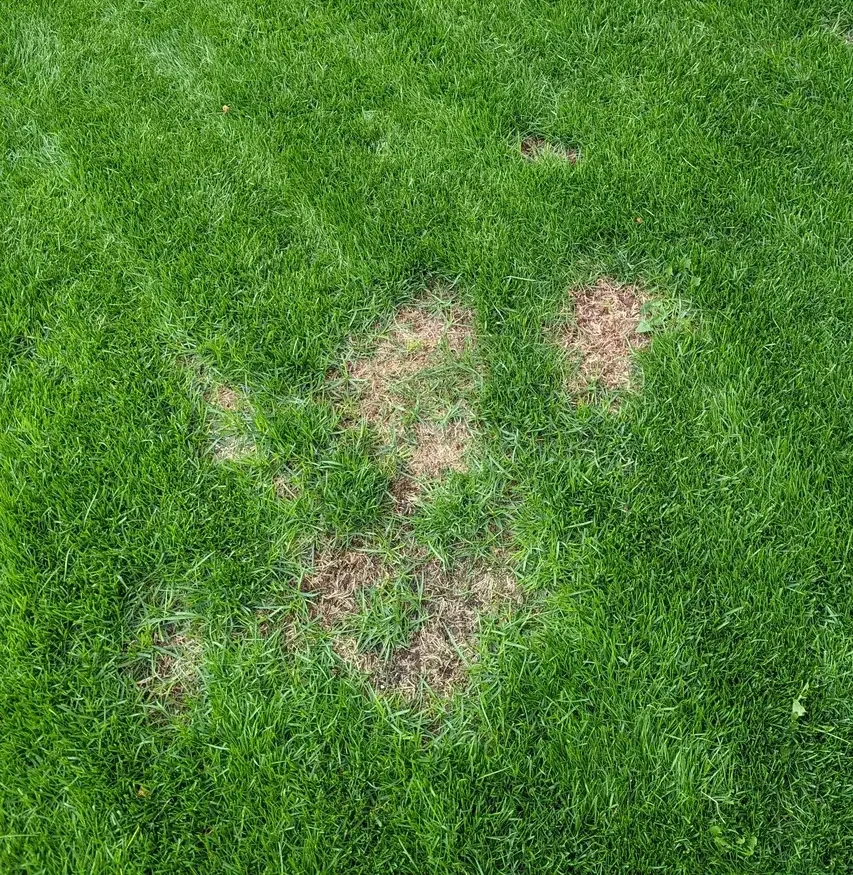
Why the Same Patches Keep Coming Back
Many homeowners try to repair dog damage by throwing seed over the affected area and hoping it grows. Sometimes this works for a short time, but often the same patches return.
This usually happens because the root cause has not been fixed.
If the soil is compacted, seed cannot make proper contact with the soil or develop strong roots. If the area is still being used heavily by the dog, young grass may be worn away before it has time to establish. If the lawn is thin, weak or poorly fed, it will not have the strength to repair itself properly.
Watering alone may help reduce the impact of urine, especially if done soon after the dog has been on the lawn, but it will not repair dead grass or improve poor soil structure. Feeding the lawn may also help healthy grass grow stronger, but feed will not fix bare soil, deep compaction or areas where the grass has already died back.
This is why dog-damaged lawns often become patchy lawns. Once the grass disappears, the exposed soil becomes vulnerable. It can dry out in warm weather, turn muddy in wet weather, and create space for weeds or moss to take hold.
Where the lawn has already become thin or bare, it is important to treat it properly rather than simply covering the problem with more seed.
Why Dog Damage Can Lead to Moss, Weeds and Mud
A thick lawn naturally protects itself better. When grass coverage is strong, there is less room for weeds, moss and bare soil. But when dogs repeatedly damage the same areas, the lawn becomes weaker and more open.
That open space creates the perfect opportunity for other lawn problems to appear.
In damp or shaded areas, moss can start to spread where the grass has thinned. In exposed soil, weeds may begin to grow because there is no dense grass to compete with them. In wet weather, worn areas can quickly turn muddy, especially where dogs run or walk across the same route each day.
This is why dog damage should not be treated as a surface issue only. The visible patch is often just the result of a deeper problem: weak grass, compacted soil, poor recovery, or a lawn that is not dense enough to cope with regular use.
The aim is not just to hide the damage. The aim is to help the lawn recover properly so it becomes thicker, healthier and more resilient.
How to Help a Dog-Damaged Lawn Recover
The right repair depends on the type of damage and the condition of the lawn.
If the grass has only been lightly scorched, careful watering and improved lawn care may help it recover. But if the grass has died back, turned bare or become muddy, the area will usually need more preparation before new seed is applied.
Dead grass and loose material should be removed so the new seed has a better chance of reaching the soil. If the ground is hard, compacted or heavily worn, it may need aeration to open up the soil and allow air, water and nutrients to move more freely into the rootzone.
This step is important. Seeding onto hard, compacted ground often gives poor results because the seed cannot establish properly. It may sit on the surface, dry out, wash away or be disturbed before it has a chance to grow.
Once the area has been prepared, overseeding can help restore grass coverage. The right seed choice matters, especially in lawns that need to cope with regular family or pet use. After seeding, consistent watering and careful aftercare are essential. New grass is delicate, and if it is walked on too soon or allowed to dry out, it may fail before it becomes established.
In some cases, dog-damaged lawns also need broader lawn improvement. If the lawn is already thin, compacted, mossy or poorly drained, repairing only one patch may not solve the bigger issue. The whole lawn may need strengthening so it can recover better in future.
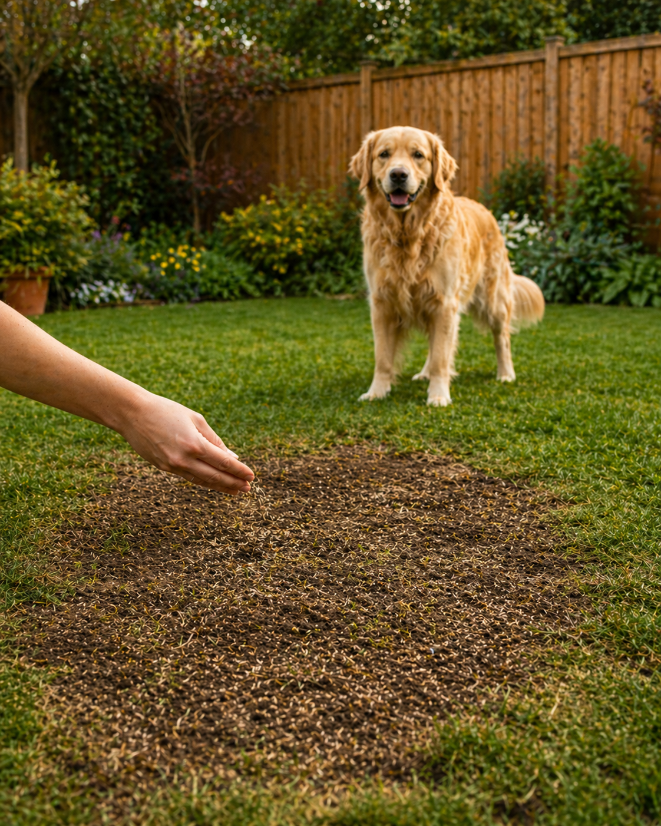
Why Professional Lawn Treatment Works Better
Dog damage can be difficult to judge because the visible problem does not always show the full picture. What looks like a simple urine patch may also involve compacted soil, weak roots, poor seed establishment or a lawn that is struggling more generally.
A professional lawn survey can identify what is really happening. Instead of guessing, the lawn can be assessed properly: where the grass is weak, where the soil is compacted, where drainage may be poor, and where overseeding or aeration would make the biggest difference.
Professional aeration helps relieve compaction and improves the conditions for root growth. Overseeding helps thicken the lawn and fill in thin or bare areas. Seasonal treatments support stronger grass growth, helping the lawn become healthier and better able to cope with everyday use.
The timing also matters. Seeding, aeration and treatment work best when conditions are right. If the work is done at the wrong time, or without the right preparation, results can be disappointing.
A professional approach does not mean your dog has to stop using the garden. It simply means the lawn is given the best chance to recover and become more resilient, with the right guidance on watering, mowing and aftercare.
Can You Stop Dog Damage Completely?
It may not be realistic to prevent every mark, especially if your dog uses the lawn every day. But you can reduce the damage and improve how well the lawn recovers.
Encouraging your dog to use a different area of the garden can help reduce repeated damage in one place. Watering the area after urination can also help dilute the concentration before it scorches the grass. Keeping the lawn well maintained, properly fed and mown at the right height can improve its strength.
However, the most important factor is lawn density. A thick, healthy lawn can cope with far more than a thin, stressed lawn. When the grass is strong and the soil underneath is in good condition, the lawn has a much better chance of bouncing back.
If your lawn is already full of bare patches, muddy areas or weak growth, prevention alone will not be enough. It will need proper repair and ongoing care.
Take the First Step Towards a Healthier Lawn
If your dog has left your lawn looking patchy, scorched, muddy or worn, the problem may not be as simple as it first appears. The damage you can see on the surface is often connected to what is happening underneath: compacted soil, weak grass, poor root growth or a lawn that is struggling to recover.
The good news is that many dog-damaged lawns can be improved with the right approach. By preparing the soil properly, overseeding bare areas, improving lawn health and following the right aftercare, your grass has a much better chance of growing back thicker and stronger.
If the same patches keep returning, a professional lawn survey can help identify what your lawn needs and the best way to help it recover.










 Made with love by: