
 Established 2016
If your lawn feels hard underfoot, drains slowly, grows unevenly or keeps developing thin and bare areas, compacted soil could be part of the problem.
Many homeowners notice the symptoms before they realise what is happening underneath. The grass may look weak, patchy or tired. Water may sit on the surface after rain. Moss may keep coming back. Seed may fail to grow properly, even when it has been applied more than once. In some areas, the lawn may become muddy in winter and dry, hard and cracked during warmer weather.
This can be frustrating because it often looks as though the lawn simply needs more feed, more seed or more watering. But if the soil underneath has become compacted, those quick fixes may not work as expected.
A healthy lawn depends on healthy soil. Grass roots need air, water and nutrients to move through the ground. When the soil becomes tightly packed, that movement is restricted. The grass is left trying to grow in poor conditions, and over time, the lawn becomes weaker, thinner and less able to recover.
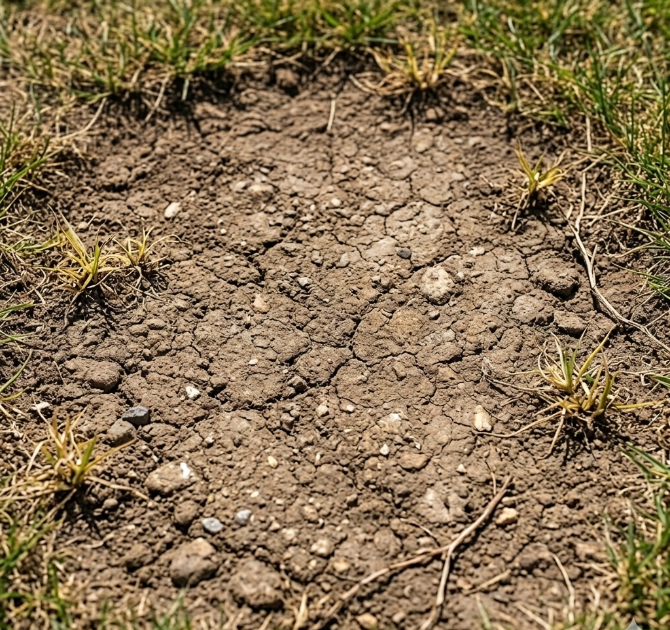
Why Does Lawn Soil Become Compacted?
Soil compaction happens when the ground becomes pressed down over time. The small air spaces in the soil are squeezed together, leaving less room for water, oxygen and nutrients to reach the roots.
This can happen for several reasons. Regular foot traffic is one of the most common. If children play on the lawn, pets run across the same routes, garden furniture sits in one place, or people regularly walk over the grass, the soil underneath can slowly become compacted.
Wet weather can make the problem worse. When soil is wet, it is more easily compressed. Walking on a damp or waterlogged lawn can push the soil particles closer together, making it harder for the lawn to breathe and drain properly.
Some lawns are more prone to compaction because of their soil type. Heavier soils can hold water for longer and become dense more easily. New-build gardens can also struggle because the soil may have been disturbed, moved around or compacted during construction.
Over time, these conditions can leave the lawn with a hard surface and shallow, weak roots. The grass may still grow, but it will struggle to grow well.
How Compacted Soil Affects Your Lawn
The biggest problem with compacted soil is that it limits root growth.
Grass roots need space to spread. When the soil is open and healthy, roots can grow deeper and stronger. This helps the lawn cope better with dry weather, heavy rain and everyday use. When the soil is compacted, the roots often stay shallow because they cannot push through the dense ground properly.
This creates a weaker lawn.
A lawn with shallow roots is more likely to dry out quickly, thin out, lose colour and struggle after stress. It may also respond poorly to feeding because the nutrients cannot move through the soil as effectively. Even when the lawn is treated, the results may be limited if the roots cannot access what they need.
Compacted soil can also cause drainage problems. If water cannot move down through the soil, it may sit on the surface instead. This can leave the lawn wet, soft and muddy after rain. In shaded areas, damp conditions can also encourage moss, especially where the grass has already become thin.
This is why compacted lawns often develop other problems at the same time. You may start with hard soil, but soon notice bare patches, moss, weak growth, muddy areas or waterlogging. The visible issue is often only the surface sign of a deeper soil problem.
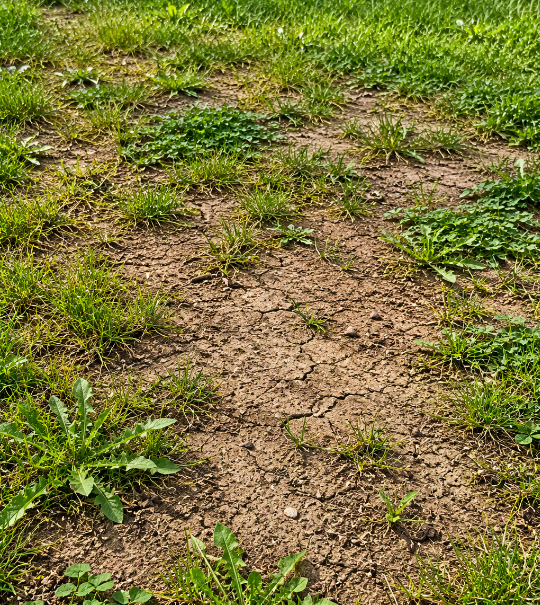
Why Feeding and Reseeding Alone Often Do Not Work
It is natural to try to fix a struggling lawn by adding lawn feed or scattering seed over the thin areas. These can be useful when the conditions are right, but they often fail when compaction is not dealt with first.
If the soil is too hard, seed may not make proper contact with the ground. It can sit on the surface, dry out, wash away, or be eaten by birds before it has a chance to germinate. Even if some seed does grow, the young roots may struggle to establish in compacted soil.
Feeding can have the same problem. Lawn feed supports grass growth, but it cannot fully solve poor soil structure. If the roots are weak and the ground is compacted, the grass may not be able to make proper use of the nutrients.
This is why the same areas often keep failing. The homeowner reseeds the patch, sees a little improvement, then the grass thins again. The problem is not always the seed. It is often the condition of the soil beneath it.
Where compacted soil has already caused bare patches, the lawn needs more than surface repair. The ground must be prepared properly so that new grass has the best chance of establishing.
Why Compacted Soil Can Lead to Bare Patches, Moss and Waterlogging
Compacted soil rarely stays as one isolated issue. Once the lawn begins to weaken, other problems often follow.
Bare patches can appear because the grass roots are too shallow or stressed to maintain healthy growth. These open areas leave the soil exposed, making the lawn look untidy and giving weeds space to move in.
Moss can also become a problem, especially where the lawn stays damp. Moss often appears when grass is weak, thin or struggling. If compacted soil is stopping water from draining properly, the damp conditions can make moss more likely to spread.
Waterlogging is another common sign. When rain cannot drain through the soil, it remains near the surface. This can make the lawn soft, slippery and muddy, particularly in autumn and winter. Walking on the lawn during these conditions can make compaction even worse, creating a cycle that becomes harder to break.
This is why it is important to look beyond the symptom. A mossy lawn may not only need moss treatment. A patchy lawn may not only need seed. A wet lawn may not only need time to dry. The real issue may be that the soil is too compacted for the grass to grow strongly.
How Aeration Helps Compacted Soil
Aeration is one of the most effective ways to help a compacted lawn recover.
The purpose of aeration is to open up the soil so that air, water and nutrients can move more freely into the rootzone. This gives the grass roots better growing conditions and helps the lawn become stronger over time.
When a lawn is aerated properly, the soil is relieved of pressure. The roots have more space to grow, drainage can improve, and the lawn is better able to take in the benefits of feeding, watering and overseeding.
Aeration is especially useful before overseeding because it improves the conditions for new grass seed. Instead of sitting on a hard surface, the seed has a better chance of reaching the soil and establishing properly. This can help thin or bare areas recover more successfully.
For lawns that have become compacted through heavy use, pets, poor drainage or repeated wear, aeration can be an important step in restoring lawn health. It does not simply cover the problem. It improves the structure underneath, where the recovery needs to begin.
The Right Way to Improve a Compacted Lawn
The best approach depends on the condition of the lawn.
If the grass is still reasonably healthy but the soil feels hard, aeration may help improve airflow, drainage and root development. This can be combined with the right seasonal treatment to support stronger growth.
If the lawn has already become thin or patchy, overseeding may also be needed. However, the area should be prepared first. Seed needs good contact with the soil, enough moisture and protection while it establishes. Without this preparation, results can be disappointing.
If moss is present, it may need to be treated as part of the wider recovery plan. Moss often thrives where the grass is weak, the soil is damp or the lawn is shaded. Removing or treating moss without improving the grass and soil conditions may only give short-term results.
If the lawn is regularly waterlogged or muddy, the cause of the drainage issue should also be considered. Aeration can help many compacted lawns, but some gardens may also need additional drainage advice or changes to how the lawn is used during wet periods.
The key is to understand what the lawn actually needs. Compacted soil can look like several different problems, so guessing can lead to wasted time and poor results.
Why Professional Lawn Treatment Makes a Difference
Compacted soil is not always easy to identify from the surface. A lawn may look like it needs feed, seed, moss control or watering, when the real problem is that the soil underneath is too dense.
A professional lawn survey helps identify what is really happening. The lawn can be assessed for compaction, weak growth, bare patches, moss, drainage issues and general lawn health. This means the treatment plan is based on the condition of the lawn, not guesswork.
Professional aeration is also carried out with the right equipment and at the right time. Timing matters because the lawn needs suitable conditions to recover. If aeration or overseeding is done when the weather, soil temperature or moisture levels are unsuitable, the results may not be as strong.
A professional approach also looks at the lawn as a whole. The aim is not only to make the lawn look better for a short time. The aim is to improve the growing conditions so the grass can become thicker, healthier and more resilient.
This is especially important if the lawn has several connected issues, such as compaction, moss, bare patches and poor drainage. Treating one symptom may help briefly, but improving the soil and strengthening the grass gives the lawn a better chance of long-term recovery.
Take the First Step Towards a Healthier Lawn
If your lawn feels hard, looks thin, holds water or keeps developing bare patches, compacted soil may be stopping it from growing properly.
The good news is that many compacted lawns can be improved with the right treatment. By opening up the soil, improving airflow, supporting stronger roots and overseeding where needed, the lawn has a much better chance of becoming thicker and healthier.
If the same problems keep coming back, a professional lawn survey can help identify whether compaction is part of the issue and what your lawn needs next.










 Made with love by: