
 Established 2016
The challenge with lawn weeds is not simply removing them. It is removing them without doing more damage to the grass in the process. Apply the wrong product, use the right product incorrectly, or attempt to dig out spreading weeds without care, and you can end up with bare patches, scorched grass, and a lawn that looks worse after treatment than it did before.
🎧 Prefer to listen? Get the full weed control guide in your ears
How to Remove Weeds Without Damaging Your Lawn
Done correctly, weed control is precise and targeted. The weeds go. The grass stays. The bare areas left behind are filled with new growth rather than the next generation of weeds. Getting to that point requires understanding the tools available, the timing that makes them effective, and the follow-up steps that prevent weeds from simply returning to the cleared ground.
This guide covers everything UK homeowners need to know about removing weeds from a lawn without causing collateral damage to the grass.
Understanding Selective Herbicides
The foundation of effective lawn weed control is the selective herbicide, and understanding how it works is essential for using it correctly.
A selective herbicide is formulated to target broadleaf plants while leaving grass unharmed. This is possible because grass and broadleaf plants have fundamentally different physiologies. The active ingredients in selective lawn herbicides are absorbed through the leaves of broadleaf plants and disrupt their growth processes in a way that does not affect the narrower leaf structure of grass. Applied correctly, the weeds die and the grass is unaffected.
This selectivity is not unconditional, however. At very high concentrations, or when applied to stressed, drought-affected grass, some formulations can cause temporary yellowing or setback to the lawn. This is why correct dilution, appropriate timing, and proper application technique matter. The product is designed to be selective, but using it incorrectly reduces that selectivity.
Selective herbicides cannot remove the weed seed bank already present in the soil, fill bare patches left when weeds die, or prevent recolonisation if the underlying conditions that favoured weed establishment remain unchanged. These follow-up steps determine whether treatment produces lasting results or simply a temporary improvement.
What to Avoid: Products That Kill Everything
Total herbicides, products such as glyphosate-based systemic weedkillers, kill all plant material they contact, including grass. These have their uses in garden weed control but are entirely unsuitable for use on a lawn where you want to preserve the grass.
This is a mistake made more often than you might expect. Consumer weedkiller products are not always clearly labelled in a way that makes the distinction obvious, and glyphosate products marketed for paths and patios sometimes end up applied to lawns with damaging results. Before applying any weedkiller to a lawn, confirm that it is specifically formulated as a selective lawn herbicide, not a total or non-selective weedkiller.
Similarly, some granular combined products, lawn feed and weed combinations, contain herbicide concentrations that can cause scorch if applied incorrectly or in the wrong conditions. These products are discussed separately later in this guide.
Timing: When to Treat for Best Results
Timing has more influence on the effectiveness of weed treatment than almost any other factor. Selective herbicides work by entering the plant through the leaf surface and being transported down through the vascular system to the roots. For this to happen effectively, the plant must be actively growing and actively transporting resources.
Spring: the primary treatment window
Early to mid-spring, typically March to May, is the most effective period for broadleaf weed control in UK lawns. Weeds are in vigorous active growth, days are warming, and uptake of foliar-applied products is at its highest. Treating during this window also prevents weeds from setting seed, which reduces the addition of new weed seeds to the soil seed bank for future seasons.
For homeowners managing their own lawns, a spring treatment applied when daytime temperatures are consistently above ten degrees Celsius and weeds are visibly growing produces the most reliable results. Avoid treating in the first few days after mowing, when leaf surface area is reduced and uptake is compromised.
Summer treatment
Summer treatment is possible and effective for weeds that are actively growing, but there are some important qualifications. Avoid applying selective herbicide to a lawn that is drought-stressed or in dormancy. The grass is already under physiological pressure in these conditions and is more susceptible to the minor stress that herbicide application can introduce. More importantly, a dormant or drought-stressed weed has reduced uptake, meaning the treatment is less effective anyway.
In a normal UK summer with adequate moisture, summer treatment produces good results on actively growing weeds. Apply in the early morning or evening to avoid the product drying too quickly in heat before it has been absorbed.
Autumn treatment
A secondary treatment window exists in autumn, typically September and October, before weed growth slows significantly with the cooling temperatures. Autumn treatment is useful for catching weeds that were missed or not fully controlled in spring, and for treating weeds that established in the bare areas left by summer drought, pest damage, or heavy wear. Do not treat too late in the season: once growth has largely stopped for the year, product uptake drops sharply and results are unreliable.
Hand Removal: When It Works and When It Does Not
Hand removal is sometimes presented as the most natural or least interventionist approach to lawn weeds, and for certain species in certain situations it is genuinely effective. For others, it is ineffective and can actively spread the problem.
When hand removal works
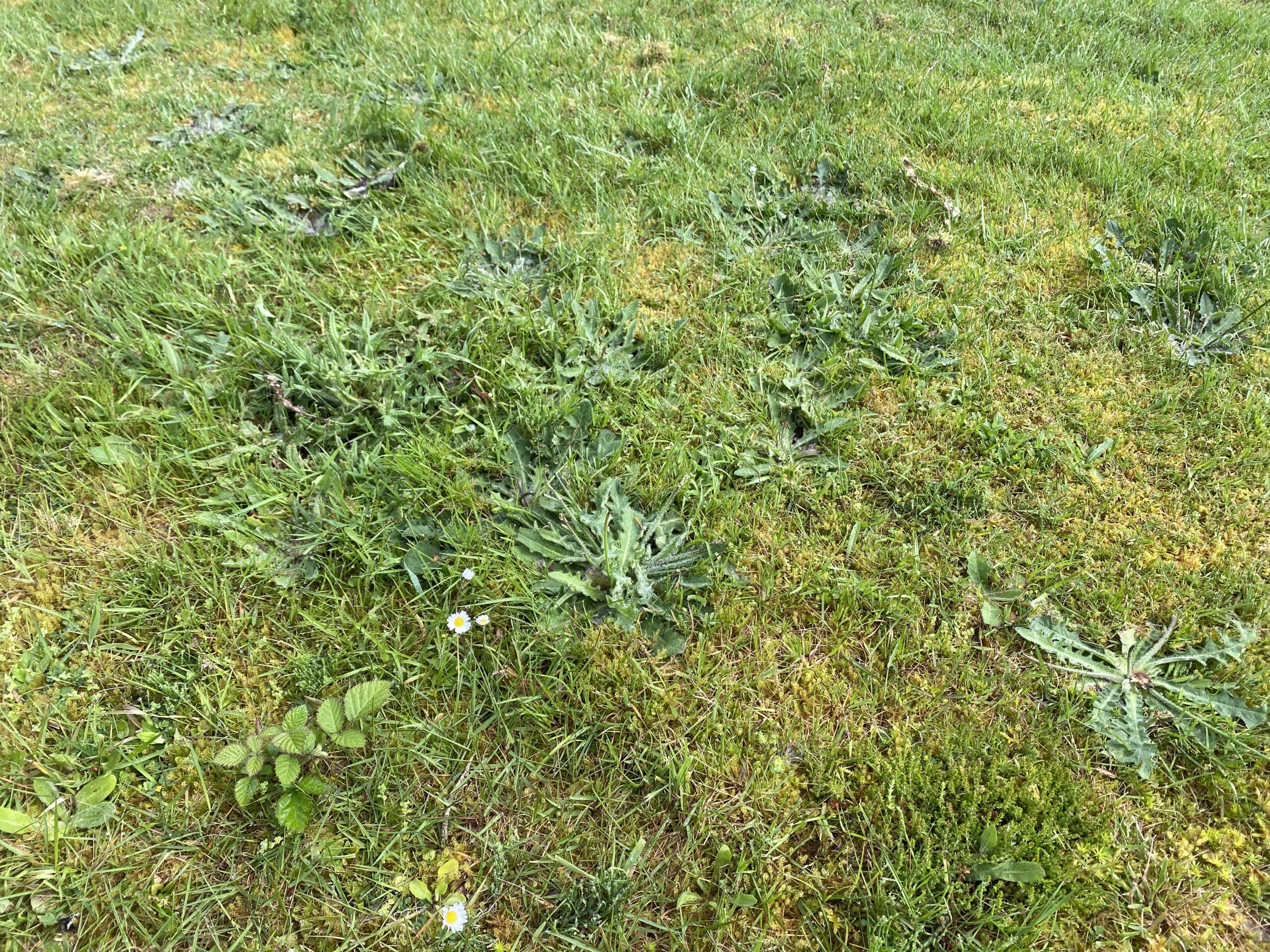
For isolated rosette-forming weeds such as dandelion or plantain, where individual plants are well spaced and the root can be extracted fully, a daisy grubber or narrow hand fork is an effective and satisfying tool. The key requirement is extracting the complete root. Dandelion taproots can reach twenty centimetres or more into the soil, and any fragment left behind will regenerate a new plant. Use a tool that reaches deep rather than simply snapping the root near the surface.
This approach is practical on a small lawn with scattered individual weeds. It is not practical on a lawn with significant weed coverage, where the time and physical effort required makes it an unrealistic solution.
When hand removal makes things worse
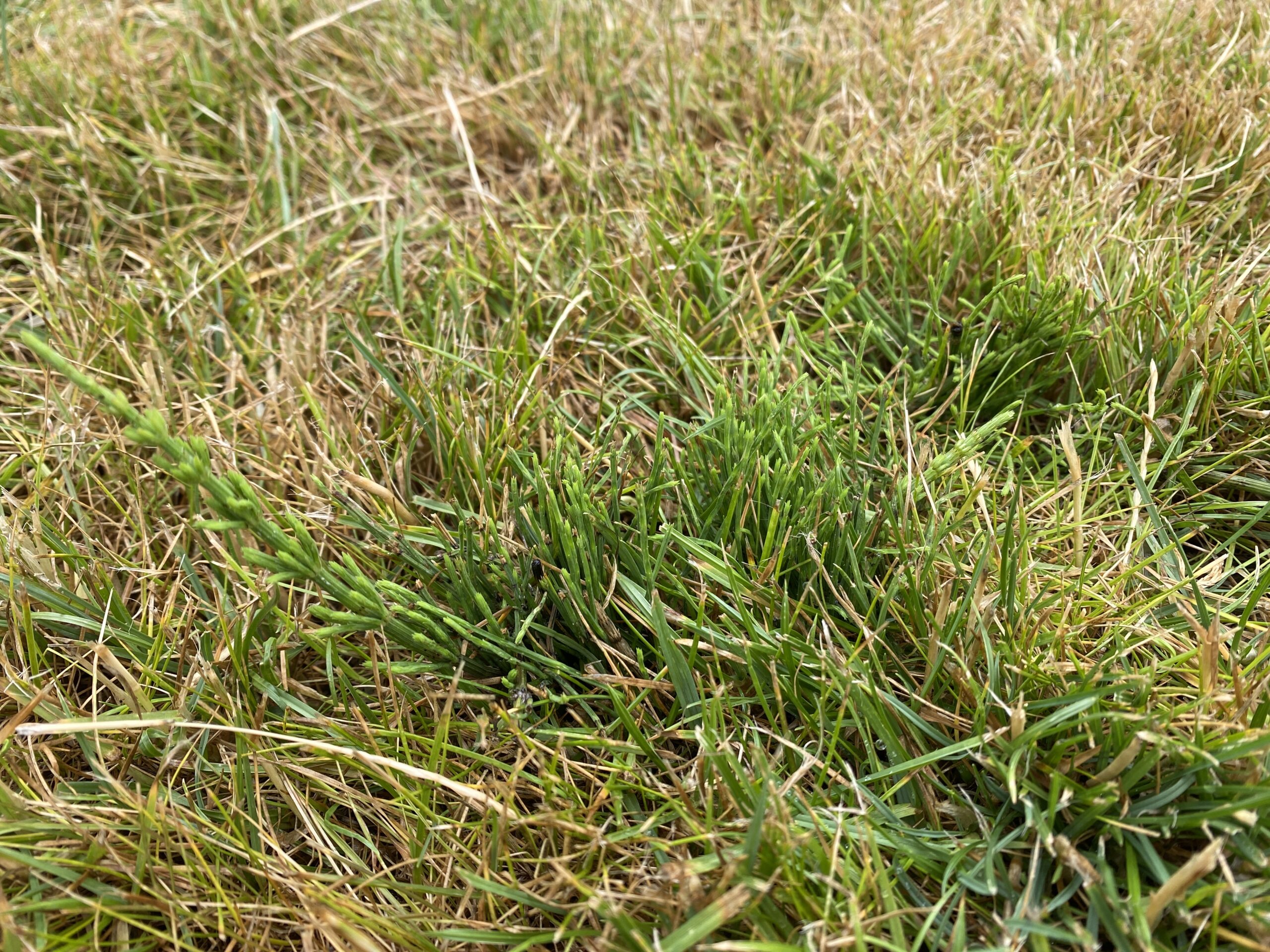
For spreading weeds such as speedwell, clover, or creeping buttercup, hand removal is actively counterproductive unless done with considerable care. These plants spread by creeping stems, stolons, and surface runners that root at nodes as they contact the soil. Pulling or raking these weeds without removing every rooted fragment distributes stem pieces across the lawn, each of which can establish a new plant. A speedwell infestation can be significantly worsened by vigorous raking or dethatching that spreads stem fragments to previously clean areas of lawn.
For spreading weeds, selective herbicide treatment is considerably more reliable than mechanical removal.
Using Selective Herbicide Correctly
Choosing the right product
Consumer selective herbicides vary considerably in the active ingredients they contain, and not all products are effective on all weed species. Most standard formulations perform well on dandelion, plantain, and buttercup. Clover and speedwell are significantly harder to control and require specific active ingredients, including mecoprop-P for clover, that are not present in all consumer products.
Before purchasing a product, check that it lists the weed species you are dealing with on the label. If clover or speedwell are your primary problem and a product does not specifically list them, it is unlikely to produce satisfactory results regardless of how carefully you apply it.
Mixing and dilution
If using a concentrate that requires dilution, follow the label instructions precisely. Under-dilution produces a concentration that risks scorching the grass and does not necessarily improve weed control effectiveness. Over-dilution produces insufficient active ingredient concentration for reliable uptake. Consumer products often come ready-to-use for this reason, removing the dilution variable from the process.
Application method
Apply to dry grass when no rain is forecast for at least four to six hours. Wet grass dilutes the product and rain shortly after application washes it off before it can be absorbed. Avoid windy conditions that cause spray drift onto flower beds or vegetable gardens.
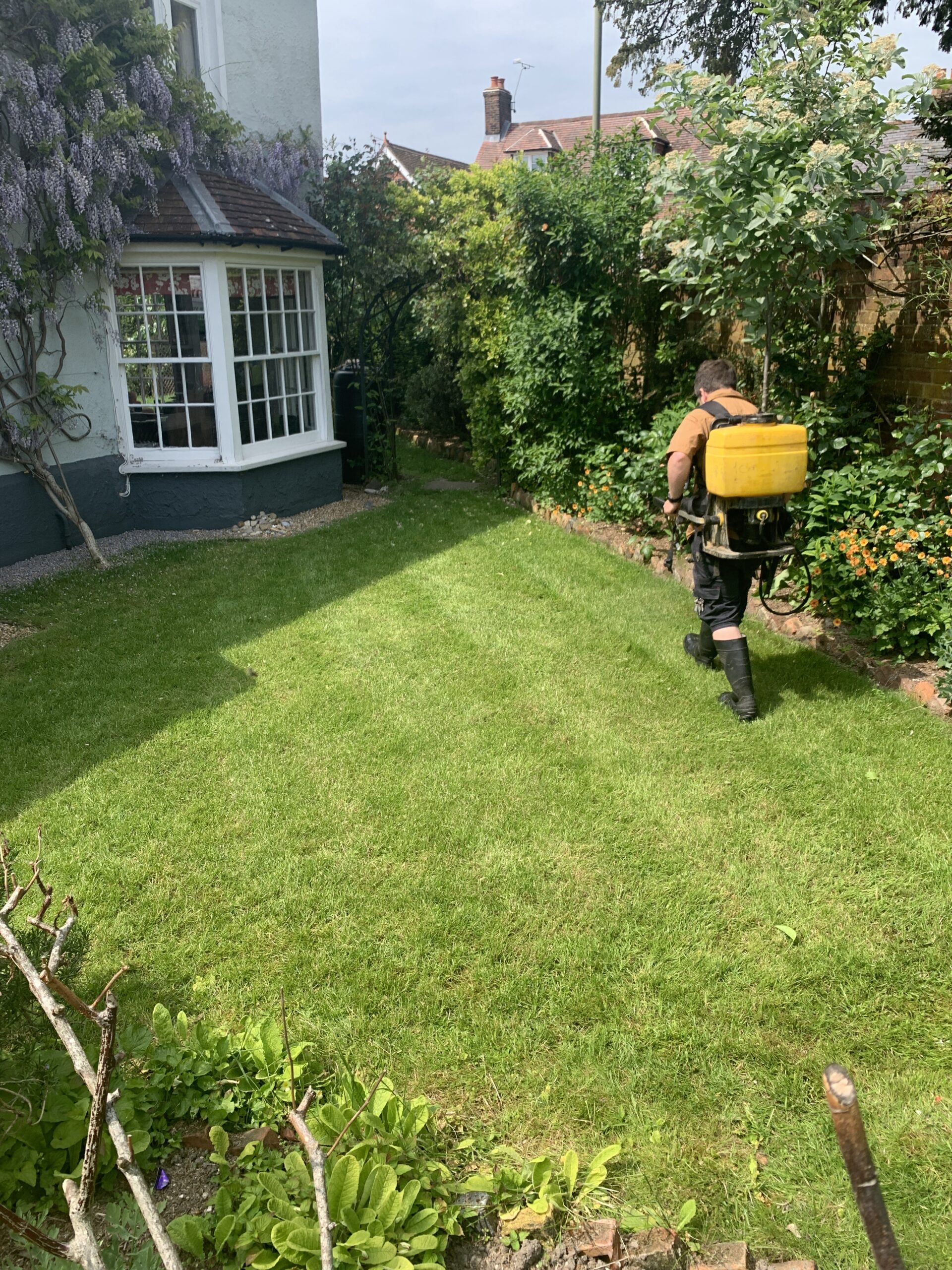
A knapsack or pressure sprayer produces more even coverage than a watering can rose. Walk at a consistent pace and apply evenly, overlapping each pass slightly to avoid gaps. Do not concentrate product on individual weeds in the hope of killing them faster; even application at the correct rate produces better results than uneven application with concentrated spots.
Leave at least three to four days after application before mowing. Mowing too soon removes treated leaf tissue before the product has fully translocated to the root system, producing incomplete kill and requiring retreatment.
After treatment: dealing with the bare patches
This is the step most commonly overlooked and it is the one that determines whether weed control produces lasting improvement or simply a brief respite. When treated weeds die and are mown off over the following weeks, they leave bare patches of soil. Bare soil in a lawn is an open invitation. Weed seeds in the soil seed bank, present in virtually every UK garden in significant quantities, will germinate in those gaps given light and moisture. So will weed seeds arriving from surrounding gardens and verges.
Overseeding the bare patches with appropriate grass seed, four to six weeks after treatment once the dead weed material has cleared, closes those gaps with competitive grass before weed seeds can exploit them. This step is not optional if you want the improvement to last. It is what separates a temporary clearance from a genuinely lasting result.
Lawn Feed and Weed Combined Products
Combined granular products that deliver fertiliser and selective herbicide in a single application are widely available and appeal to homeowners who want to simplify the process. Used correctly, they can be effective for light to moderate weed pressure alongside a spring feed. There are, however, some important considerations.
The herbicide component in combined products is only released when the granules dissolve, which requires moisture. Applied to dry grass with no rain forecast, the fertiliser component can cause scorch before the herbicide has any effect. These products work best when applied just before a period of rain, or when the lawn is watered in thoroughly after application.
Coverage consistency matters more with granular products than with liquid treatments. An uneven spread produces uneven herbicide distribution, meaning some areas receive an effective dose and others do not. A quality rotary spreader set to the correct spread rate produces better results than hand broadcasting.
For significant weed infestations, or for difficult species such as clover and speedwell, a liquid selective herbicide applied by sprayer is more reliable than a combined granular product, which typically contains lower herbicide concentrations and a more limited range of active ingredients.
The Role of Grass Health in Weed Control
It is worth reinforcing a point that runs through all effective weed control: the health and density of the grass is the most powerful long-term weed suppressant available. A thick, well-fed sward with a continuous canopy of leaf blades shades the soil surface, limits the light reaching dormant weed seeds, and gives grass seedlings a significant competitive advantage over germinating weeds.
A lawn receiving regular seasonal fertiliser treatments, aerated annually to prevent compaction and improve root depth, and mown at the correct height produces significantly less weed pressure over time than a neglected lawn treated with herbicide once a year. The herbicide removes the weeds that are currently there. The healthy grass prevents the next generation from establishing.
This is why a consistent programme combining treatment with ongoing grass health management produces better year-on-year results than repeated one-off weed treatments applied to a lawn that is otherwise not being looked after.
Why Professional Treatment Produces Better Results
The gap between professional weed control and a consumer product applied by a homeowner is larger than most people expect, and it comes down to four factors: product access, species identification, application precision, and follow-up.
Professional technicians at Shrekfeet use formulations that contain active ingredients specifically matched to the weed species identified in your lawn. These include professional-grade concentrates with active ingredient combinations that are not available in consumer retail products. Our technicians hold NPTC qualifications, are trained in species identification and product selection, and use calibrated spray equipment that delivers an accurate, even dose across the full lawn area.
We also include adjuvants in our spray mixes, specialist additives that improve adhesion to the leaf surface and resistance to light rain in the hours following application. These improve the reliability of uptake, particularly on difficult species such as clover and speedwell where consistent leaf contact is critical.
Weed control is part of our Professional Lawn Treatment Plan, designed to work alongside seasonal feeding, moss control, and aeration as a complete lawn health programme rather than an isolated intervention. We cover Hampshire, Surrey, West Sussex, and Berkshire, and we carry BASIS Lawn Assured accreditation for the safe and responsible use of plant protection products.
Frequently Asked Questions
Applied correctly, at the right dilution, to actively growing grass in suitable weather conditions, a selective lawn herbicide will not damage your grass. Temporary minor yellowing of the grass is occasionally seen in the days following application but this resolves quickly. The most common cause of grass damage from weed treatment is incorrect dilution, application during drought stress, or using a non-selective total herbicide by mistake.
Wait at least three to four days before mowing after applying a selective herbicide. Mowing sooner removes the treated leaf tissue before the active ingredient has fully translocated through the plant to the root system, producing incomplete kill. For best results, allow five to seven days if conditions permit. The treated weeds will begin to show discolouration and distortion within seven to ten days of treatment.
Most selective broadleaf herbicides begin to show visible effects within seven to fourteen days of application, with weeds showing twisting, distortion, and yellowing before dying back over the following weeks. Some species, particularly clover and speedwell, may take longer or require a second application. Full clearance of treated weeds typically takes three to four weeks from application.
Once the treated grass is fully dry, usually within a few hours on a dry day, the lawn is safe for children and pets. Shrekfeet technicians will always advise you of the specific re-entry time for each treatment. Everything we use is fully licensed and tested as safe for people, pets, and wildlife, including pollinators, once dry.
The most common reasons are species mismatch, where the product does not contain the active ingredient needed for the weed in question; poor timing, treating dormant or drought-stressed weeds with reduced uptake; application in rain or wind that compromises absorption; or mowing too soon after treatment. Clover and speedwell are the species most commonly reported as surviving standard consumer product treatment, and they genuinely require specialist formulations to control reliably.
No. Most selective herbicides have a soil residual period during which newly germinating grass seed will also be affected. The label on your specific product will give the recommended interval before overseeding, which is typically six to eight weeks. Overseeding too soon after treatment produces poor germination and thin, patchy results. Wait for the recommended period, allow dead weed material to clear, then overseed the bare areas properly.
Weeds coming back despite treatment?
Our technicians cover Hampshire, Surrey, West Sussex, and Berkshire. We will identify the species present, explain why they keep returning, and apply the right professional-grade treatment matched to your specific lawn.







 Made with love by: