
 Established 2016
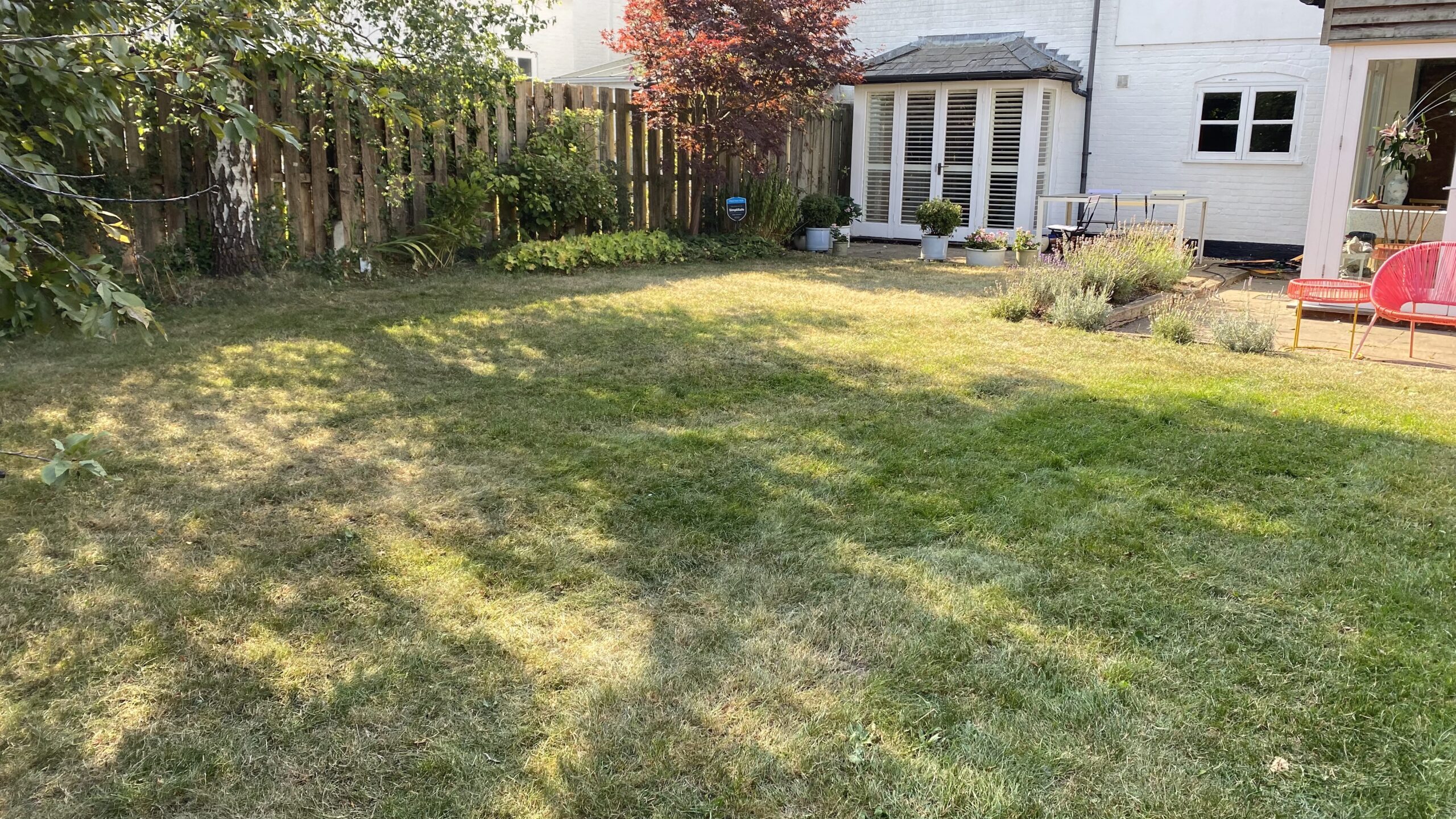
Ask any lawn care technician which season matters most and you will nearly always get the same answer. Autumn. Not spring, whatever that first burst of growth might suggest. Not summer, however obviously the grass struggles in the heat. Autumn is when the work that counts gets done, and what happens between August and November sets up the whole of the following year.
There is a biological reason for it. The soil is still warm from summer but cooling steadily, which is exactly what grass roots and new seed want. At the same time the plant is winding down leaf growth and pushing its energy into roots ahead of winter. Opening up compacted ground, pulling out thatch, adding new seed and feeding correctly all work with that rather than against it.
An autumn renovation covers four operations: aeration, scarification, overseeding and top dressing, with moss treatment and feeding around them. Here is what needs doing, in what order, and why each step earns its place.
🎧 Prefer to listen? Get the full guide in your ears
Autumn Lawn Care: What to Do Before Winter Sets In
Why Autumn Is the Critical Window
The window runs from late August through to November, and September and October are usually the most productive months for renovation work. Several things line up in that period that never quite line up again. Early September opens roughly six weeks when conditions for this work are as good as they get all year.
Soil temperatures stay above ten degrees well into the autumn, which is the point at which grass seed germinates reliably. Seed sown in September gets eight to ten weeks of growing weather before the cold arrives, long enough to build a root system that will come through winter and thrive next spring. Sown later, germination is slower and the seedlings have less time, but in the south of England the soil holds enough warmth for useful establishment considerably later than most guidance suggests.
The plant itself is receptive through early and mid autumn. Summer growth is finished and resources are going into roots and carbohydrate reserves. Aerate and feed now and you are working with the grass. Do the same in the depths of winter and you get a fraction of the benefit.
A lawn that goes into winter with decent root depth, loose soil, adequate reserves and thick coverage copes far better with waterlogging, frost, foot traffic and disease pressure than one that does not.
The Autumn Lawn Care Programme: Step by Step
Assess the lawn before doing anything else
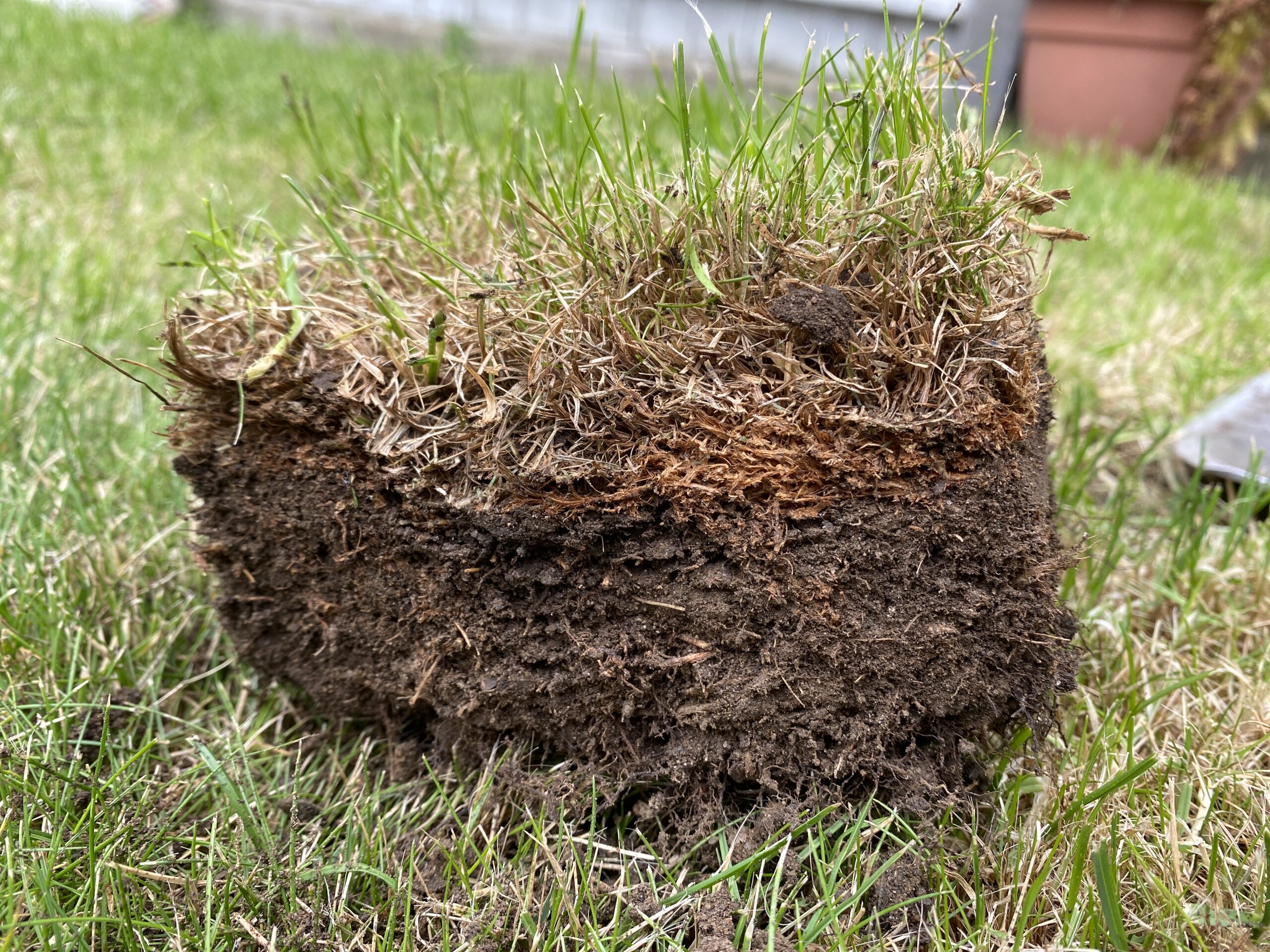
Walk the lawn properly before you start anything. Note where the grass is thin or bare. Look at the moss, and whether it is in one or two patches or spread across the whole thing. Press down in a few places, because a firm, unyielding surface means compaction. Cut out a small section and look at the base of the grass: a spongy, fibrous layer more than a centimetre deep between the crowns and the soil needs dealing with. Note anywhere that holds water, sits in permanent shade, or gets scalped by the mower because the ground is uneven.
Fifteen minutes spent here is worth more than any single treatment. Work through a lawn without knowing what is actually wrong with it and you get an average result. Deal with the real causes and the difference is obvious.
Aeration
Aeration comes next, before the scarifier goes anywhere near the lawn. Relieving compaction first means the surface is open and the soil is working properly by the time the thatch is stripped out, and it avoids dragging loose surface debris down into freshly opened channels.
The channels aeration leaves behind let air, water and nutrients reach root depth. On a compacted lawn that single change alters how the grass responds to everything else. Fertiliser gets down to the root zone instead of sitting on the surface. Rain soaks in instead of running off. Roots grow downwards instead of staying shallow and vulnerable in dry spells.
Which tine to use depends on the lawn. Hollow tines pull small cores of soil out and are the right choice where compaction is significant, particularly on heavier ground or a lawn that has never been aerated properly. Solid tines and slitting have their place on lighter soils, on lawns already in reasonable condition, or where a less disruptive treatment suits the situation better. The decision comes from what the assessment turns up rather than from a fixed rule.
Where hollow tines have been used, filling the holes with a sandy top dressing brushed in thoroughly with a stiff brush or a drag mat makes a considerable difference. The sand gradually improves drainage in the surface layer and stops the holes closing up again under use. On heavy clay, sandy loam top dressing after aeration is the single most useful long-term thing you can do to the soil.
Scarification
Scarification is the mechanical removal of thatch, dead moss and the organic matter that builds up in the surface of every established lawn. A powered scarifier or a spring-tine rake is run across the surface to pull that material out.
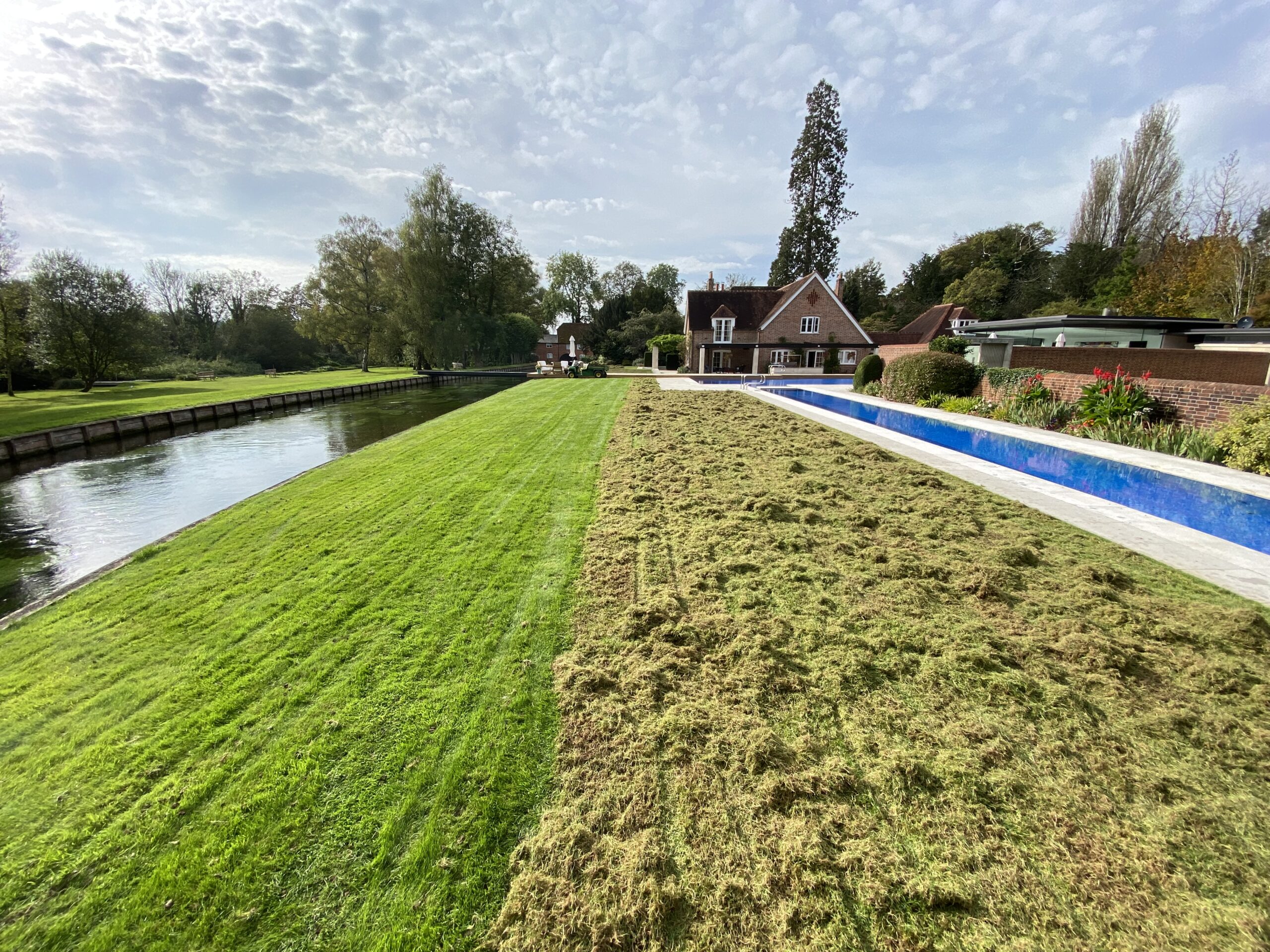
If you have not seen it done before, the state of the lawn afterwards is alarming. A remarkable quantity of material comes out and what is left looks sparse, rough and worse than when you started. That is entirely normal and entirely temporary. Clearing the surface lets light, air and moisture reach soil level, makes overseeding far more effective, and takes away the layer that has been smothering growth at the base of the sward.
How hard you go depends on the thatch depth. On a lawn being renovated properly for the first time, thorough beats cautious. Grass recovers well from a heavy scarification in autumn conditions, whereas a timid pass that leaves most of the thatch behind is largely wasted effort.
Clear up, then treat the moss
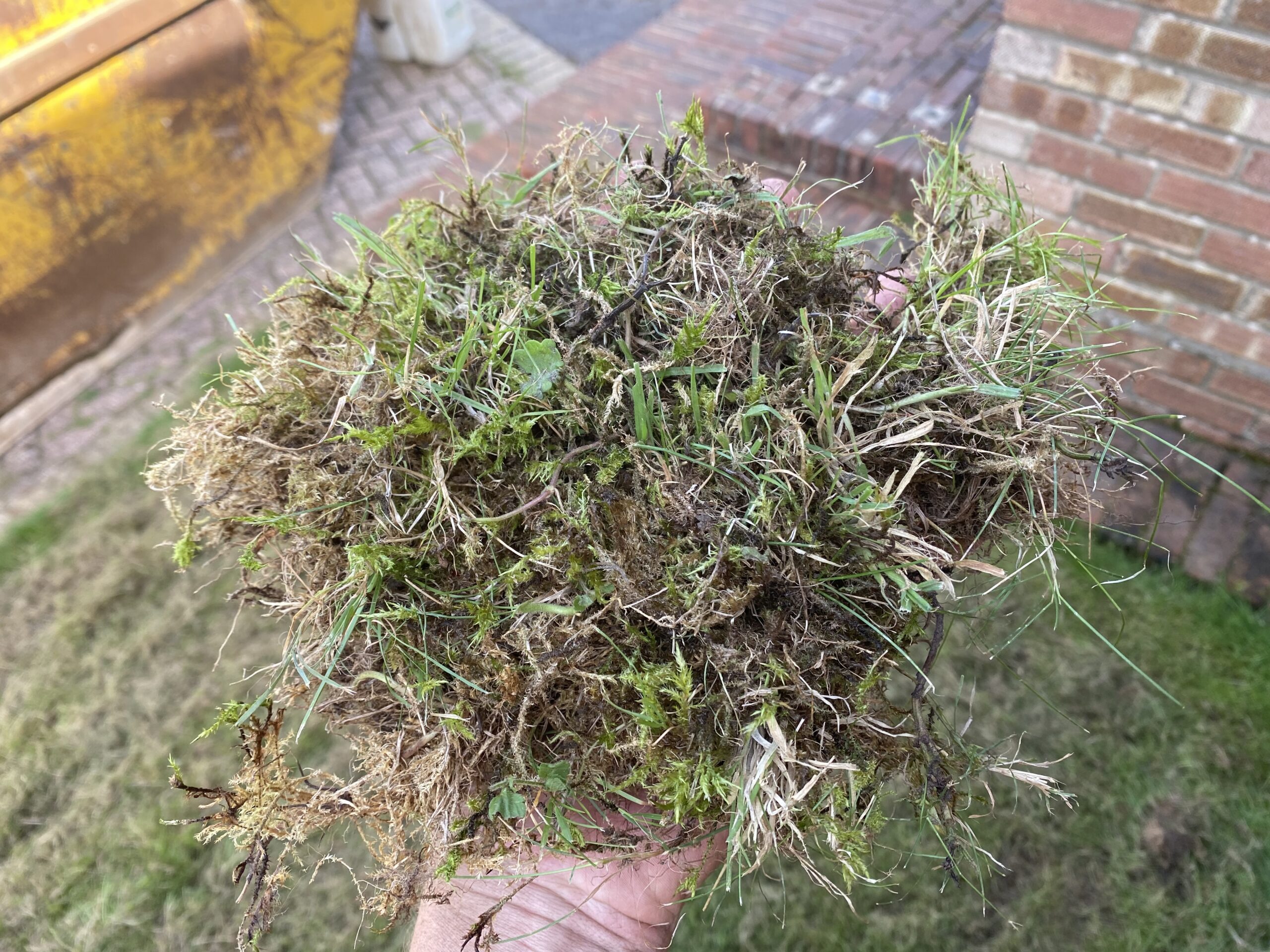
Clear the lawn thoroughly once the scarifier has been through. A heavy scarification pulls out a remarkable volume of thatch and moss, and leaving it lying defeats the point of removing it.
Moss treatment goes on at this stage rather than at the start. Scarification takes out the bulk of the moss mechanically, so treating afterwards deals with what is left in the surface rather than blackening a thick living mat that then has to be dragged out anyway. Iron sulphate, applied as a liquid or a granular product, kills residual moss within seven to ten days.
Iron sulphate does the grass some good as well. It hardens the cell walls, improves colour, and makes the lawn more resistant to the fungal diseases that autumn weather encourages, which is worth having on a surface that has just been opened up.
Overseeding
Overseeding introduces new grass seed into the renovated surface, filling thin and bare areas, adding younger and more vigorous plants to the sward, and thickening the lawn overall. September and October give you warm soil, rising moisture and moderate air temperatures, so seed germinates reliably and the seedlings have time to establish before winter.
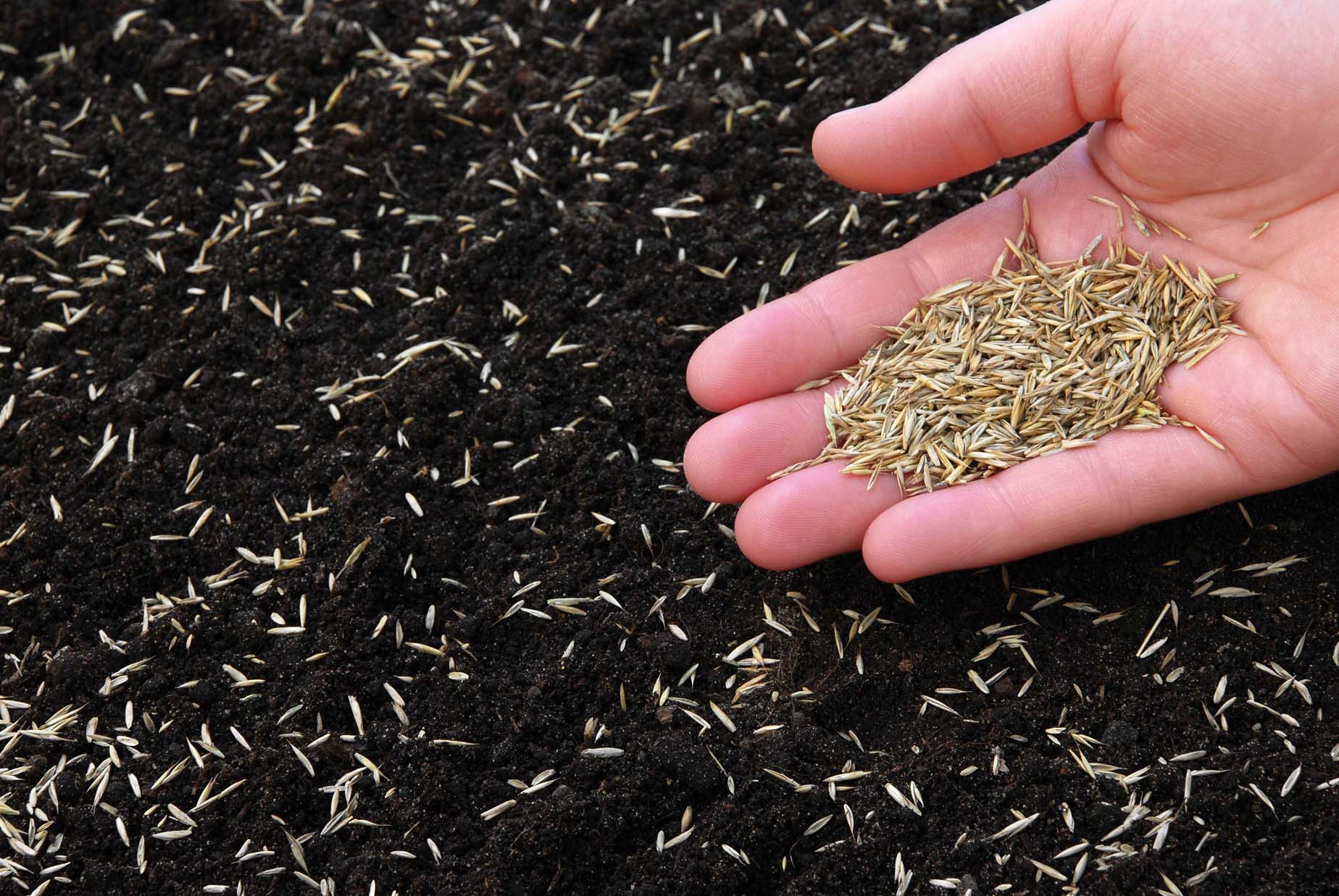
Choose the mix to suit the lawn. A hard-wearing ryegrass-dominant mix suits a family lawn that takes regular foot traffic. A fescue-rich fine mix suits a more ornamental lawn. Under trees or in permanent shade you need a shade-tolerant mix containing creeping red fescue and wood meadow grass, because standard mixes will not establish there.
Broadcast the seed evenly across the prepared surface and rake it in lightly to get it in contact with the soil. Keep the area moist right through germination. Most varieties come up within seven to fourteen days at September soil temperatures, and rather longer as the season goes on. Leave the new grass until it reaches five to six centimetres before the first cut, and make that cut a gentle one with the mower set high.
Top dressing
Top dressing is the fourth operation in an autumn renovation and the one most often left out. A dressing spread across the lawn after the seed goes down improves the levels, protects the new seed, holds moisture around it, and builds up the quality of the surface layer over time.
The blend is chosen for what the lawn needs. Sand and loam or sand and compost are both used, and on heavier ground a dressing applied after aeration works down into the open holes and helps keep them from closing again. It also feeds soil biology and improves the surface over successive seasons, which is why it is done annually rather than once.
Work it in with a stiff brush or a drag mat rather than leaving it sitting on the surface, and keep it thin. The aim is to work material down between the grass plants, not to bury them.
Autumn feeding
Autumn fertiliser is formulated for the job. Nitrogen is lower than in a spring or summer feed, which avoids pushing out soft growth just as winter arrives, and phosphorus and potassium are higher to support root development, harden cell walls, and improve resistance to frost, disease and waterlogging.
Feed after overseeding rather than before. The phosphorus helps the new seedlings establish as well as feeding the roots of the existing grass. Applying once the seedlings are visibly up gets the best result from both.
Do not reach for the spring or summer fertiliser simply because it is what is already in the shed. A high-nitrogen feed applied in autumn creates exactly the conditions that fusarium patch and the other autumn diseases are waiting for.
Weed control
If there are broadleaf weeds, deal with them either in August before renovation begins, or six to eight weeks after overseeding once the new grass is properly established. Selective herbicides damage germinating seed, so they cannot go on during or immediately after overseeding.
Treating in August gives the weeds time to die, the dead material time to clear, and the herbicide residual period time to pass before you sow. Anything that comes up in the bare areas during renovation can wait for the spring treatment.
The order that matters: aeration, scarification, clearing up, moss treatment, overseeding, top dressing, then feeding. Opening the soil before stripping the surface gives the better result, and treating moss after the scarifier has taken the bulk of it out beats blackening a thick living mat first. This is the sequence we work to on customer lawns.
Mowing Through Autumn
Keep mowing for as long as the grass is growing, which in most UK gardens means into November and sometimes December in a mild year. Leave the cut slightly higher than your summer setting. Going very short in autumn takes away the leaf the plant needs for photosynthesis and for building the carbohydrate reserves that carry it through winter.
Do not mow a wet or frosty lawn. Wet grass tears rather than cutting cleanly, finishes unevenly, and carries fungal spores across the lawn on the mower. Frost makes the blades brittle, and walking on frosted turf causes cell damage that shows up later as brown footprints. Late in the season, wait until the frost has lifted rather than heading out first thing.
Collect the clippings in autumn rather than mulching them back in. With moisture rising, clippings left on the surface mat down, smother the grass, and hold exactly the warm, damp conditions fungal disease favours. Box them off or rake them up afterwards.
Leaf Management
Leaves left lying on a lawn through autumn do real damage. A layer of wet leaves blocks light, holds moisture against the grass surface, and creates ideal conditions for fusarium patch and other fungal diseases. Anywhere covered for more than a few days loses colour quickly, and if the cover is thick and stays put, the thinning can be permanent.
Clear the leaves regularly through October and November instead of waiting for the trees to finish and doing one big clearance. A weekly pass with a blower or a rake keeps the surface clear and is far less work than shifting a deep, sodden layer at the end of the season.
What Happens If You Miss the Autumn Window
Miss autumn altogether and the next opportunity is spring, and spring is a weaker time for the same work. Seed sown in spring gets only eight to ten weeks before the summer heat arrives. Scarifying in spring exposes soil that then dries out before the new grass can take hold. A lawn that goes into spring with thatch built up, no aeration and depleted nutritional reserves starts the hardest season of the year already behind.
The autumn window is longer than most guidance suggests, though. Renovation work continues well into November in our experience, and a lawn treated in early November is in a far better position than one left until March. If you have reached the back end of autumn and think you have missed your chance, it is worth asking rather than assuming.
Missing one year is not a disaster. Missing several in a row, on a lawn that genuinely needs the work, leads somewhere considerably harder and more expensive to come back from. A thorough autumn renovation always costs less than rescuing a lawn that has gone far enough to need re-turfing.
Why Professional Autumn Lawn Care Produces Better Results
Professional equipment, used properly, does things a domestic machine cannot. But the machinery is not really the point. What makes the difference is knowing what is wrong with a particular lawn, working through the steps in the right order, using products formulated for the job, and timing each stage to the lawn in front of you rather than to a date on a calendar.
Our autumn visits start with a full assessment. We look at compaction, thatch depth, moss coverage, nutritional status, seed requirements, and any disease or pest activity that needs dealing with before or alongside the renovation. The programme gets built around your lawn rather than pulled off a shelf, including which type of aeration suits the ground we find.
Scarification is matched to the thatch depth we actually find. Seed, top dressing and fertiliser are chosen for the conditions the assessment turns up. We have been established since 2016. We hold BASIS Lawn Assured accreditation, work to the Amenity Standard, and are members of the UK Lawn Care Association, and our City and Guilds trained technicians cover Hampshire, Surrey, West Sussex and Berkshire.
Frequently Asked Questions
Late August through to November, with September and October the strongest months for renovation work. Aeration and scarification come first, then the clear up and moss treatment, then overseeding and top dressing, with feeding once the new seedlings are up. Leaf clearance continues through October and November. We carry out renovation work into November, so a late start is not the lost cause it is often made out to be.
Aerate first, then scarify. Relieving compaction before the surface is stripped means the soil is open and working by the time the thatch comes out, and it avoids dragging loose surface material down into freshly opened channels. The full sequence is aeration, scarification, clearing up, moss treatment, overseeding, top dressing, then feeding.
After. Scarification takes out the bulk of the moss mechanically, so treating afterwards kills what remains in the surface rather than blackening a thick living mat that then has to be dragged out anyway. Clear the lawn properly once the scarifier has been through, then apply the moss treatment.
It depends on how quickly thatch builds up in your lawn, which varies with grass type, soil and how the lawn is managed. Cut out a small plug and look at the base. Less than a centimetre of fibrous material is doing no harm and is worth leaving. More than that is worth removing. Most lawns benefit from scarification every year or every other year, and a lawn that has never been scarified almost always needs it.
No. Hollow tines remove cores of soil and are the right answer where compaction is significant, particularly on heavier ground or a lawn never properly aerated before. Solid tines and slitting suit lighter soils, lawns already in reasonable condition, or situations where less disruption is wanted. The tine type should follow the assessment rather than a fixed rule.
Later than most guidance suggests, yes, particularly in the south of England where soil temperatures hold up well. Germination slows as the season goes on and seedlings have less time to establish, so results are steadier earlier in the window, but useful establishment is achievable considerably later than mid October. If in doubt about your own lawn, ask rather than defaulting to spring.
Yes, and the difference matters. Spring feeds are high in nitrogen to drive leaf growth and colour. Autumn feeds carry less nitrogen and more phosphorus and potassium, which support root development and harden the plant against frost and disease. Using a spring feed in autumn produces soft growth at precisely the wrong moment and raises the risk of fungal disease.
Keep off it while it is saturated, because walking on waterlogged turf compacts the soil further and makes the problem worse. Aeration followed by top dressing is the standard treatment and improves matters measurably in the surface layer. If water sits for days after every spell of rain, the cause is likely to be deeper than the surface and worth a proper drainage assessment.
Ready to make the most of the autumn window?
Our technicians cover Hampshire, Surrey, West Sussex and Berkshire. We will assess your lawn properly, identify exactly what it needs, and work through the programme in the right order for your specific lawn.







 Made with love by: