

 Established 2016
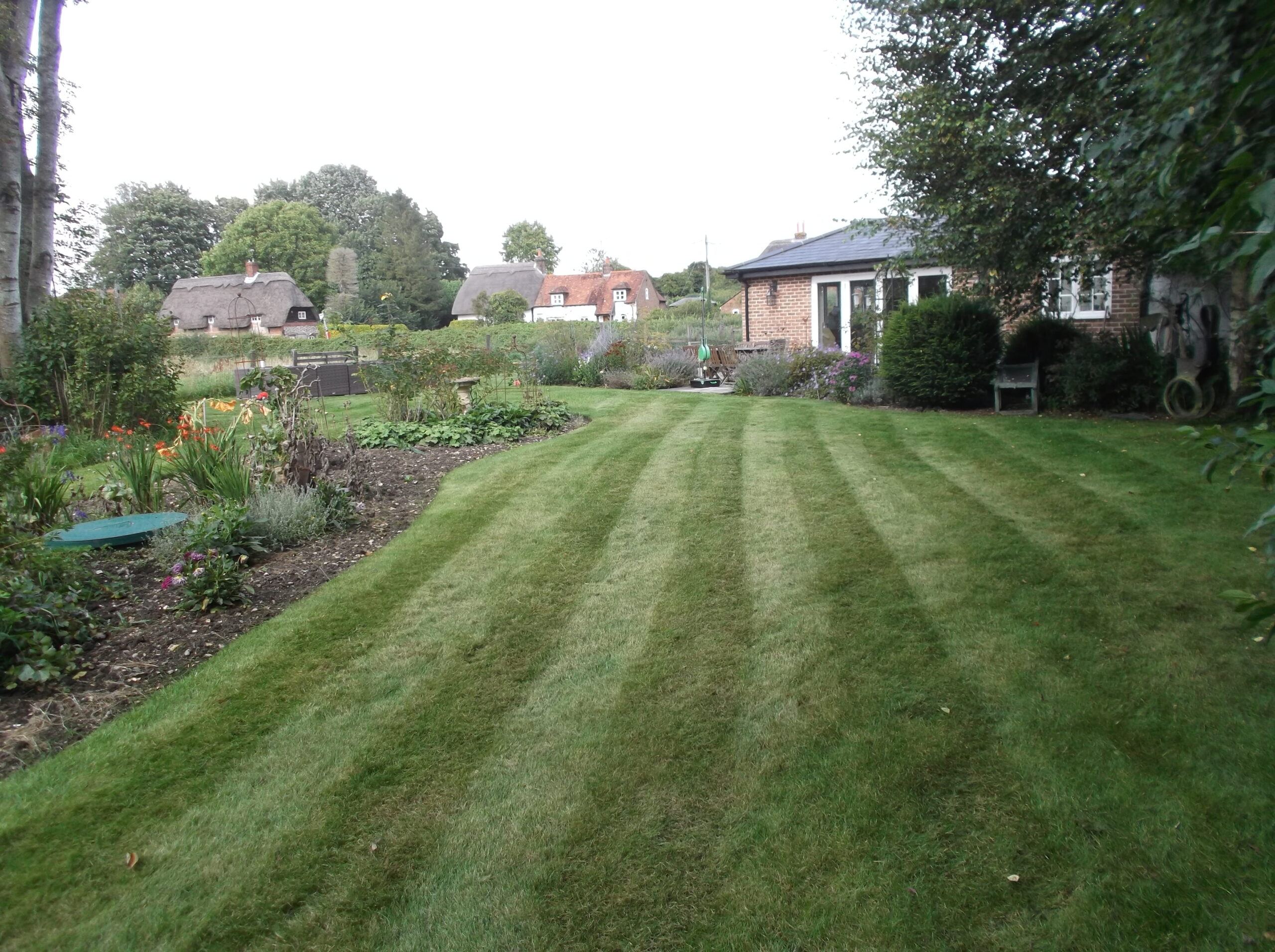
The stripes on a cricket square or a well kept lawn look like two different shades of grass. They are not. Every blade is the same colour, and the pattern is entirely an optical effect.
What you are seeing is light reflecting off grass that has been bent in alternating directions. Grass leaning away from you reflects light back off the flat upper surface of the leaf and appears pale. Grass leaning towards you shows the shadowed underside and appears dark. Change your viewpoint and the whole pattern inverts.
🎧 Prefer to listen? Get the full guide in your ears
Why Does My Lawn Look Striped After Mowing?
How the Effect Is Created
Two things bend the grass. The forward motion of the mower pushes leaf over as it passes, and any weight rolling behind the cutting unit presses it flat and holds it there.
This is why some mowers stripe and others do not. A cylinder mower with a rear roller does it well, because the roller flattens the grass immediately after the cut. A rotary mower on four wheels has nothing pressing the surface down behind the blade, so the effect is weak or absent.
Hover mowers do not stripe at all, since there is no wheel or roller contact with the surface.
Getting Stripes on an Ordinary Lawn
If you want them, three things matter more than the mower.
Grass length
Longer leaf bends and holds its position. Grass cut very short has too little length to lean and the effect largely disappears. Around forty millimetres gives a good result, and it is a better height for the lawn anyway.
A roller
Either a mower with one fitted, or a striping kit, which is a roller attachment that fits behind an existing rotary mower. These are inexpensive and they work.
Mowing in straight lines
Obvious but the part people get wrong. Pick a straight edge to work from, a fence, path, or border, and take the first pass along it. Every subsequent pass follows the previous one, so the first line decides the whole pattern.
Alternate direction on each pass so adjacent strips lean opposite ways, then finish by mowing a border around the perimeter to tidy the ends.
Grass Type Makes a Difference
Ryegrass has broad, glossy leaves that reflect light well and hold a bend, so it stripes readily. Fine fescues and bents are thinner and more upright, and they stripe far less distinctly however good the mower.
This is worth knowing if striping matters to you and you are overseeding, because the seed mixture affects the result more than most people expect.
Change Direction Every Time
This is the part that matters for the lawn rather than the appearance, and it is why we mention striping at all.
Mowing the same direction every week trains the grass to lean permanently that way, which makes it progressively harder to cut cleanly, encourages the plant to grow sideways rather than upright, and wears tracks into the surface where the wheels run every time.
Varying the direction keeps growth upright, gives a cleaner cut, and spreads wheel wear. If you want stripes, alternate between two directions week to week rather than mowing the same lines every time.
When Stripes Reveal a Problem
Occasionally what looks like striping is not striping at all, and it is worth telling the difference.
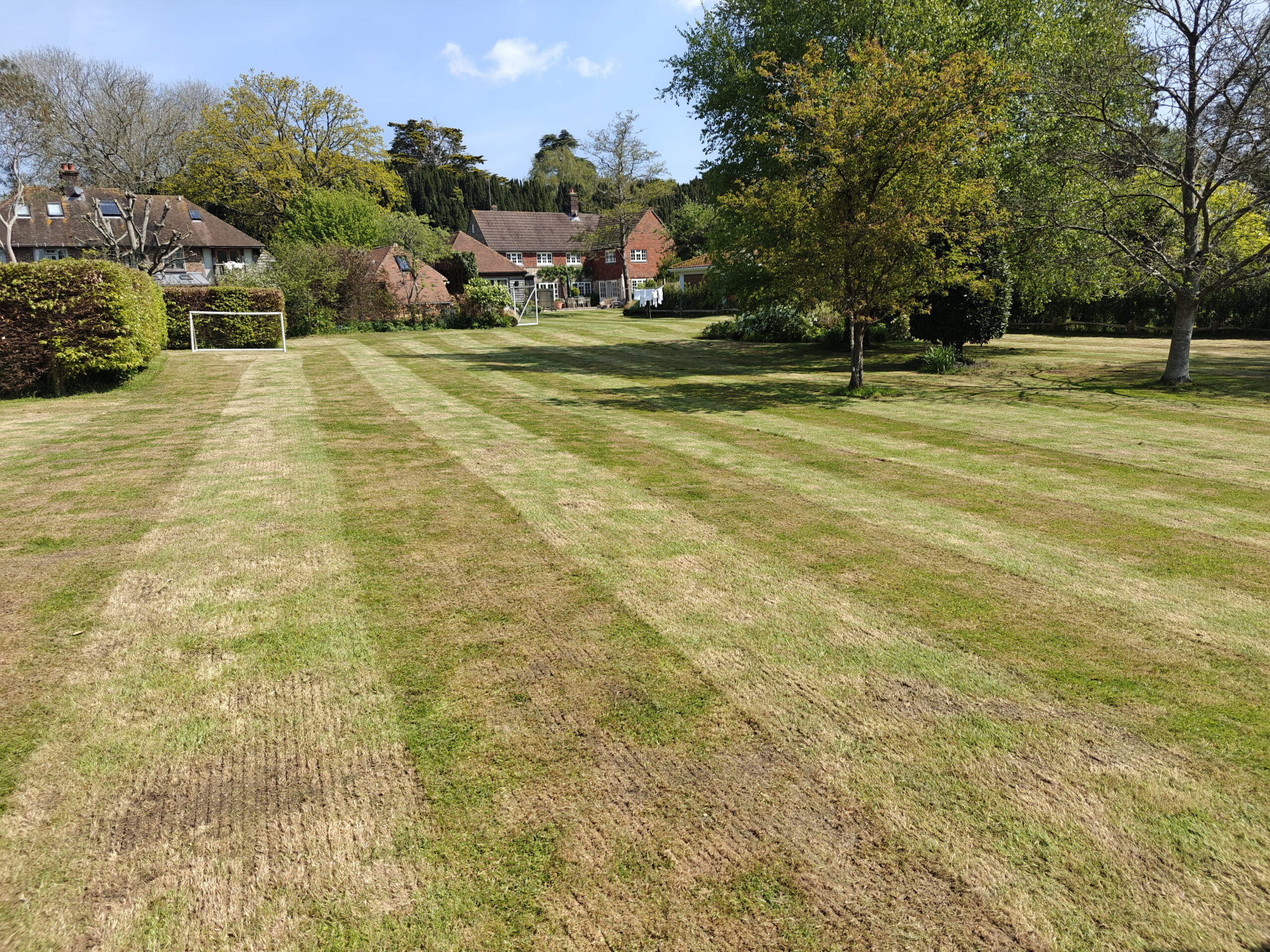
Stripes left by the use of a scarifier, as can be seen from the slits cut into the turf.
Stripes that do not invert when you view the lawn from the opposite end are not a light effect. They are genuine differences in the grass, and the usual cause is uneven fertiliser application. Overlapping passes with a spreader give darker green bands, missed strips give paler ones, and unlike true striping the pattern looks the same from every angle.
Lines left by a scarifier are another cause and look quite different once you know what to look for. The machine cuts narrow vertical slits into the surface, and those slits sit in straight bands following the direction of the passes. They are visible in the turf itself rather than being a trick of the light, so they do not invert when you walk to the other end. This is normal after scarification and grows out as the lawn recovers.
Scalped stripes, where the mower has cut down to the stem on high points, indicate an uneven surface rather than a mowing fault. That is a levelling and top-dressing job.
A pattern of yellow or brown stripes following the mowing lines usually means fertiliser scorch from uneven application, or blunt blades tearing rather than cutting, which browns the leaf tips along each pass.
The test is simple. Walk to the other end of the lawn and look back. True stripes swap over. Anything that looks identical from both ends is a real difference in the grass rather than a trick of the light.
Blades and Cut Quality
Worth a mention because it affects both appearance and health. A sharp blade slices the leaf cleanly. A blunt one tears it, leaving a ragged edge that browns off within a day or two and gives the whole lawn a dull, slightly brown cast.
Torn leaf also loses more water and gives fungal pathogens an easier entry point. Sharpening once or twice a season is enough for most domestic use, and winter is the sensible time to do it while the mower is not being used.
Does Striping Harm the Lawn?
Not in itself. Bending grass over does no damage, and the effect disappears within a few days as the leaf straightens up.
The associated risks are worth noting though. Rollers add weight, and rolling a lawn repeatedly on soft ground contributes to compaction. Mowing the same lines every week wears tracks and trains the grass sideways. And cutting short to sharpen the definition weakens the plant, which is the opposite of what the lawn needs.
Stripes are a decorative effect. They should not be allowed to dictate a mowing regime that leaves the lawn weaker.
How We Approach It
We are asked about stripes fairly often and our answer is usually that a dense, healthy lawn cut at a sensible height will stripe reasonably well without anyone trying very hard, while a thin one will not stripe convincingly whatever mower is used.
If stripes matter to you, the useful work is the same work that makes a good lawn anyway. Density through overseeding, a sensible mowing height, and a surface level enough that the mower is not scalping high points.
We have been established since 2016, we are independent and family owned rather than a franchise, and we cover Hampshire, West Sussex and West Surrey along with Berkshire and the Thames Valley. We hold City and Guilds NPTC pesticide qualifications and BASIS Lawn Assured accreditation, carry full insurance through NFU Mutual, are licensed waste carriers, and are members of the UK Lawn Care Association, whose committee Ian Kenyon sits on.
Frequently Asked Questions
Because light reflects differently off grass bent in alternating directions. Grass leaning away shows the flat upper leaf surface and looks pale, grass leaning towards you shows the shadowed underside and looks dark. Every blade is the same colour, and the pattern inverts if you walk to the other end of the lawn.
You need something to press the grass flat behind the cut, which usually means a mower with a rear roller or a striping kit fitted to a rotary mower. Beyond that, keep the grass long enough to bend, around forty millimetres, mow in straight lines working from a straight edge, and alternate direction on each pass.
Most domestic rotary mowers run on four wheels with nothing pressing the grass down after cutting, so there is little to hold the leaf in position. Hover mowers cannot stripe at all, since nothing touches the surface. A striping kit is an inexpensive way to add a roller to an existing mower.
The striping itself does not. The habits that sometimes come with it can. Rolling repeatedly on soft ground contributes to compaction, mowing the same lines every week wears tracks and trains the grass to lean sideways, and cutting short to sharpen the definition weakens the plant.
If the pattern looks the same viewed from both ends of the lawn, it is not a light effect but a real difference in the grass. Uneven fertiliser application is the usual cause, giving darker bands where passes overlapped and paler ones where they were missed. Scarifier slits, scalping on high points and blunt blades all produce similar banding.
Ryegrass, because the leaves are broad and glossy, reflect light well, and hold a bend. Fine fescues and bents are thinner and more upright, so they stripe far less distinctly however good the mower. Worth knowing if you are choosing a seed mixture and striping matters to you.
Want a lawn worth striping?
A dense, healthy lawn cut at a sensible height stripes well without anyone trying very hard. A thin one will not, whatever mower is used. We will assess your lawn and tell you honestly what it needs.




 Made with love by:
