

 Established 2016
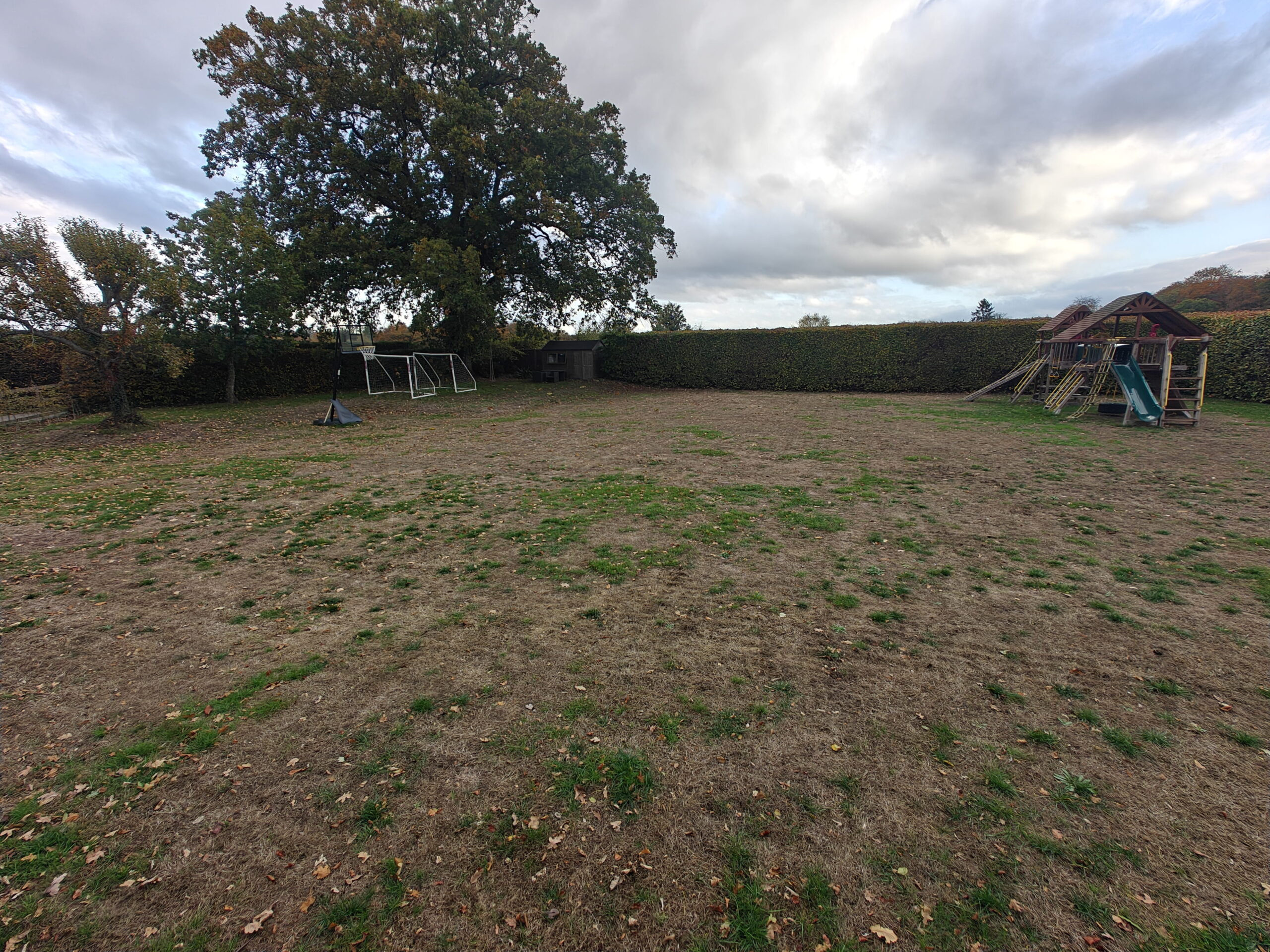
There comes a point every winter when you look out of the kitchen window and conclude that something has gone badly wrong. The lawn is flat. The colour has drained out of it. Parts of it have gone a dull grey that does not look like grass at all, and every footprint made since October is still sitting there like a record of the season.
It is the time of year we get asked, more than almost anything else, whether the lawn has died.
Almost always, it has not. What you are looking at is a plant that has stopped rather than one that has finished, and from a distance the two look remarkably similar. The good news is that telling them apart is straightforward once you know where to look, and you do not need anything more than your hands and a bit of patience.
🎧 Prefer to listen? Get the full guide in your ears
Is My Lawn Dead or Just Dormant?
What Dormancy Actually Is
Grass is a survivor, and dormancy is one of the reasons why. When conditions turn against it, whether that is cold in winter or drought in summer, the plant does something sensible: it stops spending energy on the parts it can afford to lose and protects the parts it cannot.
Leaf is expendable. The plant lets it brown off and withdraws what it can, because growing new leaf is cheap once conditions improve. What it protects is the crown and the root system, and as long as those survive the lawn will come back.
Through a British winter this is driven by temperature. Below roughly five or six degrees the grass is barely growing, so from December through to February it is essentially waiting. It is not producing leaf, it is not repairing wear, and it is not closing the gaps left over from autumn.
That last point explains more about a winter lawn than anything else. You are not really looking at the state of your lawn in January. You are looking at the state it was in when growth stopped in November, preserved exactly as it was until spring. Every mark, every thin patch and every worn route has simply been held in place because nothing has been able to grow over it.
Where the Crown Is, and Why It Matters
Almost every test in this article comes back to the crown, so it is worth knowing what you are looking for.
A grass plant has three parts that matter here. There is the leaf, the part you see and the part you cut. There are the roots, running down into the soil. And between them, sitting right at soil level, is the crown. It is a small, pale, slightly swollen point where the leaf emerges and the roots begin, and it is the growing point of the entire plant.
Everything the grass regrows comes from there. Cut the leaf off and the plant pushes out more from the crown, which is precisely why mowing does not kill a lawn. Grass evolved alongside grazing animals, and the growing point sits low enough that a sheep cannot reach it. Your mower cannot either.
So when we talk about whether a lawn is dead or dormant, we are really asking one question. Is the crown alive? Brown leaf above a living crown is a lawn having a hard winter. A dead crown is a lawn that needs reseeding, because there is nothing left to grow from.
The Test That Settles It
If you want one answer rather than three, this is the one that matters, and it is the test we use ourselves.
Dormancy is a response to conditions, which means it ends when the conditions change. Give a dormant lawn what it was missing and it will respond. In summer that means water, and a drought-dormant lawn begins to green up within a fortnight of proper rain returning. In winter it means warmth, and the lawn starts moving again as soil temperatures rise in March.
Dead grass does not respond to anything, because there is nothing left to respond.
If a lawn has gone grey or straw-coloured and has had two or three weeks of decent rain and reasonable conditions without showing any sign of green returning, it is not dormant. It is dead, and those areas will need reseeding.
That is the honest answer, and it is worth knowing sooner rather than later. A lawn that is genuinely dormant is best left alone. A lawn with dead patches needs a plan.
The reason this test works so well is that it does not depend on your judgement about colour. Plenty of people struggle to tell dormant straw from dead straw by eye, and in honesty so would most professionals at a glance. Time and moisture tell you what looking cannot.
Three Checks You Can Do Today
If you would rather not wait for rain to answer the question, there are three things you can do in about five minutes.
Pull a handful
Take hold of the grass in one of the suspect areas and give it a gentle tug. Dormant grass resists, because the roots underneath are still alive and still anchored. Dead grass comes away in your hand with almost no effort, often lifting like a piece of old carpet.
If it lifts that easily, the roots have gone. That is worth looking into rather than waiting out, because something has usually caused it. Grubs feeding on the root system are a common explanation, and so is prolonged waterlogging.
Look at the crown
Part the grass at the base with your fingers and look at that point where the leaf meets the root. On a dormant plant the crown is still pale green and firm to the touch, even when the leaf above it has gone completely brown. On a dead plant it is brown or grey all the way through, and it feels dry and papery rather than fleshy.
This is the most direct answer available without waiting, and it is why knowing where the crown is matters so much.
Look at the pattern
Step back and consider how the discolouration is distributed, because dormancy and damage look quite different.
Dormancy is even. The whole lawn fades together, or the shaded parts go first and the rest follows over a week or two, but there are no hard edges anywhere. Damage and disease are patchy and defined. They have shapes, often circular, and sometimes they follow a line where people walk or where water collects.
A uniform dull brown across the whole lawn is almost always just winter. Distinct patches with edges you could draw around are worth a closer look.
When We Would Actually Be Concerned
A brown lawn in January does not worry us. There are four things that do, and it is worth knowing them so you can tell the difference between a lawn that needs attention and one that simply needs leaving alone.
The first is turf that lifts with no resistance at all. As above, that means the root system has gone, and something has usually taken it. Chafer grubs and leatherjackets both feed on grass roots, and a lawn that peels back like carpet is the classic sign. Foxes and badgers digging the lawn up at the same time more or less confirms it.
The second is patches with a white or faintly pink cottony growth around the edges, usually most visible early in the morning. That is fusarium patch, and it is one of the few lawn diseases that kills down to the crown rather than just marking the leaf. It spreads in mild damp spells and it needs dealing with.
The third is ground that stays waterlogged for days rather than hours. Roots need oxygen, and soil sitting saturated for weeks on end suffocates them along with the soil life that supports them. That is one of the few ways a winter genuinely kills grass rather than just pausing it.
The fourth is bare ground being taken over by moss. Moss does not go dormant in the way grass does, because low light and damp cold suit it perfectly well. A gap in the sward in November will be a moss patch by March, and the grass cannot contest it until spring.
Why Doing Nothing Is Usually Right
The instinct when a lawn looks poor is to do something about it. Feed it, rake it, roll it, give it a cut. In December and January all of those do more harm than good, and it is worth understanding why rather than just taking our word for it.
Feeding is the one that catches most people. A nitrogen feed produces soft, lush growth, and soft growth going into cold damp weather is exactly what fusarium patch is waiting for. You would be greening the lawn up slightly and handing it a disease that kills to the crown.
Walking on it is the next. Frozen grass blades are brittle, and footsteps crush the cells and rupture the walls. Because nothing is growing, the lawn cannot replace that leaf, so the marks sit there for weeks. The same applies to working saturated ground, which compacts the soil and shows up the following summer as a drainage problem.
And seeding simply will not work. Germination needs soil above roughly eight degrees, and seed sown into cold wet ground rots or washes away. You would be spending money to feed the birds.
The work that decides how a lawn looks in spring was done the previous September and October. By January that ship has sailed, and the most useful thing you can do is let the lawn get on with it.
What Is Actually Worth Doing
Not nothing, but not much either, and all of it is quiet work.
Keep the leaves cleared, because a layer of wet leaf blocks what little light the grass is getting and holds moisture against the crowns, which is how a thin patch becomes a bare one. Keep an eye on where water collects after heavy rain and make a note of it, because that is exactly where aeration needs to go next autumn and it is far easier to spot in January than in June. And get the mower serviced and the blades sharpened while it is sitting idle, which is the job more people should do and almost nobody does.
If the grass has genuinely grown during a mild spell, a very light topping on a dry day will not hurt. Take the tips off and no more. Do not go hunting for a reason to mow.
How We See It
We get asked about winter lawns more than almost any other question, and the answer is usually the same. The lawn is fine, the month is doing what the month does, and the thing to do is wait.
Where there is a genuine problem it tends to be one of three things: fusarium taking hold during a mild damp spell, ground that has been waterlogged long enough to kill roots, or damage from the autumn that has simply been preserved rather than repaired. The first needs attention now. The other two need a plan for the autumn.
Telling those apart is most of the value in a winter visit, and it is why we would rather look at a lawn and tell you it is fine than sell you a treatment it does not need.
We have been established since 2016, we are independent and family owned rather than a franchise, and we cover Hampshire, West Sussex and West Surrey along with Berkshire and the Thames Valley. We hold City and Guilds NPTC pesticide qualifications and BASIS Lawn Assured accreditation, carry full insurance through NFU Mutual, are licensed waste carriers, and are members of the UK Lawn Care Association, whose committee Ian Kenyon sits on.
Frequently Asked Questions
Almost certainly dormant if the browning is even across the lawn rather than appearing in defined patches. The quickest check is to pull a handful of grass: dormant grass resists because the roots are still alive, while dead grass lifts away with almost no effort. Then part the base and look at the crown, which stays pale green and firm on a living plant and goes brown and papery on a dead one.
Give it the conditions it is missing and see whether it responds. Dormancy is a reaction to cold or drought, so it ends when that changes. If a grey or straw-coloured lawn has had two or three weeks of decent rain and reasonable conditions and still shows no sign of green returning, it is dead rather than dormant and those areas will need reseeding.
It is the growing point, sitting right at soil level where the leaf emerges and the roots begin. Everything the plant regrows comes from there, which is why cutting the leaf off does not kill grass. Grass evolved alongside grazing animals and the crown sits below the height anything can reach. It is also the part that decides whether a lawn recovers, since brown leaf above a living crown will come back.
Because it has stopped growing. Below roughly five or six degrees there is no meaningful growth, so the lawn is holding position rather than repairing itself. Colour drains away, footprints stay visible, and any damage from the autumn sits there unfixed. You are essentially looking at the condition the lawn was in when growth stopped in November.
No, and this is the mistake most worth avoiding. Nitrogen produces soft growth, and soft growth going into cold damp conditions is exactly what fusarium patch wants. That disease attacks the crown rather than just the leaf, so it leaves genuinely bare ground. The first feed of the year belongs in March as a controlled-release application.
If the crowns are alive, yes, and usually earlier than people expect. Growth often starts in March before anyone has thought about getting the mower out. Where plants have actually died, though, those gaps will not fill themselves and the areas need overseeding, which belongs in the autumn window or in spring from April.
Because walking on frosted grass crushes the frozen leaf and ruptures the cells. The plant cannot grow replacement leaf while it is dormant, so the damage simply stays where it is. The marks usually appear a few days after the event and often last into spring, which is why keeping off a frozen lawn matters more in winter than at any other time.
Not sure if your lawn is dead or dormant?
Most winter lawns are simply waiting for spring. Where there is a genuine problem, such as fusarium, waterlogging or root damage, we will tell you honestly what needs attention now and what needs a plan for later.




 Made with love by:
