

 Established 2016
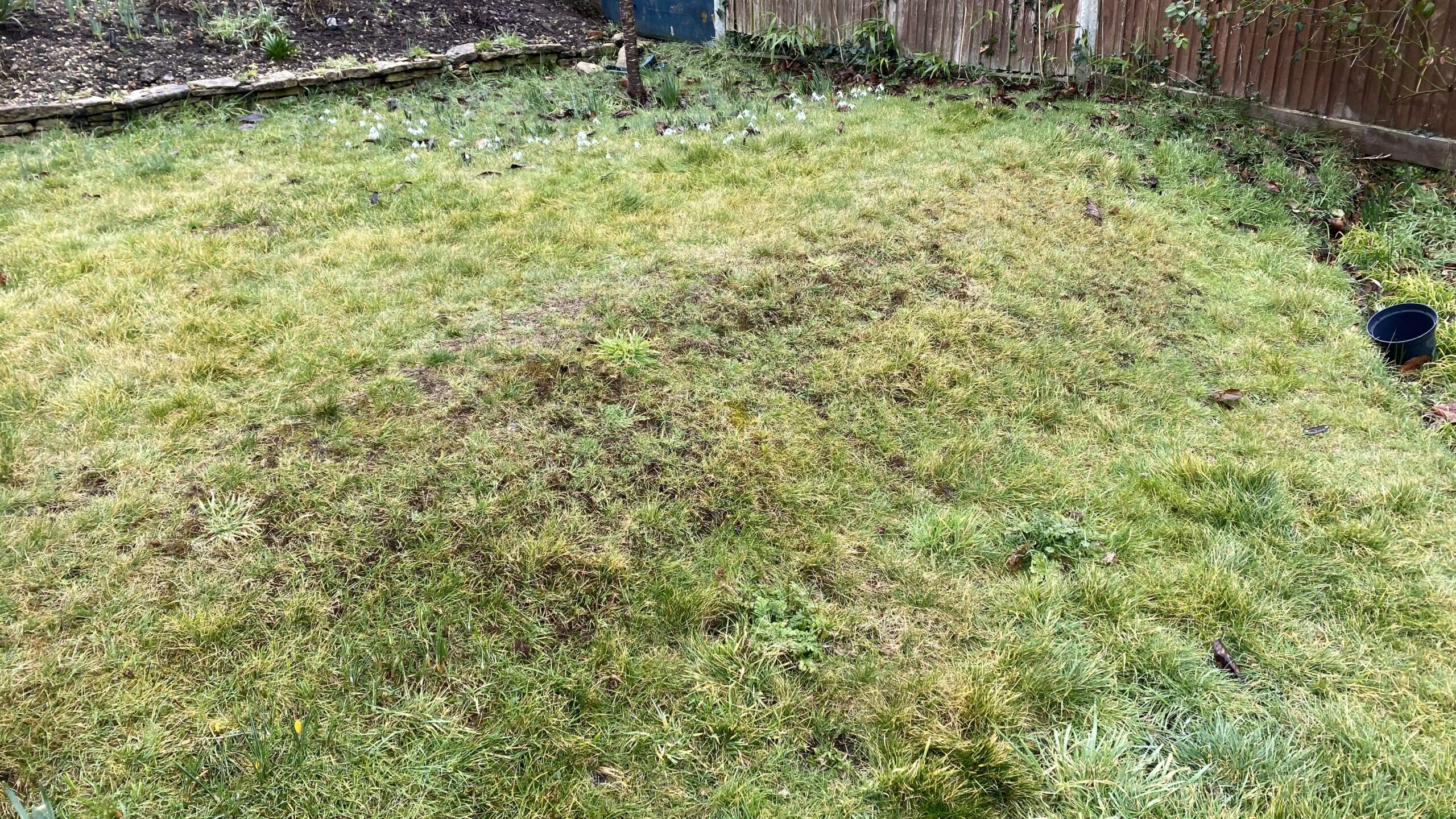
Moss seems to arrive from nowhere in winter. A lawn that looked acceptable in October is visibly mossy by January, and it feels as though something has gone wrong in the space of a few weeks.
What has actually happened is that one of the two competitors has stopped competing. The moss has not become more aggressive. The grass has gone quiet.
The good news is that there are three things that make a genuine difference to a mossy lawn, and a fourth that costs nothing at all and that almost nobody gets right.
🎧 Prefer to listen? Get the full guide in your ears
Why Is Moss Taking Over My Lawn This Winter?
Why Winter Suits Moss
Grass needs light, warmth and growing conditions. From December to February it has none of them, so it is holding position rather than growing.
Moss has none of those requirements to the same degree. It tolerates low light, it is perfectly happy at low temperatures, and it thrives in the damp, still conditions that define a British winter. While the grass is doing nothing, the moss is still working.
So any gap in the sward at the point growth stopped is an opening that moss will occupy over the following months, and the grass cannot contest it until spring.
How Moss Actually Spreads
This is worth understanding before anything else, because it explains why some lawns get steadily mossier year after year despite the owner doing what looks like the right thing.
Moss spreads in two ways.
The first is spores, which is what most people expect. Moss produces spores that travel on the wind and in water, and they settle wherever conditions suit them. Bare soil is the obvious landing site, which is why any gap in a lawn is an invitation.
The second is fragments, and this is the one that catches people out. A piece of broken moss is perfectly capable of establishing as a new colony on its own. It does not need to come from a spore. It just needs to end up somewhere damp and shaded with space around it.
Which means your mower can spread moss across your lawn. If you cut short enough that the blade is going into the moss, you are chopping it into fragments and distributing them evenly across the whole surface, where they colonise and compete with your grass. You are not removing the moss. You are planting it.
That single point changes how you should mow a mossy lawn, and it is covered properly further down.
Winter Reveals Problems Rather Than Causing Them
Moss is an opportunist that colonises space the grass has failed to hold. It is a symptom rather than a disease, and the conditions that let it in were already present before winter arrived.
Shade is the most common of them. Grass needs light to photosynthesise and moss does not need much at all, and winter light levels are low everywhere. Poor drainage comes close behind, because standing water and permanently damp surfaces suit moss and are hostile to grass roots. Compaction works in a similar way: squeezed soil means shallow roots, weaker grass and gaps for moss to take.
Mowing too short does damage on several fronts at once. Scalped grass photosynthesises less, leaves the soil surface exposed to light, and spreads moss fragments across the lawn. Poor nutrition thins the grass, and thin grass leaves space. Acidic soil tilts things further, since grass prefers a pH near neutral and moss tolerates acidity far better. And any existing bare patch is an opening, because moss colonises bare ground considerably faster than grass does.
Clay lawns are particularly prone, because they hold water through winter and the surface stays damp for long periods.
The Three Things That Make a Difference
If you want to significantly improve a mossy lawn, these are the three that matter, in the order they matter.
One: light
Moss loves to hang out in dark places. If there are areas where sunlight is not reaching your grass, those areas are going to be mossy, and no amount of anything else will change that.
So do what you can about the light. Cut back hedges and overhanging trees, thin or crown lift where that is an option, and make sure light can actually get to the lawn. Winter is a reasonable time to do this while the plants are dormant.
Shade is the hardest of the causes to fix and the one that most often defeats everything else. Where a lawn genuinely gets two hours of light a day, the realistic choice is to accept some moss there or to plant that corner as a bed instead.
Two: moisture
If your lawn stays damp through autumn and into winter, it is far more likely to have a moss problem.
Surface compaction is often the contributing factor behind that. Squeezed soil has lost the air spaces water travels through, so instead of draining away the water sits at the surface, which is exactly the condition moss wants and exactly the condition grass roots cannot cope with.
What needs to happen is reducing that compaction so water moves down through the soil profile more quickly, and the way to do that is aeration. We aerate every lawn we look after, every year, as standard, for this reason among others.
Three: treatment
Mossy lawns need moss treatment. The cultural work changes the conditions over time, but on a lawn that is already mossy you also need to deal with what is there.
Our recommendation is to treat in the autumn and again in the winter, which is what really gets it under control. One application on a badly affected lawn is rarely enough, because moss that is suppressed in October has months of ideal conditions ahead of it.
Our moss control is an iron sulphate treatment, applied as a liquid with a wetting agent that helps it penetrate thick moss. It works by dehydrating the moss, and because iron is a nutrient the grass needs it also improves colour and hardens the plant against winter disease. It is applied by qualified technicians at a measured rate.
The Mowing Change That Costs Nothing
This is the professional tip, and it follows directly from how moss spreads.
Raise your mowing height, and never cut into moss.
If you mow short enough that the blade is going into the moss layer, you are shredding it and spreading the fragments across the lawn, where they will colonise and outcompete the grass. You have made the problem worse while believing you were tidying it up.
Raising the cut does two further things. It gives the grass more leaf area to photosynthesise with, which matters when light is already scarce, and it shades the soil surface so moss spores have less opportunity to establish in the first place.
Our winter mowing height is around sixty millimetres, which is higher than most people expect and higher than most advice suggests. On a mossy lawn it is the single easiest change available and it costs nothing.
What Can and Cannot Be Done Now
Moss treatment is a genuine winter job, and it is one of the few things that can usefully happen in the cold months. Moss is at its most active and most visible from autumn through early spring, which is precisely when treating it works.
What cannot happen in midwinter is the mechanical work. Raking or scarifying moss out leaves bare soil sitting open through the wettest months, which is an invitation for it to come straight back, and the grass cannot grow into the gaps until spring. That work belongs in a window when the grass is growing well enough to recover and fill the space.
The order matters on a renovation, and it runs the other way to what most people assume. We scarify first and treat the residual moss afterwards, because the machine lifts out the bulk of it mechanically and the treatment then deals with what is left. Blackening a thick living mat and then having to drag it out is the harder route.
What Not to Do
Do not mow short into moss, for the reasons above. It is the most common way people make a moss problem worse.
Do not rake it out now and leave the ground bare. Without overseeding, which is not viable in midwinter, you are simply creating the conditions for the next lot.
Do not feed nitrogen to push the grass back. Soft growth going into winter is what fusarium patch wants, and that disease kills to the crown, so you would be trading a moss problem for a worse one.
And do not reach for the household remedies that circulate online. Anything that kills moss by direct contact kills grass the same way, because both are plants. Vinegar is the worst of them, since it browns the grass alongside the moss and acidifies the surface, pushing conditions further in the direction moss prefers.
How We Approach It
Moss control runs through autumn, winter and early spring while the moss is active, with treatment in the autumn and again in the winter on lawns that need it.
Around that sits the work that actually changes the conditions. Aeration relieves the compaction keeping the surface damp and the grass shallow-rooted. Scarification removes the thatch layer holding moisture at the wrong level. Overseeding closes the gaps before moss can take them. A sensible mowing height denies moss the light it needs at soil level. And feeding properly keeps the sward dense enough to hold its own ground.
The honest position is that moss control which lasts is cultural first and treatment second. Treatment deals with what is there. The conditions decide whether it comes back.
We have been established since 2016, we are independent and family owned rather than a franchise, and we cover Hampshire, West Sussex and West Surrey along with Berkshire and the Thames Valley. We hold City and Guilds NPTC pesticide qualifications and BASIS Lawn Assured accreditation, carry full insurance through NFU Mutual, are licensed waste carriers, and are members of the UK Lawn Care Association, whose committee Ian Kenyon sits on.
Frequently Asked Questions
Because the grass stops competing and the moss does not. From December to February grass is barely growing, while moss tolerates low light, low temperatures and damp still conditions perfectly well. Any gap in the lawn at the point growth stopped gets colonised over the following months, and the grass cannot contest it until spring.
In two ways. Spores travel on wind and water and settle wherever conditions suit them, usually on bare soil. Fragments of broken moss can also establish as new colonies on their own. That second route is why mowing into moss spreads it: the blade shreds the moss and distributes the pieces across the whole lawn.
Yes, and winter is one of the better times for treatment, because moss is at its most active and most visible from autumn through early spring. We recommend treating in autumn and again in winter on a lawn with a real moss problem. What cannot be done in midwinter is the mechanical removal.
Not in midwinter. Raking removes the visible growth and leaves bare ground that moss recolonises faster than grass can, and overseeding is not viable until soil temperatures recover. The work belongs in a window when the grass is growing well enough to fill the space afterwards.
No, it makes it worse in two ways at once. Short grass photosynthesises less, roots more shallowly and lets light reach the soil surface, which is what moss spores need to establish. Worse, if the blade cuts into the moss it shreds it and spreads the fragments across the lawn. Raise the mowing height and never cut into moss.
It means something is limiting the grass rather than that the moss is attacking it. The usual causes are shade, poor drainage, compaction, mowing too short, poor nutrition, acidic soil or existing bare patches, and most mossy lawns have three or four of them at once. The moss is useful information.
Not directly, since it is not a disease. What it does is occupy space, compete for light, water and nutrients, and hold moisture at the surface so that water and feed struggle to reach the roots. The grass does not get killed so much as crowded out.
Deal with the light if shade is the problem, because nothing else will work until that changes. If the lawn is shaded only in parts, raising the mowing height is the easiest and cheapest change available, and on a lawn that stays damp, aeration to relieve compaction does the most. Treatment then handles what is already there.
Moss taking over your lawn this winter?
Treatment deals with what is there. The conditions decide whether it comes back. We will look at the light, drainage and mowing on your lawn and tell you honestly what will make the difference.




 Made with love by:
