
 Established 2016
 Professional lawncare in Twyford
Your local independent specialist offering tailored programmes for Berkshire's varied soils, shade and seasonal conditions.

We understand what Twyford lawns are up against
Twyford grew from a small coaching village into a compact commuter settlement mostly from the 1960s onwards, and the gardens that came with that expansion were laid out on gravel terrace soil. It is flinty, free-draining ground typical of this part of the Thames Valley. That soil drains well and warms up quickly in spring, but it holds limited moisture in reserve, and that becomes obvious in summer. Gardens on the lower western edge of the village, near the River Loddon, sit on wetter alluvial ground that behaves quite differently through winter, and many of the post-war gardens across the village have never had any soil management work done.
Our technician covers Twyford, Ruscombe, Charvil and the surrounding Wokingham area regularly and understands the gravel terrace and Loddon valley conditions in this part of Berkshire. We assess each lawn individually and recommend treatments based on what is actually limiting it, not a standard programme applied to every property.
Meet your technician
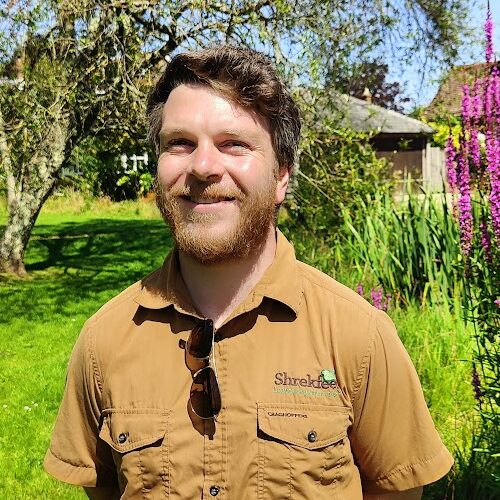
Your local Shrekfeet technician covers Twyford and the surrounding Wokingham area, assessing each lawn individually and building a programme around what is actually restricting it. If you’d like to know more, start with an online assessment or give us a call.
David Fricker
Complete our online lawn assessment or speak to a lawn consultant by phone
What's stopping your lawn from recovering
When the lawn dries out and doesn't recover
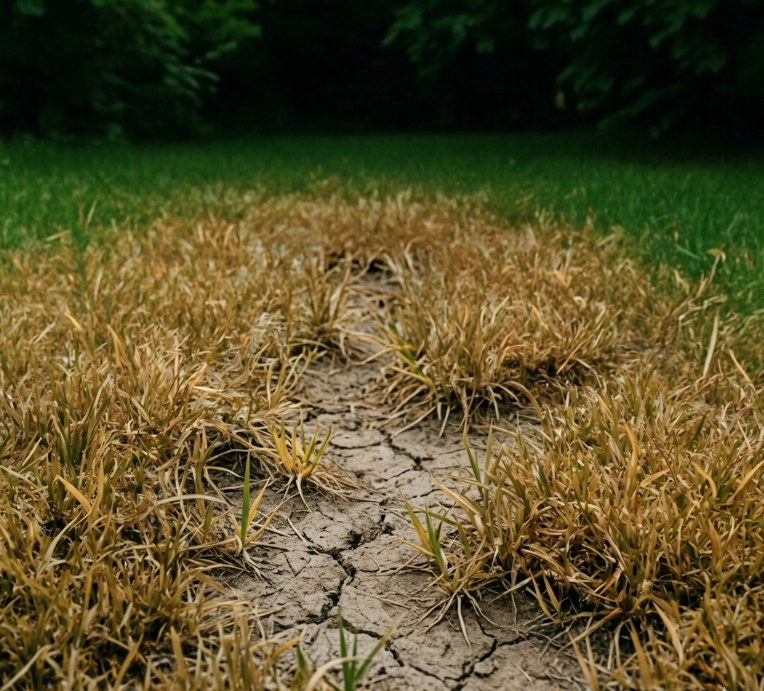
The flinty gravel soils that underlie most of Twyford’s residential areas drain freely and hold limited moisture. When summer dry spells arrive, the ground dries out quickly, roots stay shallow and the lawn starts to thin and pale. On gardens where the gravel lies closer to the surface, the effective depth available for roots is more limited still, and the lawn can go from looking reasonable to looking stressed faster than homeowners expect.
Compaction at the surface makes things worse by reducing how effectively any rainfall that does arrive can penetrate and reach the roots. On severely dry flinty gravel, the soil can also become hydrophobic, meaning it actively repels water rather than absorbing it. At that point, even a decent rainfall event can run off the surface without meaningfully recharging the root zone.
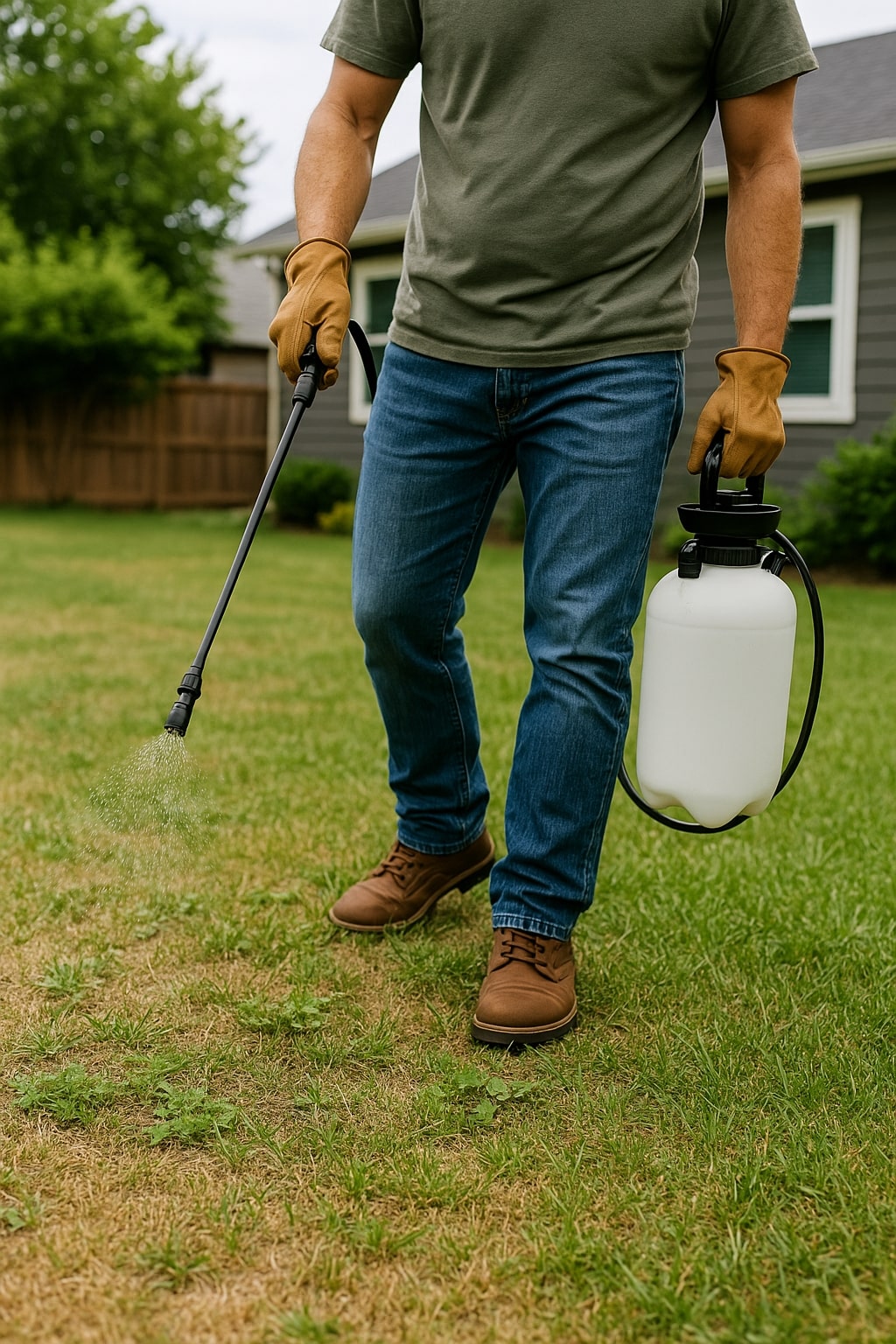
We address this with aeration, overseeding, seasonal lawn treatments and, where the conditions call for it, the application of a professional wetting agent called Drench.
What is Drench and why is it used on Twyford lawns?
Drench is a professional wetting agent used to improve how water moves into and is held within the soil profile. On flinty gravel soils like those across most of Twyford, water drains through quickly and the root zone loses accessible moisture rapidly during dry weather. Drench works by reducing the surface tension of water, which is what causes it to bead and run off dry surfaces rather than penetrate them. Once that tension is reduced, water moves into the surface more readily and then travels laterally through the root zone rather than draining straight down.
The practical effect on a Twyford lawn is that moisture is held where the grass roots can actually use it, for longer than it would be on untreated gravel. That matters most during the extended dry spells that Thames Valley summers regularly produce, when even a week or two without rainfall can push a shallow-rooted lawn into visible stress. Over time, consistent moisture deeper in the profile also encourages roots to grow downward, building resilience that compounds across seasons.
Drench also has a role in winter on the wetter ground near the River Loddon. Applied as a penetrant during the wetter months, it helps surface water move into the profile rather than sitting on top. We use it as part of a wider programme alongside aeration, overseeding and seasonal treatments, working best once the soil has been opened up so the wetting agent can penetrate properly.
When the ground is compacted
Many of Twyford’s residential gardens date from the post-war expansion of the village, particularly the 1960s and 1970s. Gardens on former agricultural and grassland ground have had decades of continuous household use since they were laid out, in most cases without any aeration. On gravel soils, compaction reduces what little moisture-holding structure there is, making the summer drying problem worse, and where any clay sits beneath the gravel it compounds slow drainage through winter.
Compaction works against the lawn in a specific way: it crushes the small air pockets within the soil that hold both oxygen and moisture. Once those pockets are gone, roots cannot access either effectively. The lawn grows slowly, responds poorly to feeding even when conditions otherwise seem reasonable, and is more vulnerable to drought in summer and waterlogging in winter.
Mechanical aeration relieves that compaction by creating channels through the soil, restoring the movement of air, water and nutrients to the root zone. Where compaction has caused thinning, we combine aeration with overseeding and seasonal treatments, and aeration also improves the effectiveness of any moisture management treatments applied afterwards.
hen the lawn stays wet near the river
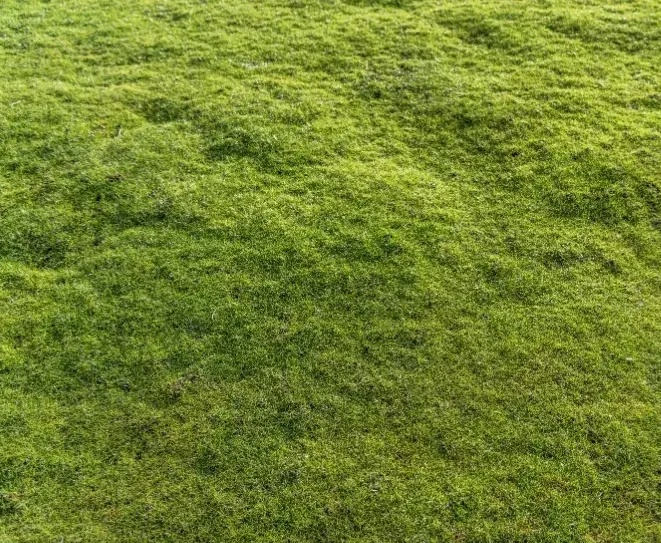
For gardens on the lower western side of the village, close to the River Loddon and its flood meadows, the soil is quite different to the gravel terrace above. Alluvial deposits on the Loddon valley floor hold water through winter and can stay soft and saturated for extended periods. For gardens close to that boundary, winter waterlogging is a regular condition rather than an occasional one.
Saturated soil excludes oxygen from the root zone, which weakens grass roots significantly over time. Walking on soft, waterlogged ground also compacts it, and a lawn in that position can arrive at spring already damaged before any growth has begun. Recovery on alluvial valley floor ground tends to be slower than on the gravel above, and the effects of a difficult winter can persist well into the growing season.
Mechanical aeration relieves compaction, restores oxygen movement through the soil and improves drainage from the surface downward. Drench used as a winter penetrant can support that by helping surface water move into the profile rather than pooling, and where waterlogging has caused thinning we combine aeration with overseeding and seasonal treatments to help the lawn rebuild through spring.
When moss keeps coming back
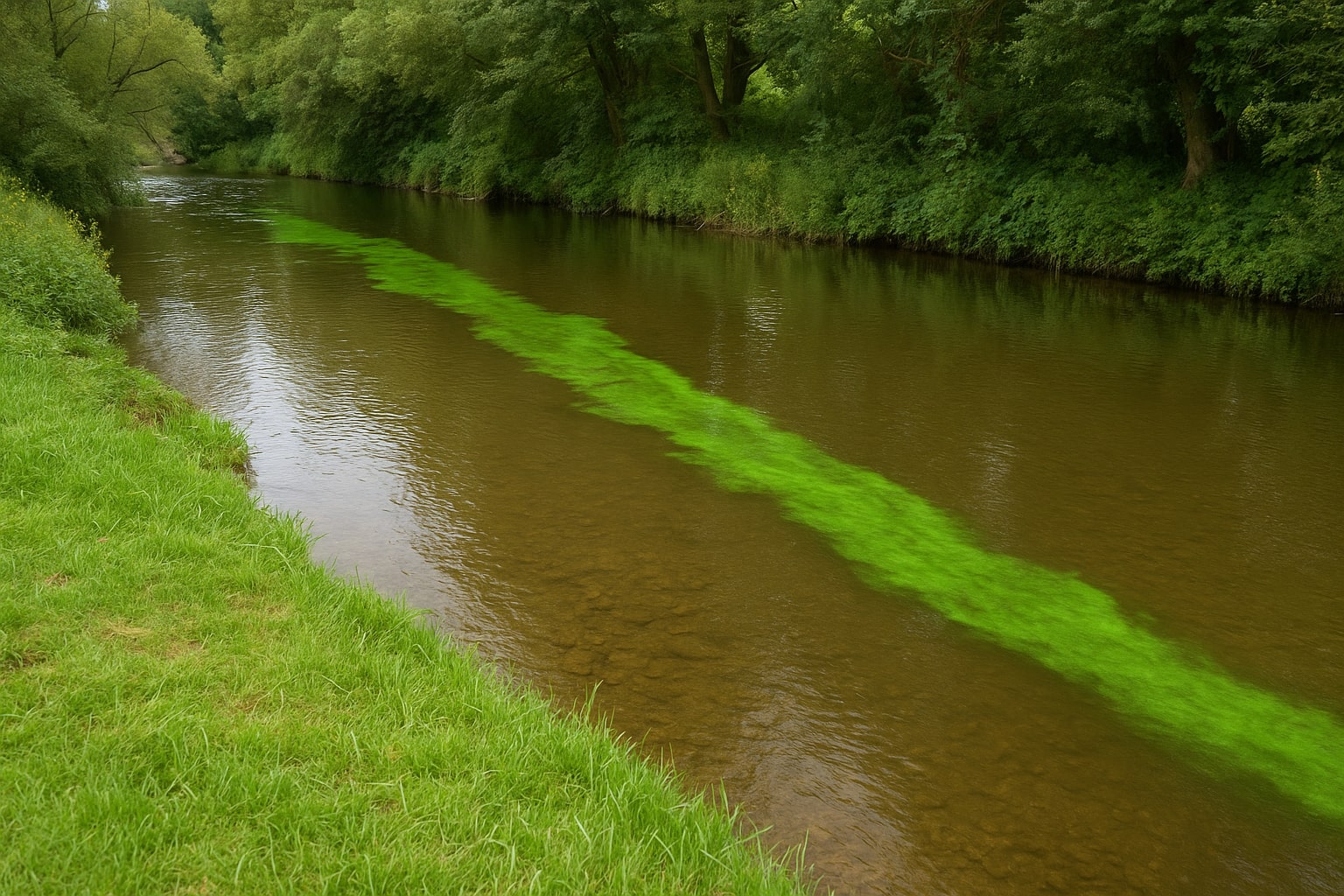
Moss is less common in Twyford than on heavier clay soils further south in Berkshire, but it appears consistently in shaded gardens. North-facing plots, gardens enclosed by close boundary fencing and established hedging all provide the low-light, damp conditions moss requires. Near the Loddon, where the soil holds moisture for longer into spring, conditions remain more persistently favourable for moss through the cooler months.
Moss does not cause a thin lawn. It moves into spaces that weakened or thinning grass has already left behind, whether from summer drought on the gravel, winter waterlogging near the river, compaction from regular use, or shade reducing grass vigour over time. Treating the visible growth without addressing those underlying conditions is why it returns each year.
Our approach combines moss control, scarification and overseeding. Scarification removes dead moss and the thatch layer that builds up in established lawns, and overseeding restores density so there is less bare ground for moss to colonise. Where shade is a permanent feature, we work with the conditions that exist rather than against them.
When the lawn is patchy and uneven
Patchy lawns in Twyford tend to reflect conditions that have been accumulating over time. Gravel soils drying out in summer, wetter alluvial ground near the river struggling through winter, compaction from decades of household use and shaded corners where moss holds ground can all be occurring in the same garden at once. In gardens with a long post-war history, the soil profile below the surface is often in worse shape than the turf above suggests.
We identify what is limiting the lawn before recommending anything. Depending on what we find, the programme might involve overseeding, aeration, scarification, seasonal treatments, moisture management or full renovation. For lawns in worse condition, renovation provides a proper reset and a sounder foundation to grow from. Addressing moisture management is particularly important on Twyford’s gravel soils, where the underlying drainage will always favour quick loss over retention without intervention.

When weeds are spreading through a weakened lawn
Weeds establish themselves when grass thins and leaves space. Summer drought on gravel, winter waterlogging near the Loddon, compaction from long-term use and shaded mossy corners all create those gaps. Certain weed species thrive in drought conditions and are quicker to colonise dry, stressed ground than grass is to recover, so a lawn weakened by a difficult summer becomes more vulnerable at exactly the time it is least able to compete.
We offer targeted weed control, but treat it as part of a wider programme rather than a standalone fix. A dense, healthy lawn competes naturally against weeds, and weed treatment works better and lasts longer when it runs alongside aeration, feeding and overseeding. Improving moisture retention through the root zone also helps maintain density through the dry periods when Twyford’s gravel soils are most vulnerable.
Everything we use is safe for your family, pets and garden wildlife.
Safe for people, pets & wildlifeEverything we use in your garden is safe for everything that uses your garden!
A garden on the gravel terrace in the middle of the village behaves differently to one on the alluvial ground near the Loddon, and both differ again from an older garden with established shade trees or a plot where the gravel lies particularly close to the surface. Soil depth, drainage, shade and the history of the lawn all shape what it actually needs.
We build programmes around what is actually restricting your lawn. Where moisture management is a key issue, which it frequently is on Twyford’s free-draining gravel soils, it is built in from the start rather than treated as an afterthought. The focus is on identifying the cause and treating it properly, not on producing temporary results.
1
Remove guesswork with a professional consultation
Answer a few questions online or speak to a lawn consultant so we can understand your lawn and advise appropriately.
2
A tailored foundation programme for your lawn
Based on the consultation, we create a tailored programme that establishes the right conditions for your lawn to thrive.
3
Professional care begins on site
Your qualified technician surveys your lawn, confirms the correct programme, and begins the improvement process with professional care.
Areas we cover around Twyford
Our local lawn technician covers Twyford and the surrounding Wokingham area, including:
- Twyford
- Ruscombe
- Charvil
- Sonning
- Wargrave
- Hurst
- Winnersh
- Wokingham
- Reading
- Maidenhead
- + surrounding Berkshire & south Oxfordshire villages
If your lawn is struggling with dryness, moss, compaction or patchy growth, we can assess what is causing it and recommend a programme suited to your lawn. Start with a short online assessment or speak to a lawn expert by phone.
Frequently asked questions
Why does my Twyford lawn dry out so quickly in summer?
The flinty gravel terrace soils across most of the village drain freely and hold very limited moisture. Water moves through them quickly and the root zone loses accessible moisture rapidly during dry spells. Aeration improves soil structure and supports root development over time, and seasonal treatments provide nutritional support through the growing season. Where drought stress is a recurring issue, we also use Drench, a professional wetting agent that reduces the surface tension of water, improving its penetration into dry gravel soils and helping moisture move laterally through the root zone rather than draining away. On Twyford’s gravel soils, this can extend the period before the lawn comes under visible stress and support deeper roots that make the turf more resilient through successive dry summers.
Why does my garden on the western side of the village stay wet through winter?
Gardens close to the River Loddon and its floodplain sit on alluvial ground that holds water through the colder months and drains slowly. Saturated soil excludes oxygen from the root zone, which weakens the grass, and walking on soft ground compounds the problem by compacting it further. Aeration relieves that compaction, restores oxygen movement and improves drainage from the surface downward. Drench used as a penetrant through the wetter months can help surface water move into the soil profile more efficiently, reducing pooling and muddy surface conditions and helping the lawn remain usable for longer. Combining aeration with overseeding and appropriate seasonal treatments gives the lawn the best chance of rebuilding a strong root system ready for the growing season.
What does lawn aeration actually do?
Aeration breaks up compacted soil by removing or fracturing plugs of earth through the root zone, creating channels for air, water and nutrients to reach the roots properly. Healthier, deeper roots produce a more resilient lawn that responds better to feeding and recovers faster from stress. On Twyford’s gravel soils, aeration also significantly improves the effectiveness of any moisture management treatments applied afterwards, because the soil is open and receptive rather than sealed off at the surface.
What is Drench and when is it used?
Drench is a professional wetting agent used to change how water behaves in the soil. By reducing the surface tension of water, it allows moisture to penetrate dry or compacted gravel surfaces rather than running off, and helps it move through the root zone rather than draining straight down. In summer, this holds moisture where grass roots can access it for longer, reducing drought stress and supporting deeper root growth. In winter on the alluvial ground near the Loddon, Drench can act as a penetrant, helping surface water move into the profile more efficiently, easing muddy conditions and keeping the lawn in better shape through the wetter months. We use it as part of a broader programme on lawns where moisture management is a limiting factor, particularly on the free-draining flinty gravel soils across Twyford.
Can a patchy lawn recover?
Usually, yes. Overseeding, aeration and the right seasonal treatments make a real difference in most cases. Where the lawn is in worse condition, renovation is often the better starting point because it addresses the underlying soil conditions rather than just the surface appearance. Identifying what caused the patchiness is the essential first step before deciding on the right programme.
Do you use the same treatment plan for every lawn?
No. Every programme is based on the specific issues affecting your lawn. Gravel terrace soils and the alluvial Loddon valley ground behave very differently, and the treatment needs to reflect the actual conditions in your garden. Soil type, drainage, shade history and the condition of the existing turf all shape what we recommend.







 Made with love by: