
 Established 2016
Walk into any garden centre in spring and you will find a shelf of weed control products all making broadly similar promises. Kill the weeds. Protect the grass. Keep the lawn looking its best. The reality is that these products vary considerably in what they can actually achieve, and choosing the wrong one for the weeds in your lawn is one of the most common reasons weed control efforts produce disappointing results.
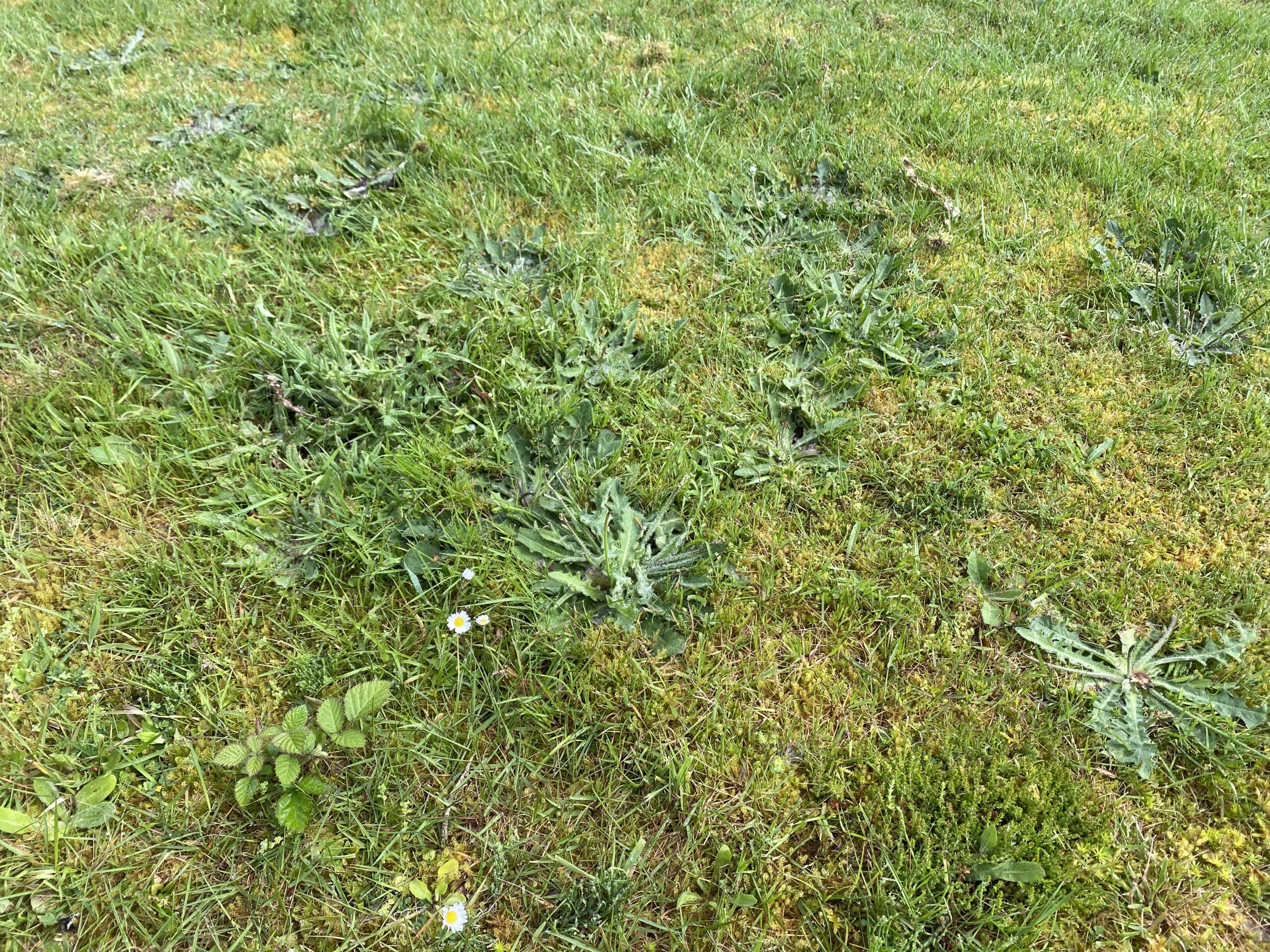
The best weed treatment for your lawn is not the most expensive product on the shelf, or the one with the most confident packaging. It is the product that contains the active ingredients matched to the specific weeds growing in your lawn, applied at the right time of year using the correct technique. Everything else is secondary to those three factors.
This guide covers the different types of weed treatment available for UK lawns, how they work, which species they are and are not effective against, and where the limits of consumer products are and why professional treatment consistently goes further.
The Foundation: How Selective Herbicides Work
All effective lawn weed treatments are built around selective herbicides, products that target broadleaf plants while leaving grass unharmed. This selectivity is based on the different physiology of broadleaf plants and grasses. The active ingredients in selective lawn herbicides are absorbed through the leaves and transported through the vascular system of broadleaf plants, disrupting their growth processes in a way that does not affect the fundamentally different structure of grass leaves.
The active ingredients responsible for this selectivity belong to a group of compounds called synthetic auxins, plant growth hormones that in broadleaf plants cause uncontrolled, distorted growth that exhausts and ultimately kills the plant. In grass, the same compounds have no significant effect because the physiological response pathway is absent.
Selecting the right active ingredient for the weed species present is not a minor detail. It is the difference between a treatment that works and one that does not. Different synthetic auxin compounds have different selectivity profiles across weed species, and the weeds most commonly found in UK lawns are not all equally susceptible to the same ingredients.
The Key Active Ingredients and What They Control
MCPA and mecoprop-P
MCPA and mecoprop-P are the most widely used active ingredients in selective lawn herbicides and are present in the majority of consumer weed control products. They are effective against a broad range of common broadleaf weeds including dandelion, plantain, creeping buttercup, selfheal, and lesser trefoil.
Mecoprop-P is particularly important for clover control. Standard MCPA-only formulations have limited effect on white clover, which is why many homeowners find that their chosen consumer product kills the dandelions and plantain but leaves the clover untouched. Products containing mecoprop-P alongside MCPA produce considerably better results on clover-heavy lawns. Checking the active ingredient list on the label before purchase is therefore essential rather than optional.
Dicamba
Dicamba is frequently combined with MCPA or mecoprop-P to broaden the spectrum of control. It improves activity against clover and certain other species that are less susceptible to mecoprop-P alone, and is commonly found in three-way combination products marketed for more comprehensive broadleaf weed control. Three-way formulations containing MCPA, mecoprop-P, and dicamba represent the most complete option available in consumer-grade selective herbicide products.
Clopyralid
Clopyralid is a professional-grade active ingredient used for the control of particularly persistent or difficult broadleaf weeds, most notably clover, yarrow, and certain other species that consumer products struggle to manage consistently. It is not available in retail consumer products and is restricted to trained and certificated professional operators.
This is one of the clearest practical distinctions between professional weed control and consumer product treatment. On a lawn with significant clover or persistent speedwell pressure, a professional treatment using clopyralid-containing formulations produces substantially better results than anything a homeowner can purchase over the counter. The product itself is materially different, not just the application technique.
Ioxynil and bromoxynil
These active ingredients are used for the control of annual broadleaf weeds and certain species not well controlled by synthetic auxin compounds. They are less commonly encountered in standard domestic lawn products but may be included in specialist formulations for specific weed problems. Their relevance for most domestic lawn situations is limited, but professional operators have access to a broader toolkit that includes these compounds where appropriate.
Consumer Products: What They Can and Cannot Do
Consumer selective herbicide products available in UK garden centres have improved considerably over the years and the better formulations, particularly three-way combinations containing MCPA, mecoprop-P, and dicamba, are genuinely effective against the majority of common broadleaf lawn weeds when used correctly.
The limitations are real, however, and worth understanding clearly.
Species coverage
Single or two-way formulations have meaningful gaps in their species coverage. A product containing only MCPA will not reliably control clover. A product not containing a wetting agent or adjuvant will struggle on speedwell, whose waxy leaf surface sheds spray before adequate absorption can occur. Reading the label and confirming that your specific weeds are listed is essential.
Concentration and formulation
Consumer products are formulated and diluted for safe self-application by untrained users, which means the active ingredient concentrations are lower than professional formulations. This is entirely appropriate from a safety and regulatory standpoint, but it also means that on a difficult infestation, or on a species at the boundary of the product’s effectiveness, the lower concentration may produce incomplete control where a professional formulation would not.
No adjuvants
Professional spray mixes include adjuvants, specialist additives that improve the performance of the active ingredient. These include wetting agents that break down the surface tension and waxy coatings on difficult-to-wet leaves, sticker additives that improve adhesion and resistance to light rain after application, and penetrants that improve absorption through the leaf surface. Consumer products do not contain these additives, and the difference in performance on species such as speedwell and clover is measurable.
Application precision
Professional spray equipment, calibrated to deliver an accurate and consistent dose per square metre, produces more even coverage than a watering can rose, hand-held trigger sprayer, or even a consumer knapsack sprayer used without calibration. Uneven application produces uneven results: some areas receive an effective dose, others do not, and the weed survives in the under-treated patches and recolonises from there.
Combined Feed and Weed Products
Granular products that combine a spring fertiliser with a selective herbicide are popular for their convenience, and on a well-managed lawn with light to moderate weed pressure they can be effective. Understanding their limitations helps set realistic expectations.
The herbicide in a granular combined product is only released when the granule dissolves, which requires moisture. On dry ground with no rain forecast, the fertiliser component provides the immediate visible benefit of greening the lawn while the herbicide sits unreleased on the soil surface. If rain does not follow within a day or two, the product has limited weed control effect.
The granule must also land on and adhere to the weed leaf to be effective, which is less reliable than a liquid application that coats the leaf surface comprehensively. Rosette weeds with flat, broad leaves are reasonably well contacted by granular application. Low-growing spreading weeds with small leaves, such as speedwell, are poorly contacted and therefore poorly controlled by granular methods.
For lawns with significant weed pressure, or where difficult species are present, a liquid selective herbicide applied by sprayer is the more reliable choice. Combined granular products are a reasonable maintenance tool for keeping light weed populations in check alongside spring feeding, but should not be relied upon as the primary treatment on a weedy lawn.
Timing: The Factor That Determines Whether Any Treatment Works
The best product in the world produces poor results if applied at the wrong time. Selective herbicides work by entering actively growing plant tissue and being transported through the vascular system to the roots. If the plant is not actively growing, that translocation does not happen and the treatment produces surface damage at best without killing the root.
Early to mid-spring, when soil temperatures are above ten degrees Celsius and weeds are in vigorous growth, is the most effective treatment window for the majority of UK lawn weeds. Treatment during this period catches weeds before they set seed, which reduces the ongoing soil seed bank. It also aligns with the period of fastest uptake and most reliable translocation to roots.
Summer treatment is effective when weeds are actively growing but should be avoided during drought stress or heatwaves. Treat in the early morning or evening to prevent the product drying too quickly before absorption. Autumn provides a secondary window in September and October before growth slows with cooling temperatures.
Do not mow for three to four days before treatment, as this maximises leaf surface area available for absorption. Do not mow for three to four days after treatment, as mowing removes treated tissue before the active ingredient has fully translocated to the root. These two rules alone improve treatment outcomes significantly compared to treating without regard for the mowing schedule.
Organic and Non-Chemical Approaches
For homeowners who prefer to avoid synthetic herbicides, the options for weed control in an established lawn are more limited but not without value.
Iron sulphate, commonly applied as part of a moss control treatment, has a secondary hardening and suppression effect on some broadleaf weeds when applied at appropriate rates. It does not kill established broadleaf weeds but can reduce their vigour and improve their susceptibility to mechanical removal. It is most useful as a complementary measure rather than a standalone weed treatment.
Improving grass density through overseeding, feeding, and aeration is the most genuinely organic approach to long-term weed suppression. Dense, vigorous grass reduces weed establishment through natural competition. This is a slow strategy and does not remove established weeds, but on a lawn where weeds are a recurring problem rather than an entrenched infestation, consistent grass health management gradually reduces weed pressure year on year without chemical intervention.
Hand removal is effective for isolated rosette weeds when the complete root is extracted. It is not practical at scale and is counterproductive for spreading weeds that regenerate from stem fragments.
What Professional Treatment Delivers That Consumer Products Cannot
The difference between professional weed treatment and a consumer product application is not simply a matter of expertise, though that matters too. It is a combination of product access, formulation quality, application precision, and the integration of weed control within a wider lawn health programme.
At Shrekfeet, our technicians begin every treatment visit with an assessment of the weed species present in your specific lawn. This determines the product selection for that visit. A lawn with significant clover pressure receives a formulation containing the active ingredients proven effective on clover, not a generic broadleaf treatment that may or may not address the primary species. A lawn with speedwell receives a treatment with appropriate adjuvants to overcome the leaf surface resistance that makes speedwell so difficult to control with standard products.
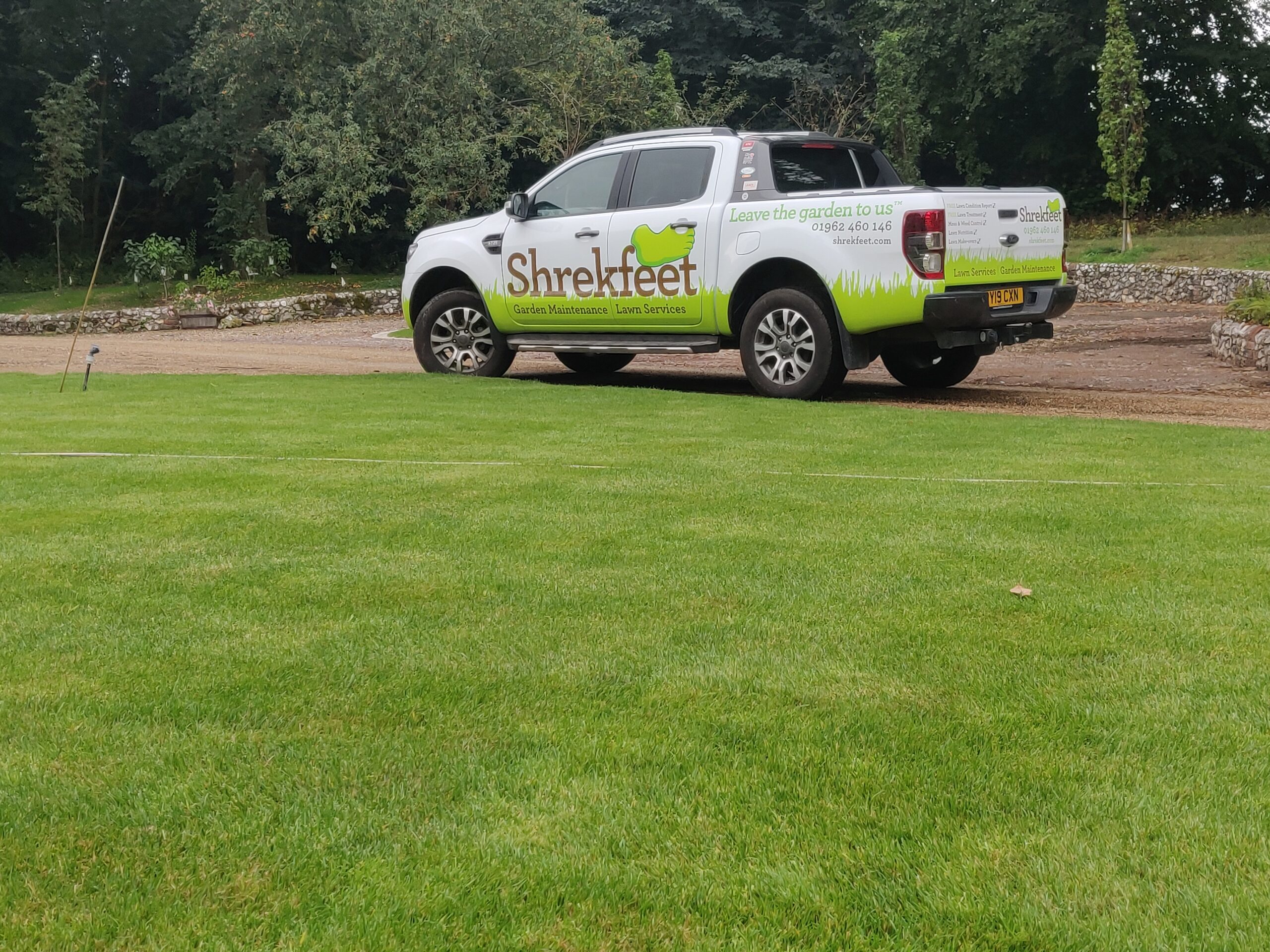
Our spray equipment is calibrated for accurate dosing across the full lawn area, and our mixes include professional-grade adjuvants that genuinely improve performance on difficult species. Our technicians hold NPTC qualifications and are trained in species identification and appropriate product selection. We carry BASIS Lawn Assured accreditation for the safe and responsible use of plant protection products.
Weed control is one component of our Professional Lawn Treatment Plan, which works alongside seasonal feeding, moss control, and aeration to support the grass health that makes weed control progressively less demanding over time. We cover Hampshire, Surrey, West Sussex, and Berkshire.
Frequently Asked Questions
For consumer products, a three-way selective herbicide containing MCPA, mecoprop-P, and dicamba covers the broadest range of common UK lawn weeds and is more effective on clover than single or two-way formulations. For difficult species, particularly clover or speedwell that have not responded to consumer products, professional treatment using formulations with additional active ingredients such as clopyralid, combined with adjuvants that are not available in retail products, produces materially better results.
Clover has a waxy leaf surface that resists many standard herbicide formulations, and not all consumer products contain the active ingredients needed to control it reliably. Mecoprop-P is the primary active ingredient for clover control. If your product does not contain it, clover will not respond well regardless of how carefully you apply it. Products also need to be applied with a wetting agent to overcome the waxy leaf surface, which consumer products do not always include. Professional treatment with the correct formulation and adjuvants is the most reliable solution for persistent clover.
On a lawn with moderate weed pressure and species that respond well to selective herbicide, a single spring treatment combined with follow-up overseeding of bare patches produces a significant and lasting improvement. On a more heavily infested lawn, or one containing difficult species such as speedwell or established clover mats, two treatments, typically spring and autumn, are more reliable. Consistent ongoing management combining treatment with feeding and overseeding produces the best long-term results.
Yes, once the treated lawn is fully dry. Shrekfeet use fully licensed plant protection products applied by trained and certificated technicians. Every product we use has been tested and approved as safe for people, pets, and wildlife, including pollinators, once the lawn surface is dry. Our technicians will always advise the specific re-entry time for each treatment visit.
Repeated use of exactly the same active ingredient year after year can, over time, favour weed populations that are less susceptible to that specific compound. Professional operators rotate active ingredients and adjust formulations based on the species and pressure levels observed at each visit, which produces better long-term control than applying the same product on a fixed annual schedule. This is one of the less obvious advantages of professional treatment over a fixed consumer product routine.
Avoid treatment during drought stress or dormancy, as uptake is poor and the grass is more susceptible to the minor stress of herbicide application. Avoid treatment in the first few days after mowing, which reduces leaf surface area. Avoid treatment when rain is forecast within four to six hours. Avoid treatment in windy conditions that cause spray drift. And avoid late autumn treatment when weed growth has effectively stopped for the season, as translocation to the roots is insufficient for reliable kill.
Weeds not responding to consumer products?
Our technicians cover Hampshire, Surrey, West Sussex, and Berkshire. We will identify the specific species in your lawn and apply the professional-grade treatment matched to them, not a generic programme that may miss the worst offenders.







 Made with love by: