

 Established 2016
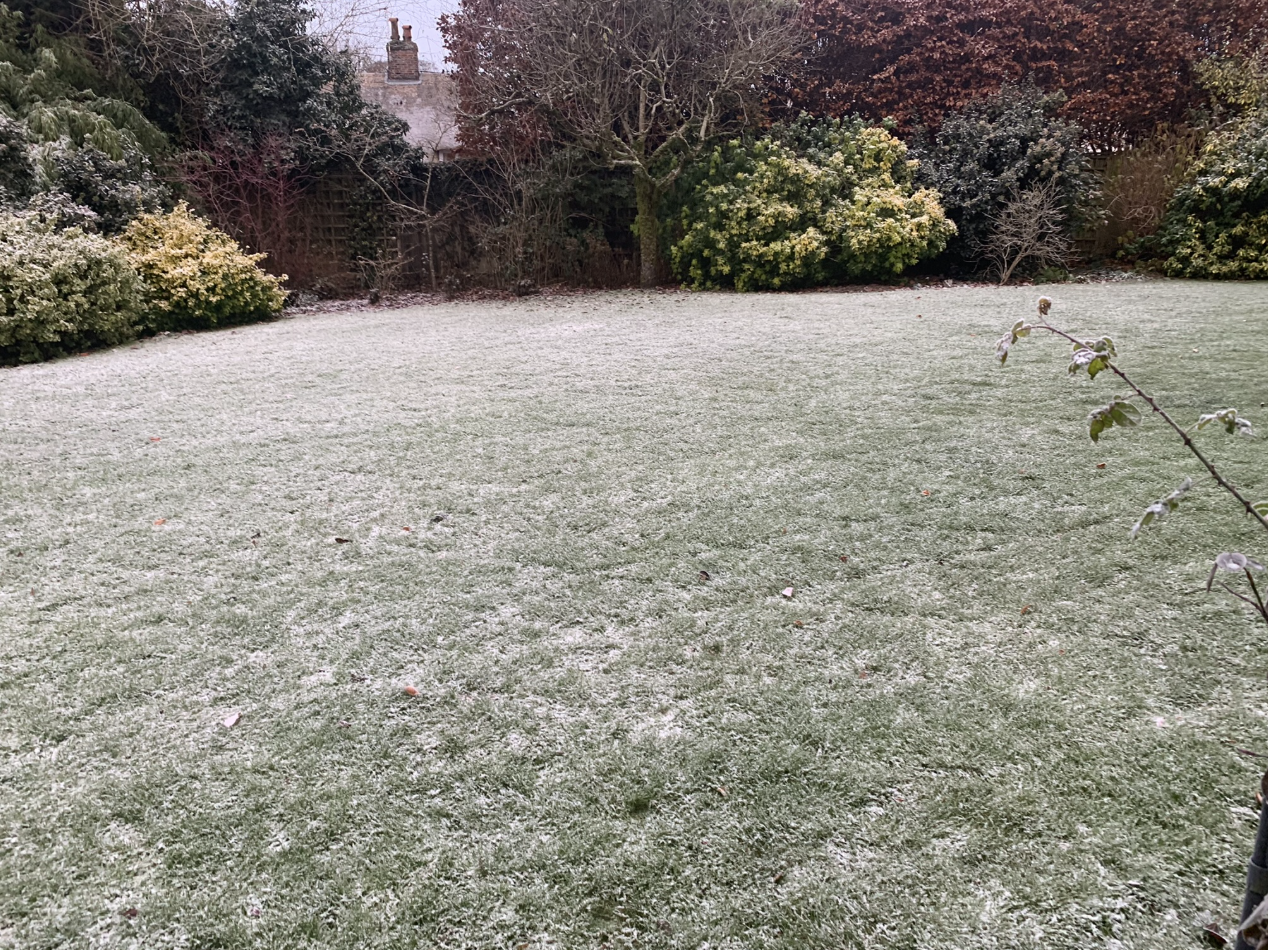
A frosty lawn can look beautiful. Silvered blades, crisp edges, and a quiet stillness across the garden.
It can also be surprisingly fragile. Here is what frost actually does to grass, and why walking across a frozen lawn can leave damage that lasts well into spring.
🎧 Prefer to listen? Get the full guide in your ears
Frost Damage: What Is It and Why Does It Matter?
What Happens When Grass Freezes
Grass blades are made up of living cells filled with water. When temperatures drop below freezing, that water forms ice crystals. Ice expands, the blade becomes rigid and brittle, and it loses its flexibility.
At that point the grass is vulnerable in a way it is not at any other time of year.
Walk across a frosted lawn and the pressure crushes those frozen cells, rupturing the cell walls and bruising the leaf. The damage is not always visible immediately. It usually appears days later as dark areas, and later still as straw-coloured footprints tracking exactly where you walked.
Once those cells are ruptured they cannot recover. The plant has to grow new leaf tissue to replace what was damaged, and in January it is not growing. That is why the marks sit there for weeks and sometimes well into spring.
This is the thing that catches people out. In June a footprint across the lawn is gone within days because the grass grows over it. In January there is no growth to cover anything, so every mark made between December and March stays visible until the lawn starts moving again.
Is Frost Damage Serious?
In most cases frost damage affects the leaf rather than the crown of the plant, which is the growing point the grass regenerates from. The lawn will recover as growth resumes in spring.
There are two reasons not to dismiss it entirely.
The first is disease. Ruptured cells are an open door for fungal infection, and fusarium patch and snow mould are the two that take advantage. Those thrive in cool, damp, still conditions, which is exactly the weather that follows a frost in a British winter. Fusarium is also one of the few lawn diseases that attacks the crown rather than only the leaf, so an outbreak can leave genuinely bare ground rather than discoloured grass.
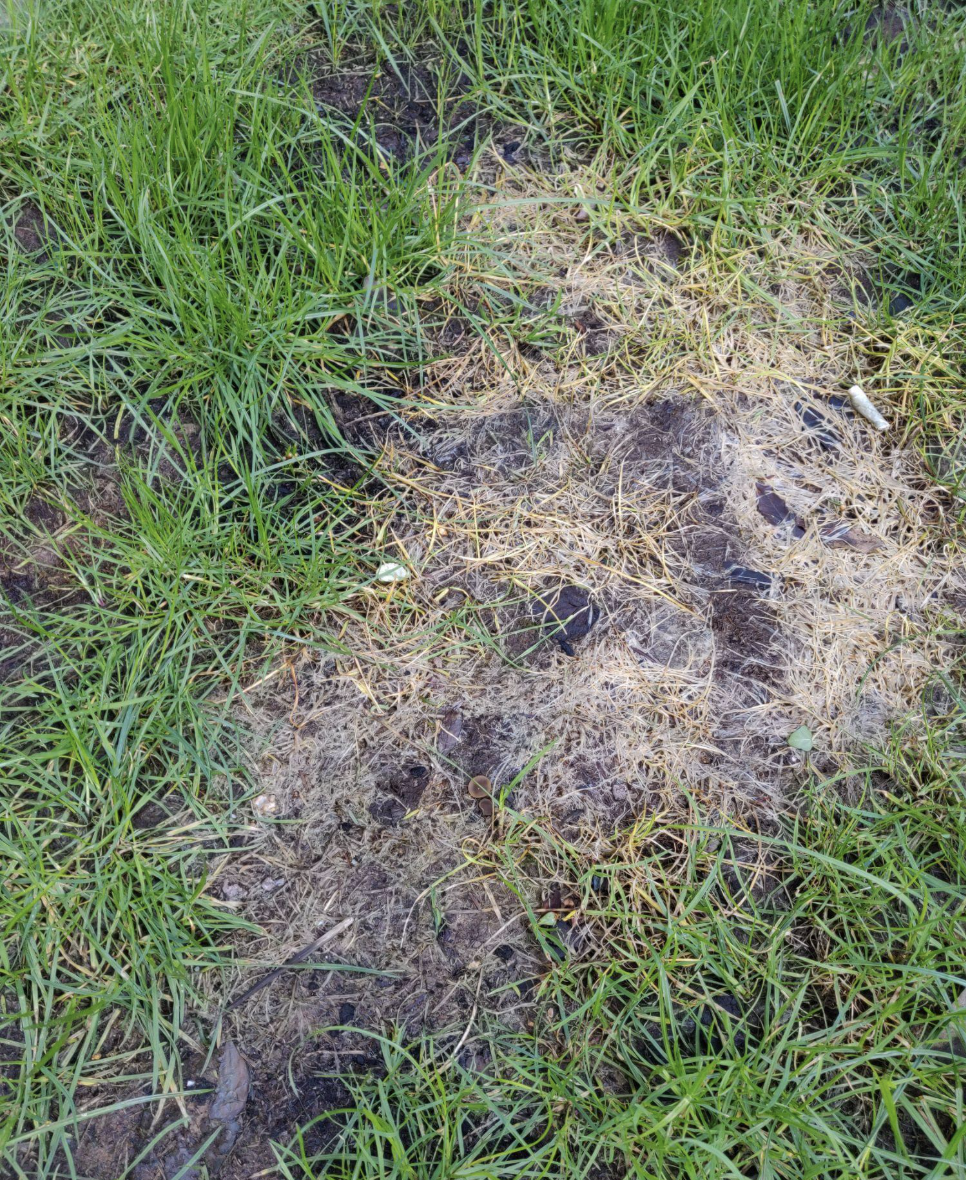
The second is cumulative. Repeated damage across a winter weakens the lawn and creates thin areas, and thin areas in winter get colonised by moss and weeds. Moss does not stop for the cold in the way grass does, so a gap created in January is a moss patch by March.
Lawns that are already stressed, compacted, waterlogged or poorly fed are more susceptible to all of it. As with most things in lawn care, resilience begins below the surface.
The Difference Between Frost and Snow
Snow and frost are often lumped together and they behave very differently.
Snow insulates. A layer of it sitting on a lawn actually protects the grass from deeper freezing, and lawns under snow cover generally come through cold spells better than exposed ones.
Frost leaves the leaf exposed and brittle with nothing between it and the air. A clear, cold morning following damp conditions is when a lawn is most at risk, because there is moisture in the leaf to freeze and no cloud cover to hold any warmth in.
The one thing snow does bring is the conditions snow mould likes, which is why the disease is often most visible as snow melts off a lawn.
What Should You Do?
Very little, and that is usually the right answer in winter lawn care.
If the lawn is frosted, avoid walking on it, keep pets off where you reasonably can, and wait until the frost has fully lifted before crossing it.
Do not try to brush the frost away and do not attempt to help it thaw. Both do more damage than leaving it alone.
If a route across the lawn is unavoidable, whether that is the path to the bins, the shed or the back gate, stepping stones or a temporary path of bark or gravel boards will take the pressure off. It sounds trivial and it makes a considerable difference across a winter.
Patience is worth more than intervention here. The lawn is not asking you for anything in January.
What Not to Do While the Lawn Is Frozen
A few things worth naming, because the instinct in winter is to try to help.
Do not mow a frozen lawn. The blade cannot cut frozen tissue cleanly and the mower adds its own weight to the damage.
Do not feed. Nitrogen in winter produces soft growth that fusarium takes, and nitrogen feeding should stop by November. The first feed of the year belongs in March as a controlled-release application.
Do not aerate frozen ground. Aeration is not locked to a season and can be carried out whenever conditions allow, but frozen ground will not take a tine and saturated ground smears rather than fracturing, so the machine does more compacting than relieving.
Do not sow seed. Germination needs soil above roughly eight degrees, and seed sown into cold wet ground rots or washes out.
Preparing for Spring
If you notice areas that look thin once temperatures rise, the useful response is to strengthen the lawn rather than react immediately to the symptom.
Make sure drainage is adequate, since waterlogged soil drives the air out and the roots and soil biology suffer together. Note over winter where water sits after heavy rain, because that tells you exactly where aeration needs to go later in the year and it is far easier to see in January than in June.
Avoid compaction, which means staying off saturated ground and giving regular routes an alternative.
Plan the feeding for the right times rather than the convenient ones. A lawn fed four to five times at the correct points in the season is a different proposition from one given an occasional bag of something in April.
And going into the following winter, raise the mowing height towards sixty millimetres for the final cuts rather than taking the lawn down short. More leaf means a stronger plant and better protection for the crown underneath.
How We Approach Winter
Our winter work is deliberately light. Moss control is the main treatment, applied through autumn, winter and early spring when moss is most active and visible. Beyond that the lawn is left alone until growth returns.
The work that decides how a lawn comes through a winter is done in September and October: aeration, scarification, overseeding and top dressing, with an autumn feed that is lower in nitrogen and higher in potassium to harden the plant rather than push soft growth. A lawn that goes into December well rooted and correctly fed handles frost in a way that a thin, compacted one does not.
We have been established since 2016, we are independent and family owned rather than a franchise, and we cover Hampshire, West Sussex and West Surrey along with Berkshire and the Thames Valley. We hold City and Guilds NPTC pesticide qualifications and BASIS Lawn Assured accreditation, carry full insurance through NFU Mutual, are licensed waste carriers, and are members of the UK Lawn Care Association, whose committee Ian Kenyon sits on.
Frequently Asked Questions
Yes, and the damage lasts longer than people expect. Frozen grass blades are rigid and brittle, so pressure crushes the cells and ruptures the cell walls. The marks often appear days later as dark areas and then as straw-coloured footprints, and because the lawn is not growing in winter there is nothing to cover them until spring.
Usually yes. Frost normally damages the leaf rather than the crown, which is the growing point the plant regenerates from, so the lawn grows through it once temperatures rise. Where it matters more is when ruptured cells let fungal disease in, or when repeated damage thins the lawn enough for moss to take hold.
No, snow is generally kinder. A layer of snow insulates the lawn and protects it from deeper freezing, while frost leaves the leaf exposed and brittle. The risk snow brings is disease, since snow mould is often most visible as the snow melts away.
No. Brushing frozen grass crushes and ruptures the cells in exactly the way walking on it does, so you cause the damage you are trying to prevent. Leave it to lift on its own.
Neither. A mower cannot cut frozen tissue cleanly and adds its own weight to the damage. Feeding is worse, because nitrogen in winter produces soft growth that fusarium patch takes, and that disease attacks the crown rather than just the leaf. Nitrogen feeding should stop by November.
Frost damage, almost always. The frozen leaf is crushed underfoot, the cells rupture, and the tissue dies back to a straw colour over the following days. Because growth has stopped, the lawn cannot replace the damaged leaf until spring, so the pattern of where you walked stays visible for weeks.
Want a lawn that comes through winter in better shape?
The work that decides it happens in September and October, not January. We assess each lawn before recommending anything and we will tell you honestly what it needs and what can wait.




 Made with love by:
