
 Established 2016
A frosty lawn can look beautiful.
Silvered blades. Crisp edges. A quiet stillness across the garden.
It can also be surprisingly fragile.
Let’s take a look at what frost actually does to grass — and why walking across a frozen lawn can leave damage that lasts well into spring.
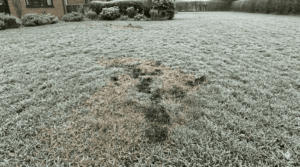
What happens when grass freezes?
Grass blades are made up of living cells filled with water.
When temperatures drop below freezing, that water forms ice crystals. Ice expands. The blade becomes rigid and brittle. It loses flexibility.
At this point, the grass is vulnerable.
If you walk across a frosted lawn, the pressure crushes those frozen cells and ruptures the cell walls, creating bruised grass leaves. The damage is not always visible immediately. Often, it appears days later as dark areas and later as straw-coloured footprints.
Once those cells are ruptured, they cannot recover. The plant must grow new leaf tissue to replace what was damaged — and that takes time.
Is frost damage serious?
In most cases, frost damage affects the leaf, not the crown of the plant. The grass will recover as growth resumes in spring. However ruptures cells are vulnerable to lawn diseases such as fusarium patch and snow mould.
However, repeated damage can weaken the lawn and create thin areas that become prone to moss or weed ingress.
Lawns that are already stressed, compacted, waterlogged, or poorly fed are more susceptible.
As with most things in lawncare, resilience begins below the surface.
The difference between frost and snow
Snow can actually insulate a lawn, protecting it from deeper freezing.
Frost, on the other hand, leaves the leaf exposed and brittle. A clear, cold morning following damp conditions is when lawns are most at risk.
What should you do?
Very little.
That is often the right answer in winter lawncare.
If the lawn is frosted:
-
Avoid walking on it
-
Keep pets off where possible
-
Wait until the frost has fully lifted
Do not try to brush frost away. Do not attempt to “help” it thaw.
Patience is more valuable than intervention.
Preparing for spring
If you notice areas that look thin once temperatures rise, focus on strengthening the lawn rather than reacting immediately.
-
Ensure drainage is adequate.
-
Avoid compaction.
-
Plan feeding at the correct time.
A healthy, well-prepared lawn is less vulnerable to environmental stress.
Frost is a natural part of winter. Damage is not inevitable, but it is often preventable.
And sometimes, the best lawncare decision is simply knowing when not to step forward – litterally!







 Made with love by: