

 Established 2016
Most lawn disease is a cosmetic problem. The grass looks poor for a few weeks, it grows through it, and by the time summer arrives you have forgotten it ever happened. Red thread is the obvious example. It looks alarming, it does very little real harm, and the lawn recovers on its own.
Fusarium patch does not work like that, and it is worth understanding why.
Most turf diseases attack the leaf. Fusarium goes further and attacks the crown, which is the growing point at the base of the plant where new leaf comes from. Kill the leaf and the grass pushes out more. Kill the crown and the plant is gone, and what you are left with is bare ground rather than discoloured grass.
That matters more than it might sound, because bare ground in winter does not stay bare. Moss is perfectly happy in cold, damp, low light conditions and carries on working while the grass is dormant, so a gap created by fusarium in December is a moss patch by March. A disease problem quietly becomes a renovation job.
🎧 Prefer to listen? Get the full guide in your ears
Fusarium Patch: The Lawn Disease That Arrives in Winter
What It Looks Like
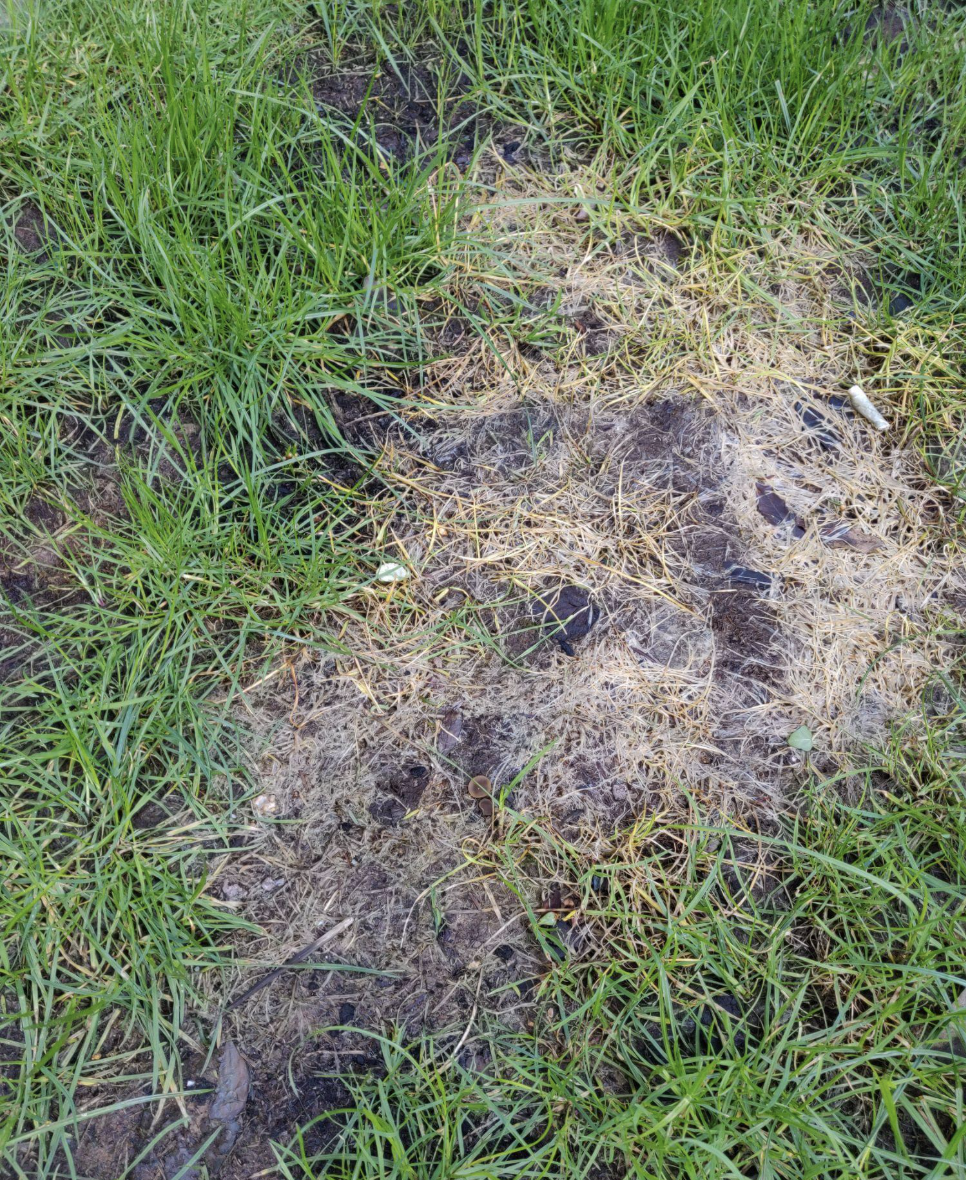
It starts small. You will see patches of yellowish, dying grass, usually only a few centimetres across to begin with, which turn brown as they develop. Left alone they spread outwards and often merge into one another, so what began as a scattering of coin-sized spots can become a large affected area within a few weeks.
The clearest identifier appears in wet conditions. Look closely at the edge of a patch, ideally first thing in the morning before the dew has lifted, and you may see a fine white or faintly pink cottony growth. That is the fungus itself, and nothing else on a lawn looks quite like it.
The pink colouring is where some of the old names come from, and the white growth is why it is also called snow mould, since it tends to be most obvious when snow melts off a lawn and leaves the affected areas exposed.
The thing actually worth establishing is whether the plant has died or only the leaf is marked. Part the grass in an affected patch and look at the base. If the crown is still pale green and firm, the lawn will recover when growth returns. If it is brown and dry through, those plants have gone and the gap will need reseeding.
What Triggers It
The weather provides the opportunity. Cool, damp, still conditions are what the fungus needs, and that describes a great deal of a British autumn and winter, which is why the disease is so common here.
But weather alone is rarely enough, and this is the useful part. The things that tip a lawn from being merely at risk into having an active outbreak are mostly management decisions made earlier in the year. Four of them matter more than the rest.
High nitrogen applied late in the season
This is the big one, and it is the mistake most worth avoiding.
Nitrogen drives leaf growth. Applied late in the year it produces soft, lush tissue at exactly the point when the plant has no time to harden it before the cold arrives. Thin-walled, water-filled leaf going into a damp British winter is close to an invitation, and fusarium takes it.
The frustrating part is that this looks like good lawn care. The owner feeds the lawn in late autumn, it greens up for a fortnight, and they feel they have done the right thing. The damage shows up in January, by which point nobody connects the two.
Poor air movement
The fungus needs the leaf to stay wet, so anything that slows down how quickly a lawn dries is working against you.
Enclosed gardens with fences or walls on several sides are the usual culprits, along with areas sitting under overhanging trees and shrubs. Air simply does not circulate, moisture sits on the leaf for hours longer than it would in the open, and the same corners of the same lawns get the same outbreak year after year.
Cutting back overhanging growth makes a genuine difference here, and it is worth doing while the plants are dormant over winter.
Heavy thatch
Thatch is the layer of dead and decaying material that builds up between the green leaf and the soil surface, and a thick layer holds moisture at precisely the worst level, right at the base of the plant where the crown sits.
What you end up with is a permanently damp microclimate wrapped around the exact part of the grass the disease wants to attack. The lawn may look dry on top and still be giving the fungus everything it needs underneath.
This is one of the reasons thatch control is worth taking seriously rather than treating as a cosmetic matter. Scarification removes it, and a lawn going into winter with an open surface carries considerably less risk than one entering it with a dense organic layer in place.
Scalped or very short grass
Cutting a lawn short going into winter is a common habit and it works against the plant in several ways at once.
Leaf is how grass makes its food. Remove too much of it and the plant has less photosynthetic area at the time of year when light is already in short supply, so it goes into winter with lower energy reserves and less in the tank to resist anything. Scalping compounds that by cutting into the stem and crown itself, which damages the growing point directly and leaves an open wound for infection.
Short grass also exposes the soil surface, which changes the microclimate at the base of the plant and gives moss the light it needs to establish alongside everything else.
The answer is to go the other way. Our winter mowing height is around sixty millimetres, which is considerably higher than most people expect and higher than most advice suggests. More leaf means a stronger plant, better energy reserves through the darkest months, and a shaded soil surface.
Prevention Does Most of the Work
Fusarium is a disease where the treatment options are genuinely limited and the preventative ones are genuinely effective. That is an unusual balance and it means effort is far better spent before an outbreak than during one.
The single most valuable decision is the feeding one. Do not apply a high nitrogen product late in the season. A proper autumn feed is lower in nitrogen and higher in potassium, which strengthens cell walls and hardens the plant rather than pushing soft growth, and that one choice does more than everything else on this list combined.
After that it is about conditions. Keep thatch under control through scarification so the base of the plant is not sitting in a damp layer. Improve air movement where you can by cutting back overhanging growth. Raise the mowing height going into winter rather than lowering it. And if you are able to, brushing heavy dew off the lawn on autumn mornings shortens the window in which the leaf stays wet, which sounds fussy and does help.
Aeration is worth mentioning too, for two reasons. It helps the lawn drain and dry more quickly after rain, and it keeps the soil biology working through the winter. A healthy soil population includes fungi and bacteria that compete with pathogens, so a biologically active soil tends to keep problem organisms in check without anything being applied.
If you already have an outbreak, keep off the affected areas. Foot traffic carries spores across the lawn and spreads the problem into clean turf, and on frozen or sodden ground you are causing a second kind of damage at the same time.
What to Do If You Have It Now
The honest position in midwinter is that your options are limited, and that is not the bad news it sounds like.
Hard frost is genuinely effective against fusarium, so a proper cold spell will often stop an outbreak where it stands. What sustains it is mild damp weather, which is why the disease tends to be considerably worse in a mild winter than a cold one. In a lot of cases the weather deals with it for you.
In the meantime, avoid feeding, keep off the affected areas, and clear any leaf litter sitting on them. If the lawn genuinely needs a cut during a mild spell, clean the mower thoroughly afterwards so you are not carrying spores back across clean turf the next time you use it.
Fungicide does exist and it is a professional application rather than something to buy and apply yourself. It is worth knowing that one treatment is frequently not enough, and that fungicides are indiscriminate. They kill the beneficial fungi in your soil alongside the pathogen, which undermines the biological balance that keeps disease in check in the first place. We use it sparingly and for a reason, not as a first response.
Most lawns recover once active growth returns in spring and the plant can replace the damaged leaf. Where the disease has killed down to the crown, those areas will not fill themselves and will need overseeding, which belongs in a proper growing window rather than the depths of winter.
How We Handle It
Our autumn treatments go on in November and December. They are liquid rather than granular, lower in nitrogen and higher in potassium, and they carry seaweed, carbohydrate, fulvic acid, amino acids and a measured amount of iron.
That composition matters for this disease specifically. The potassium hardens cell walls, which is the direct defence. The iron hardens the leaf further and suppresses moss, which is what would otherwise colonise any gaps the disease creates. And the carbohydrate feeds the soil bacteria and fungi through the months when the grass is producing almost nothing for them, which keeps the biological competition working against pathogens rather than leaving the field open.
What we do not do is apply a heavy nitrogen feed late in the year, because that is the single biggest trigger there is.
We also minimise fungicide use as a matter of approach. Prevention through nutrition, thatch control, aeration and correct mowing height does more across a season than reaching for a fungicide in January, and it does not come at the cost of the soil biology we spend the rest of the year building up.
We have been established since 2016, we are independent and family owned rather than a franchise, and we cover Hampshire, West Sussex and West Surrey along with Berkshire and the Thames Valley. We hold City and Guilds NPTC pesticide qualifications and BASIS Lawn Assured accreditation, carry full insurance through NFU Mutual, are licensed waste carriers, and are members of the UK Lawn Care Association, whose committee Ian Kenyon sits on.
Frequently Asked Questions
A fungal lawn disease, also called snow mould, that appears in cool, damp, still conditions from autumn through spring. It shows as yellowish patches turning brown, often with a white or faintly pink cottony growth at the edges in wet weather. Unlike most turf diseases it attacks the crown as well as the leaf, so severe outbreaks leave genuinely bare ground rather than discoloured grass.
Cool, damp, still weather provides the conditions, but the triggers are usually management decisions. High nitrogen applied late in the season is the main one, because it produces soft growth at the point in the year when the plant cannot harden it. Poor air movement, heavy thatch and very short mowing all contribute by keeping the leaf wet or weakening the plant.
Prevention does most of the work, because the options once it has started are limited. Hard frost is effective and will often end an outbreak on its own, since mild damp weather is what sustains it. In the meantime avoid feeding, keep off the affected areas because traffic spreads spores, clear leaf litter and clean the mower after use.
Usually, provided the damage was to the leaf rather than the crown. Once active growth returns in spring the plant replaces what it lost. Where the disease killed down to the crown you are left with bare patches that will not fill on their own, and those need overseeding in a proper growing window.
Yes, the same disease under two names. It is called snow mould because it is often most visible when snow melts and leaves the affected patches exposed. Snow is not needed for it to develop, and in most UK winters it appears during mild damp spells rather than after snowfall.
Not in the way people hope, and the wrong feed makes it considerably worse. High nitrogen produces exactly the soft growth the disease thrives on. Our autumn treatments go on in November and December and are built the other way round: low in nitrogen, high in potassium to harden the plant, with iron to firm the leaf and carbohydrate to keep the soil biology working through winter.
Because leaf is how grass makes its food. Cutting short removes photosynthetic area when light is already scarce, so the plant enters winter with lower reserves and less capacity to resist anything. Scalping goes further and damages the crown directly, leaving an open wound for infection. Our winter mowing height is around sixty millimetres for exactly this reason.
Patches appearing on your lawn this winter?
We will check whether it is fusarium and whether the crowns are still alive, then tell you honestly what needs doing now and what can wait for the growing season.




 Made with love by:
