

 Established 2016
Yes, and it is one of the more valuable things you will do to the lawn all year. The catch is that the bag sitting in most sheds is the wrong product entirely, and that the difference between a professional autumn feed and a domestic one is not a matter of strength or branding. They are doing different jobs.
The question is not really whether to feed before winter. It is what you are feeding, and what you are feeding it to.
🎧 Prefer to listen? Get the full guide in your ears
Should You Fertilise Your Lawn Before Winter?
The Autumn Feed Is Not About Growth
A spring feed drives growth. The grass is coming out of winter, the soil is warming, and nitrogen gets the plant producing leaf. That is the job and it is why spring feeds are nitrogen-heavy.
The autumn feed is doing close to the opposite. The lawn is not being asked to grow. It is being asked to survive four months of cold, wet, low light and disease pressure, then come out the other side with enough in reserve to start again.
That means hardening the plant rather than pushing it, and it means looking after the soil biology that will carry the lawn through the winter. Most domestic feed does neither.
What Is Actually in a Professional Autumn Feed
Ours is liquid rather than granular, and it contains considerably more than the three numbers on a fertiliser bag. Each component is doing a specific job.
Potassium
The one most people have heard of. Potassium strengthens cell walls, which improves the plant’s tolerance of frost and its resistance to disease. It is the difference between a lawn that shrugs off a cold snap and one that comes out of it marked.
Seaweed
Seaweed extract is a genuine biostimulant rather than a marketing addition. It is rich in minerals, antioxidants and natural plant hormones including cytokinins and auxins, and it improves root development at the point in the year when root growth continues after top growth has slowed.
It also stimulates microbial activity in the soil, and it chelates nutrients, meaning it helps release minerals that are already present in your soil but locked up and unavailable to the plant.
Carbohydrate
This is the component that most clearly separates a biological feed from a chemical one, and it is worth understanding properly.
A healthy grass plant produces sugars through photosynthesis and releases a proportion of them through its roots. Those root exudates are the food source that beneficial soil bacteria and fungi live on. The plant feeds the soil, and the soil makes nutrients available back to the plant. That exchange is the engine of a healthy lawn.
In winter the plant is barely photosynthesising, so it produces far less of that food. The soil population is still there and still needed, but its supply has been cut off at the worst possible time.
A high carbohydrate feed replicates what the plant would be producing. It keeps the bacteria and fungi fed through the months when the grass cannot feed them, so the biology survives the winter in working order and is ready to support the plant the moment growth returns.
Fulvic acid
Fulvic acid is a small-molecule organic acid and it works as a nutrient shuttle. It chelates minerals, holding them in a form the plant can take up, and it increases cell wall permeability so that nutrients move into the plant more readily.
Because the molecule is small it diffuses easily through membranes, which is why it works well in a liquid foliar application. It also stimulates microbial diversity around the root zone and improves the plant’s tolerance of cold and drought stress.
The practical effect is that the lawn gets more out of the nutrition applied, and more out of what is already in the soil.
Amino acids
Amino acids are the building blocks of protein, and supplying them directly saves the plant the energy of making them itself. That matters in autumn and winter, when the plant has little energy to spare.
They also chelate micronutrients, which makes absorption and movement within the plant easier, and they have a documented role in reducing stress responses to frost, heat and wind. Any nitrogen they carry is in protein form, which soil biology has to break down before the plant can use it, so it releases slowly rather than hitting the lawn all at once.
Iron
A measured amount of iron does two things. It hardens the leaf, improving resilience through winter, and it suppresses moss at the point in the year when moss is most active and the grass least able to compete.
It also improves colour, which is why a lawn can look better after an autumn application without having been pushed into growth.
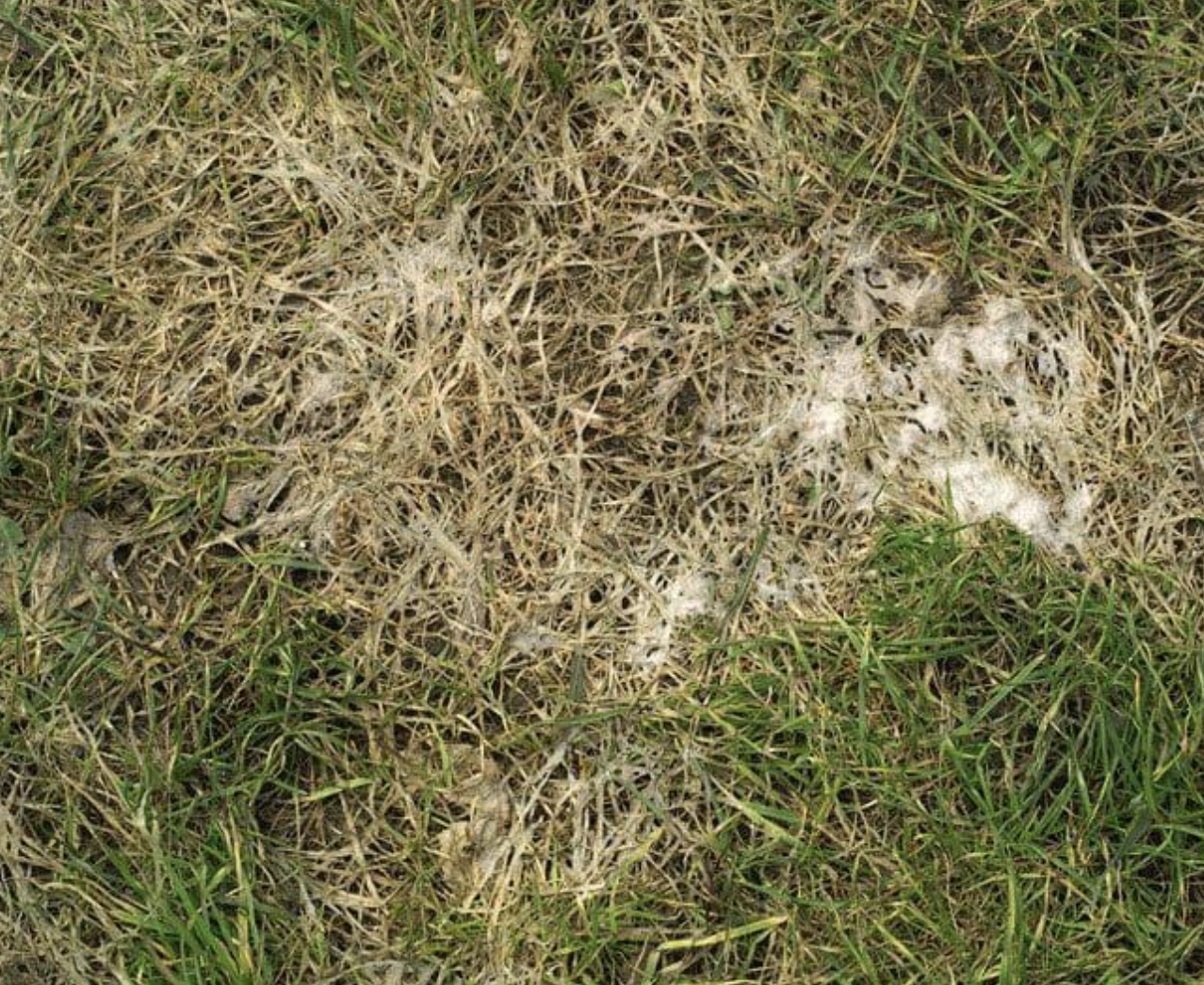
Notice what the list does not contain. There is no heavy nitrogen load, because soft, lush growth going into winter is exactly what fusarium patch wants. The feed is designed to harden the plant and support the soil, not to produce a flush of leaf at the worst time of year.
Why Liquid Rather Than Granular
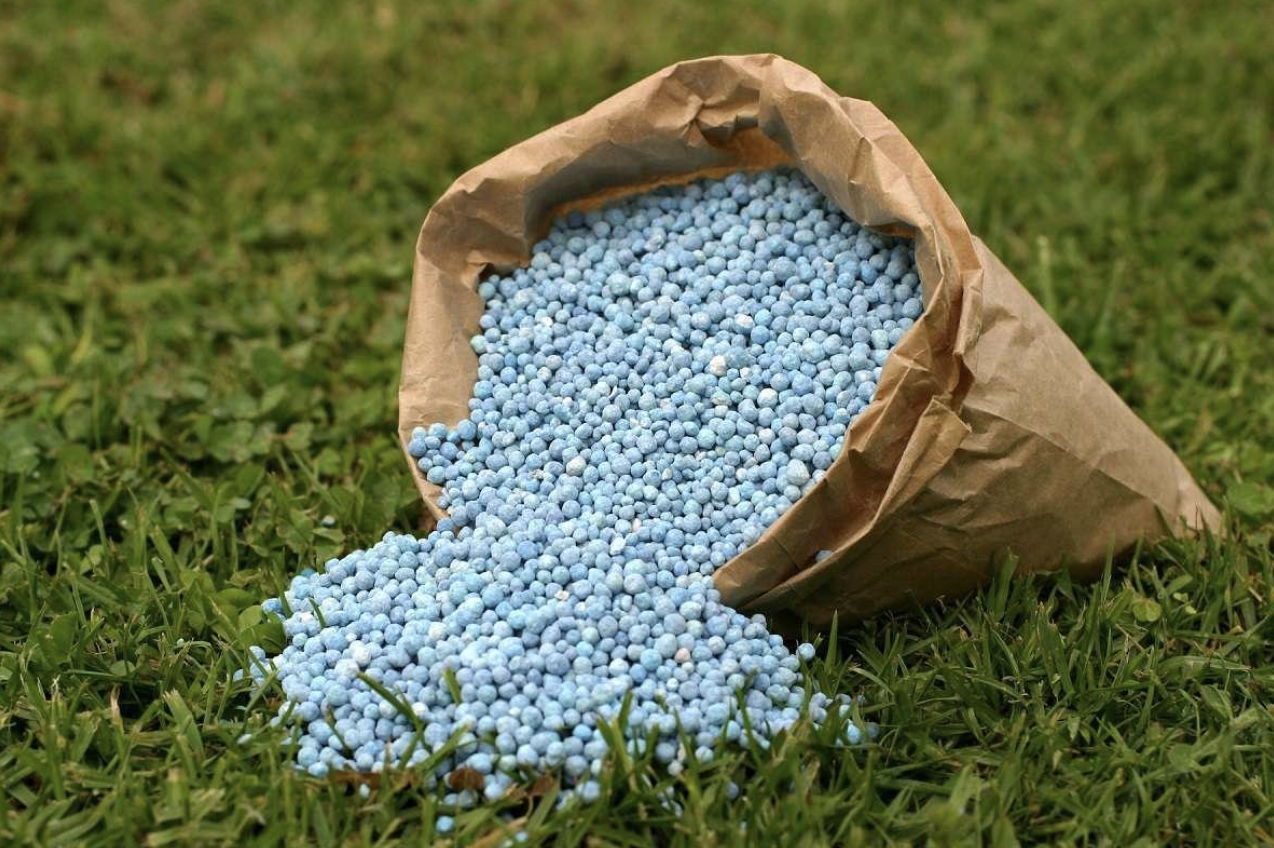
Most domestic autumn feed, and a good deal of franchise lawn care, is granular. Granular products have their place, and in autumn a liquid does several things a granule cannot.
It is taken up through the leaf as well as the soil, which matters when root activity is slowing and soil uptake is less reliable. It carries biological components such as seaweed, amino acids and fulvic acid in a form the plant can actually use. And it goes on evenly, because a liquid applied through calibrated equipment covers the lawn at a consistent rate.
Granular fertiliser applied by hand is close to impossible to spread evenly. That is where scorch comes from: burn marks in stripes or patches matching the spreader pattern, often blackening rather than browning the grass.
Why High Salt Index Fertilisers Cause Harm
This is the part of lawn nutrition that gets least attention and explains the most, and there is a simple way to understand it.
Think about why salt has been used to cure meat for thousands of years. It works because salt prevents bacteria and fungi from growing. That is the entire point of it.
Now consider what we are trying to achieve in soil. We want a thriving population of bacteria and fungi, because that population is what makes nutrients available to the grass. Applying a high salt index fertiliser does to your soil precisely what curing does to a joint of meat.
Different fertilisers carry very different salt loads, and professionals refer to this as the salt index. Cheap products tend to have cheaper ingredients and a higher salt index. They deliver nutrition to the plant while suppressing the biology that would otherwise cycle nutrients, build soil structure and break down thatch.
It is self-defeating over a season and considerably worse over several. A lawn fed on high salt products becomes dependent on the next application, because the system that would otherwise feed it has been damaged.
That matters most going into winter, since the soil population is what breaks down leaf litter, thatch and dead root material through the cold months. Suppressing it in October leaves the lawn with less working underneath it exactly when it needs the help.
When to Apply It
September is the strongest month. The soil is still warm, moisture is returning, and the plant can take the nutrition up and use it. The autumn feed belongs alongside the rest of the renovation work: aeration, scarification, moss treatment once the debris is cleared, overseeding and top dressing.
October and November continue to work well.
Our autumn feeds are applied all the way through to December. Plant growth slows considerably by then, but the applications remain effective, because much of what they are doing is supporting the soil biology rather than driving the plant. The carbohydrate, the seaweed and the fulvic acid are all still being used at a point in the year when a granular nitrogen feed would be doing nothing useful and quite possibly doing harm.
What does stop is heavy nitrogen. Pushing soft growth in late autumn is one of the commonest timing errors in domestic lawn care, and it is the main trigger for fusarium patch, which attacks the crown as well as the leaf and leaves genuinely bare ground rather than discoloured grass.
Why You Cannot Buy This Off a Shelf
Worth being direct about, because the obvious question is whether any of this can be replicated at home.
Domestic lawn feed is formulated to be stable on a shelf, safe in untrained hands and cheap enough to sell in volume. That rules out most of what makes a professional autumn application work. The biological components have limited shelf life, the application rates are narrow, and the equipment needed to apply a liquid evenly across a lawn is not something most people own.
The bag in the garden centre is almost always a spring formulation, because spring is when most people think about feeding. Check the N-P-K figures: for autumn you want the first number low and the third high, and most bags are the other way round.
It is also worth saying that many franchise lawn care operations run standardised granular programmes applied to the same specification on every lawn regardless of soil type, grass species or condition. That is a reasonable way to run a national operation and it is not the same as nutrition matched to what a particular lawn needs at a particular point in the year.
What Else the Lawn Needs Before Winter
Feeding is one part of it and will not on its own carry a lawn through a bad winter.
Aeration matters more than most people expect, because waterlogged soil drives the air out and the soil biology collapses with it. We aerate every lawn every year as standard.
Thatch control matters because a heavy layer holds moisture at exactly the wrong level and gives fusarium the conditions it wants.
Leaf clearance should be weekly through October and November rather than occasional, since wet leaf litter blocks light and holds moisture against the crowns.
And the final cuts should raise the height towards forty millimetres rather than taking the lawn down short going into winter.
How We Do It
Our professional treatment plans provide five treatment visits a year. Each visit is matched to what the grass plant actually needs at that point in the season, and depending on the lawn a visit can include soil conditioners, drought stress prevention, moss control, weed control and complex seasonal nutrition alongside the feed itself.
The autumn and winter applications are liquid, low in nitrogen, high in potassium, and carry seaweed, carbohydrate, fulvic acid, amino acids and a measured amount of iron. They run from September through to December.
Our wider approach is organic where possible: low salt index products that protect soil biology, carbon and compost added to feed the soil rather than only the plant, and minimal chemical and fungicide input. The aim is a lawn that increasingly looks after itself, rather than one that depends on the next application.
We have been established since 2016, we are independent and family owned rather than a franchise, and we cover Hampshire, West Sussex and West Surrey along with Berkshire and the Thames Valley. We hold City and Guilds NPTC pesticide qualifications and BASIS Lawn Assured accreditation, carry full insurance through NFU Mutual, are licensed waste carriers, and are members of the UK Lawn Care Association, whose committee Ian Kenyon sits on.
Frequently Asked Questions
Yes, but with an autumn formulation rather than whatever is in the shed. A proper autumn feed is lower in nitrogen and higher in potassium, which hardens cell walls and improves frost and disease tolerance rather than pushing soft growth. Ours also carries seaweed, carbohydrate, fulvic acid, amino acids and iron, and runs from September through to December.
Their jobs are opposite. A spring feed is nitrogen-heavy and drives leaf growth as the soil warms. An autumn feed hardens the plant for winter and supports the soil biology that will carry it through. Check the N-P-K figures on the bag: for autumn you want the first number low and the third high, and most domestic bags are the reverse.
Because it replaces what the grass can no longer produce. A healthy plant releases sugars through its roots to feed the soil bacteria and fungi that make nutrients available back to it. In winter the plant is barely photosynthesising, so that supply dries up. A high carbohydrate feed keeps the soil population fed through the months when the grass cannot feed it.
Seaweed is a biostimulant rich in minerals, antioxidants and natural plant hormones. It improves root development and stimulates soil microbial activity. Fulvic acid works as a nutrient shuttle, chelating minerals into a form the plant can use and increasing cell wall permeability so nutrients move into the plant more readily. Both improve what the lawn gets from the nutrition applied.
Because salt prevents bacteria and fungi from growing, which is exactly why it has been used to cure meat for thousands of years. In soil, that population is what makes nutrients available to the grass, breaks down thatch and builds structure. A high salt index product feeds the plant while suppressing the system that would otherwise feed it, and the lawn becomes dependent on the next application.
Our autumn applications run through to December and remain effective, because much of what they do is support the soil biology rather than drive the plant. What should not go on at that point is heavy nitrogen, which produces soft growth and is the main trigger for fusarium patch. A domestic granular nitrogen feed in December does nothing useful and may do harm.
Domestic feed is formulated to be shelf-stable, safe in untrained hands and cheap to sell in volume, which rules out most of the biological components. Those have limited shelf life and narrow application rates, and applying a liquid evenly across a lawn needs calibrated equipment. The bag in the garden centre is also almost always a spring formulation.
Our professional plans provide five visits a year, each matched to what the grass needs at that point in the season. Depending on the lawn, a visit may include soil conditioners, drought stress prevention, moss control, weed control and seasonal nutrition. Aeration and scarification sit alongside that as separate operations.
Want your lawn properly fed for winter?
Our autumn and winter applications are liquid, low in nitrogen and built to protect the soil biology as well as the grass, and they run through to December. We will look at your lawn first and tell you honestly what it needs.




 Made with love by:
