

 Established 2016
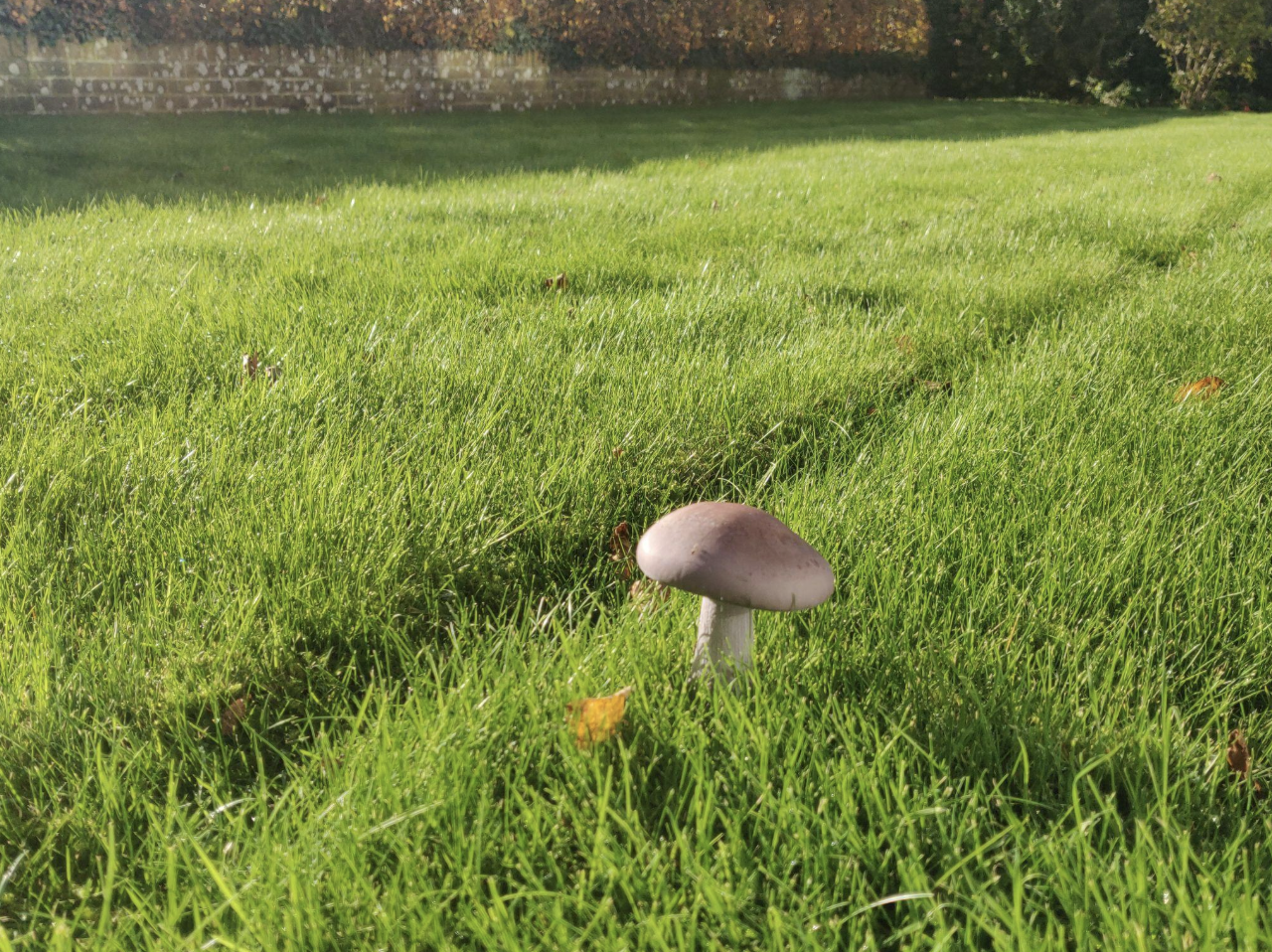
Mushrooms appear on lawns every autumn, usually overnight, usually after a wet spell, and usually to the alarm of whoever owns the lawn. The instinct is that something has gone wrong.
In almost every case the opposite is true. Mushrooms are a sign that your soil contains a working fungal population breaking down organic matter, which is what healthy soil is supposed to do. There are a couple of exceptions worth knowing about, and one genuine safety consideration if you have small children or dogs, but the presence of mushrooms is not itself a problem to be solved.
🎧 Prefer to listen? Get the full guide in your ears
Why Are Mushrooms Growing in My Lawn?
What You Are Actually Looking At
The mushroom is not the organism. It is the fruiting body, the reproductive structure, produced by a fungus whose actual body is a network of fine threads running through the soil beneath. That network can extend for metres, and it has been there for months or years before anything appeared on the surface.
Comparing it to an apple on a tree is roughly right. The visible part is a temporary structure for spreading spores, and removing it does nothing to the organism that produced it. This is why picking mushrooms never stops them returning.
What those fungal networks do underground is the useful part. They decompose dead organic matter, which is how nutrients get recycled back into a form plants can use. Many also form partnerships with plant roots, extending the root system’s effective reach for water and nutrients considerably. A lawn with an active fungal population is generally a lawn with better soil.
Why They Appear When They Do
Three conditions have to line up, which is why mushrooms arrive in flushes rather than continuously.
Moisture is the trigger. Fruiting bodies are largely water and the fungus will not produce them until there is enough of it, which is why they follow a wet spell rather than accompanying it.
Temperature matters. Most lawn fungi fruit in the mild damp conditions of autumn, roughly September through November in the UK, with a smaller flush in spring.
Food has to be present. Something organic underground is being decomposed. Common sources include a buried tree stump or root system from a tree removed years earlier, old timber or construction debris left when the garden was built, thick thatch, animal waste, or simply an organically rich topsoil.
The Common Types
Scattered individual mushrooms
The ordinary case. Random mushrooms appearing across the lawn after rain, feeding on general organic matter in the soil. No action required, they will be gone in days.
A cluster in one spot, returning every year
Almost always something buried. A stump, a root plate, or builders’ timber sitting under that patch. The mushrooms will keep appearing until the material has fully decomposed, which can take years for a large stump.
The grass over a rotting stump often struggles too, partly because decomposition ties up nitrogen and partly because the soil there is unusual. This is worth knowing so you do not attribute the poor grass to the fungus.
Fairy rings
The one type that sometimes needs attention, though the toadstools themselves are cosmetic. A fairy ring is a fungal colony spreading outward from a central point, producing a circle that expands a little each year. Mushrooms appear around the circumference and the grass often behaves oddly along it.
Sometimes you get a ring of unusually dark green, vigorous grass, caused by nitrogen released as the fungus decomposes organic matter. Sometimes you get a ring of dead or dying grass, because the dense fungal growth in the soil becomes water-repellent and the grass above it is effectively in drought. Sometimes you get both, a green ring with a brown one inside or outside it.
Fairy rings are difficult to remove. There is no domestic treatment that reliably eliminates them, and the fungal mass can extend well below normal treatment depth. Management rather than eradication is the realistic aim.
When Mushrooms Do Indicate a Problem
Three situations where the mushrooms are worth reading as a signal.
Heavy fruiting alongside a thick thatch layer suggests the fungi are working on the thatch, which tells you the thatch is substantial enough to be a food source in its own right. The thatch is the thing to address.
Persistent mushrooms alongside consistently poor drainage suggest permanently damp conditions, and that damp is likely causing you more trouble than the fungi are.
A fairy ring with a dying grass band needs attention, though the treatment is about getting water back into the soil rather than killing the fungus.
Safety, Which Is the Real Consideration
This is where honesty matters more than reassurance. Some fungi that grow on UK lawns are toxic, and a few are seriously so. Identification from a photograph or a general description is not reliable, and several dangerous species resemble edible ones closely.
The practical position for a household with small children or dogs is straightforward. Remove mushrooms from the lawn when they appear, wear gloves, put them in a sealed bag in general waste rather than the compost, and wash your hands afterwards. Do not eat anything growing on a lawn unless it has been identified by someone who genuinely knows what they are doing, and do not rely on an app for that.
Dogs are the more common problem in practice, because a dog will eat something a child would not. If a dog has eaten a mushroom from the lawn, contact a vet, and take a sample of the mushroom with you if you safely can, since identification changes the treatment.
Removing mushrooms is about safety and appearance, not control. The fungal network underground is unaffected by picking the fruiting bodies, and they will reappear in the next damp spell. Anyone selling you a treatment to remove mushrooms permanently is selling you something that does not exist.
Reducing How Often They Appear
You cannot eliminate soil fungi, and you would not want to. You can make conditions less favourable for fruiting.
Reduce the food source where it is identifiable. Removing a buried stump is a real job but it is the only permanent answer where one is the cause. Scarifying a thick thatch layer removes another significant food source.
Improve drainage and reduce surface moisture. Aeration helps the surface dry more readily between wet spells, and cutting back overhanging branches that keep an area permanently damp and shaded makes a noticeable difference.
Water in the morning rather than the evening, if you water at all, so the surface dries during the day rather than staying wet overnight.
Collect clippings during heavy fruiting periods rather than mulch mowing, and keep leaves cleared, both of which reduce the organic matter sitting on the surface in the damp autumn months.
For fairy rings specifically, the useful intervention is aeration through the affected band combined with a wetting agent, which helps water penetrate soil the fungus has made repellent. This will not remove the ring but it usually keeps the grass alive through it.
What Not to Bother With
Fungicides are not the answer for lawn mushrooms. Domestic products will not reach the fungal mass in the soil, and even professional fungicides target the pathogens that cause turf disease rather than the decomposer fungi producing mushrooms. Applying them indiscriminately damages the beneficial fungal population you actually want.
Digging out a fairy ring means excavating soil to a depth of at least three hundred millimetres across the full width of the ring plus a margin, disposing of it, and replacing it with clean soil. It sometimes works and it is a serious undertaking on a domestic lawn.
Various household remedies circulate involving vinegar, bleach, and dish soap. They damage the grass reliably and the fungus barely at all.
How We Approach It
When customers ask us about mushrooms our first job is usually reassurance, because the great majority are harmless and indicate soil doing what it should. Where we do look further, it is to work out whether the fruiting is telling us something about thatch, drainage, or buried material.
For fairy rings we are honest that eradication is not realistic on a domestic lawn, and we focus on aeration and wetting agents to keep grass alive through the affected band. Our general approach of building soil biology also means we are not looking to sterilise the soil, since the fungal networks producing these mushrooms are part of what makes a lawn resilient.
We have been established since 2016, we are independent and family owned rather than a franchise, and we cover Hampshire, West Sussex and West Surrey along with Berkshire and the Thames Valley. We hold City and Guilds NPTC pesticide qualifications and BASIS Lawn Assured accreditation, carry full insurance through NFU Mutual, are licensed waste carriers, and are members of the UK Lawn Care Association, whose committee Ian Kenyon sits on.
Frequently Asked Questions
Generally no. They indicate an active fungal population decomposing organic matter, which is a feature of healthy soil. The main exceptions are heavy fruiting alongside thick thatch or persistent damp, where the mushrooms point to an underlying condition worth addressing, and fairy rings where a band of grass is dying back. The toadstools themselves are cosmetic and best managed through nutrition.
You cannot, and no product achieves it. The mushroom is only the fruiting body of a fungal network in the soil, so picking them changes nothing underground. What you can do is reduce the food source by removing buried timber or thatch, improve drainage, and reduce surface moisture, which makes fruiting less frequent.
Some are, and identification from appearance is unreliable even for experienced people. If you have a dog, remove mushrooms as they appear, wearing gloves, and bag them in general waste. If your dog has eaten one, contact a vet promptly and take a sample of the mushroom with you if you can do so safely.
A fungal colony spreading outward from a central point, producing a ring of mushrooms and often a band of unusually dark green or dying grass. There is no reliable domestic treatment. Excavating the affected soil to 300mm or more sometimes works but is a major undertaking. Aeration and a wetting agent through the affected band usually keeps the grass alive.
Almost always because something organic is buried there, most often a tree stump, root plate, or timber left from construction. The fungus is feeding on it and will keep fruiting until it has decomposed, which can take several years for a large stump. Grass over the same patch often struggles for the same reason.
No. Domestic fungicides will not reach the fungal network in the soil, and professional products target turf disease pathogens rather than decomposer fungi. Applying them damages the beneficial soil fungi that help a lawn access water and nutrients, so the treatment costs more than the problem.
Mushrooms or a fairy ring in your lawn?
Most are harmless and a sign of healthy soil. Where they point to thatch, drainage or something buried, or a fairy ring is killing the grass, we will tell you honestly what is worth doing and what is not.




 Made with love by:
