

 Established 2016
Winter is the only season where doing less is the correct answer. From late November through to March a UK lawn is not growing in any meaningful sense, which means it cannot repair itself, cannot fill gaps, and cannot recover from anything you do to it. Damage done in January is still there in April.
That changes the job entirely. Spring and autumn are about improvement. Winter is about protection, and most of it costs nothing.
🎧 Prefer to listen? Get the full guide in your ears
Winter Lawn Protection for UK Homeowners
What Grass Is Actually Doing
Growth in cool season grasses slows sharply below about ten degrees and effectively stops below five or six. The plant is not dead and not fully dormant either, sitting in a holding state where it maintains itself but produces almost nothing new.
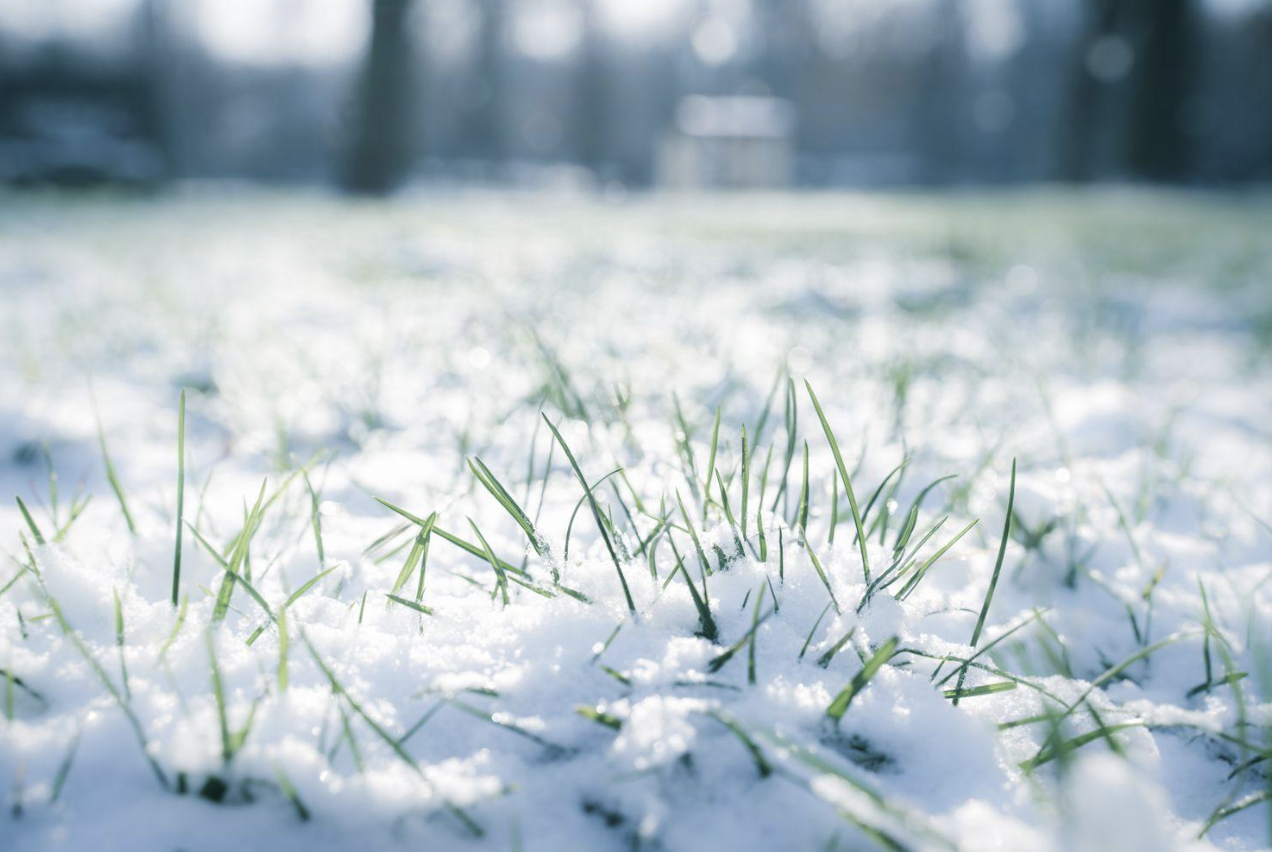
Root activity continues at a low level for longer than top growth, which is why autumn feeding matters and why a lawn that went into winter well fed comes out of it noticeably stronger. But the capacity to repair wear, close bare patches, or outcompete moss has gone until soil temperatures recover.
Everything below follows from that single fact. Anything that removes grass or exposes soil in winter creates a gap that will sit open for four months.
Keep Off Frozen and Waterlogged Grass
The two conditions where walking on a lawn does real harm, and they cover a large share of the average British winter.
Frozen grass is brittle. Water inside the leaf cells has frozen, and pressure ruptures the cell walls, which is why footprints across a frosted lawn appear as brown or blackened tracks a few days later. On a lawn that cannot regrow, those marks stay visible for months.
Waterlogged ground is the other one. Saturated soil has no structural strength, so every step compacts it and squeezes out the air spaces roots need. Clay is particularly vulnerable. The damage is invisible at the time and shows up the following summer as thin, drought-prone patches along whatever route people took.
Practical measure: if you have a route people cross daily, whether that is to a shed, a gate, or a bin store, put something down for the winter. Stepping stones, gravel boards, or a temporary bark path will save you a repair job in spring.
Mowing Through Winter
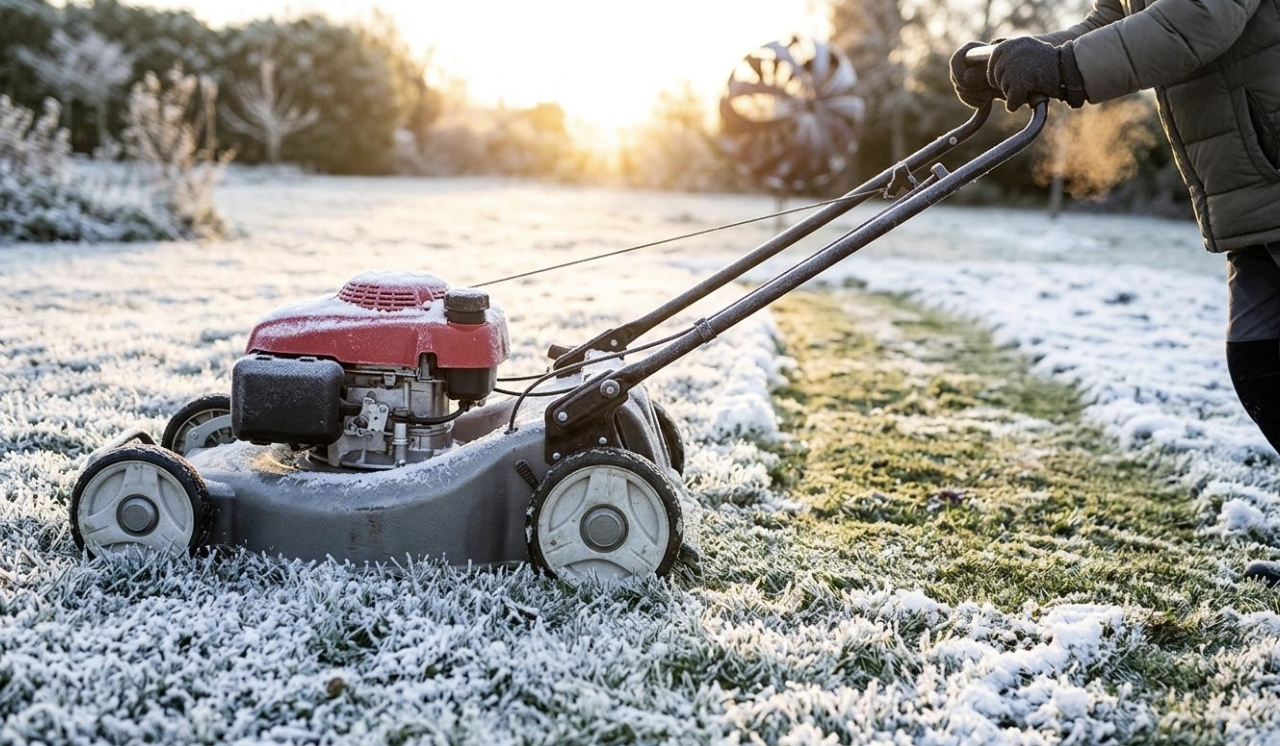
The instruction to stop mowing in October is out of date. Milder winters mean grass often keeps growing slowly into December and starts again in February, and a lawn left uncut through a mild winter goes into spring long, flattened, and prone to disease.
The sensible position is to cut when the grass has grown and conditions allow, which might be once in December and once in February, or not at all in a hard winter. Raise the height rather than lowering it. Around sixty millimetres is the winter setting we work to, which is considerably higher than most people expect and higher than the usual advice. The reasoning is straightforward. More leaf means more surface area to photosynthesise on bright winter days, a stronger plant going into the coldest months, and better shading of the soil surface against moss.
Never cut frozen grass, never cut when the ground is soft enough to take a footprint, and take the top off rather than removing much length. A winter cut is a tidy-up, not a proper mow.
Leaves Matter More Than People Think
A layer of wet leaves on a lawn does three things, none of them good. It blocks light from grass that is already short of it. It holds moisture against the crowns, which suits fungal disease. And it creates the dark, damp conditions moss spores need to establish.
Two weeks of leaves on a lawn in November will produce yellowed grass underneath. A whole autumn of them will produce bare patches that moss occupies before spring.
Clear them weekly through leaf fall. A rake, a blower, or the mower on a high setting with the box on all work, and the last of these has the advantage of shredding them for compost.
Frost, Snow, and What They Actually Do
Frost itself does not harm an established lawn. UK grasses handle it perfectly well, and a hard frost does useful work breaking up compacted clay at the surface as the water in it expands. The harm comes from traffic on frozen grass rather than from the frost.
Snow is largely benign too, and insulating. The exception is prolonged snow cover, particularly wet snow lying for weeks, which can encourage snow mould. If you have snow lying on the lawn, leave it alone rather than compacting it into ice, and avoid piling cleared snow onto the lawn from paths and drives, because a heap takes far longer to melt and the grass beneath it suffers.
Do not use salt or de-icing products anywhere the run-off reaches the lawn. Salt damages soil structure, kills soil bacteria, and persists. Sand or grit is a better choice next to grass.
What Not to Do Until Spring
A short list, and all of these are things people attempt when the weather turns mild for a week in February.
No scarifying. It removes grass cover and exposes soil at the point in the year when nothing can grow back into it.
No aerating on saturated or frozen ground. The machine compacts a surface with no strength, which is the opposite of the intention. Where conditions are suitable, though, aeration in winter is perfectly viable and we will carry it out. What matters is the state of the ground rather than the month, and slitting in particular is useful for winter surface drainage.
No seeding. Soil temperature needs to reach roughly eight to ten degrees for reliable germination. Seed sown into cold wet ground mostly rots or washes away.
No high nitrogen feeding. Pushing soft leafy growth going into or through winter produces tissue that is vulnerable to cold and to fungal disease, particularly fusarium. Autumn feeds should be low in nitrogen and higher in potassium for exactly this reason.
No weed treatment. Herbicides need actively growing weeds to work, and nothing is actively growing.
What Is Worth Doing
The list is short but not empty.
Keep the lawn clear of leaves, fallen fruit, and anything left lying on it. Garden furniture, plant pots, trampolines, and children’s toys left in place all winter will kill the grass underneath and leave a perfect rectangle of bare soil in March. Move them or move them regularly.
Watch where water collects during heavy rain and note it. This is genuinely useful information, far easier to gather in January than in June, and it tells you exactly where next autumn’s aeration and drainage work needs to focus.
Get the mower serviced and the blades sharpened while you are not using it. A blunt blade tears grass rather than cutting it, and torn leaf tips brown off and invite disease.
Plan the spring work. Note bare patches, moss, and worn routes now so that the first warm spell in April is spent doing rather than assessing.
Dogs in Winter
Worth its own mention because winter is when dog damage becomes permanent rather than temporary.
A dog patrolling the same fence line all summer wears the grass, and the grass grows back. The same dog doing the same thing in December wears it to mud that stays mud until April, because nothing can regrow. Urine damage behaves similarly, thinning grass that has no capacity to recover.
If a dog uses the lawn heavily, winter is the time to give it somewhere else to do so, whether that is a gravel run, a hard-surfaced strip along the patrol route, or simply a different exercise routine for a few months.
How We Approach It
Our winter work is deliberate rather than minimal. Winter treatments control moss, which is at its most active and most visible through the cold months while the grass cannot compete, and they provide a grass tonic that boosts the green pigment in the leaf. That pigment matters more than it sounds: it helps the plant photosynthesise on bright winter days, so the lawn is still doing useful work at a point in the year when most people assume nothing is happening at all.
We may also aerate if the conditions are suitable. Aeration is not locked to a season, and what decides it is whether the ground is workable rather than what the calendar says. On a mild, reasonably dry spell it is a useful piece of work, and on frozen or saturated ground it does more harm than good.
The work that determines how a lawn looks in March is done the previous September and October. A lawn that was aerated, scarified, overseeded, and fed properly in autumn goes into winter dense and well rooted, and dense grass is the best winter protection there is.
We have been established since 2016, we are independent and family owned rather than a franchise, and we cover Hampshire, West Sussex and West Surrey along with Berkshire and the Thames Valley. We hold City and Guilds NPTC pesticide qualifications and BASIS Lawn Assured accreditation, carry full insurance through NFU Mutual, are licensed waste carriers, and are members of the UK Lawn Care Association, whose committee Ian Kenyon sits on.
Frequently Asked Questions
Only if it has grown and conditions allow, which in a mild UK winter might mean one cut in December and another in February. Raise the height to around sixty millimetres and take the top off rather than cutting short. Never mow frozen grass or ground soft enough to hold a footprint.
Yes. Frozen leaf cells rupture under pressure, and because the lawn cannot regrow at that temperature, footprints show as brown or blackened tracks for weeks or months. Keep off until the frost has lifted, and give regular routes a temporary hard surface for the winter.
Not with a high nitrogen product. Soft leafy growth going into cold weather is vulnerable to frost damage and fungal disease. Autumn feeds should already be low in nitrogen and higher in potassium to harden the plant for winter. Wait until spring for anything designed to push growth.
Leave it where it falls. Snow insulates and does little harm, and walking on it compacts it into ice which takes far longer to clear and damages the grass beneath. Do avoid piling snow cleared from paths and drives onto the lawn, and keep salt and de-icer away from grass entirely.
Yes for reliable results. Germination needs soil temperature around eight to ten degrees, and November ground in the UK is below that and usually saturated. Seed sown now mostly rots or washes out. Mark the bare patches and sow in spring once the soil warms, or plan for early autumn next year.
Winter conditions favour moss and disadvantage grass. Low light, constant damp, and no growth mean any gap in the sward gets colonised. Leaves left lying, close autumn mowing, compaction, and shade all make it worse. Moss treatment itself is a winter job, since moss is at its most active and visible then, and it forms part of our winter programme. What belongs in spring or autumn is the mechanical removal, because raking or scarifying in midwinter leaves bare soil open through the wettest months.
Want your lawn protected through winter?
Our winter treatments control moss and give the grass a tonic that helps it make the most of bright winter days. We will look at your lawn first and tell you honestly what it needs now and what can wait for spring.




 Made with love by:
