
 Established 2016
A lawn that sits in shade can often be one of the most difficult parts of the garden to manage. Instead of a thick, even green surface, you may notice thin grass, patchy areas or sections that never seem to properly establish. In some cases, the grass looks weak and pale. In others, it gradually gives way to moss or bare soil.
Shaded areas are common in many gardens. Trees, fences, hedges and buildings can all block sunlight at different times of the day. While grass can tolerate some shade, it struggles when light levels are too low or inconsistent.
For many homeowners, shaded lawns feel like a problem that cannot be fixed. The grass never seems to improve, and even when it does, the results do not last.
But shade alone is rarely the full problem. It is usually part of a wider set of conditions that affect how well the lawn can grow.
Understanding what is happening in shaded areas is the first step towards improving them properly.
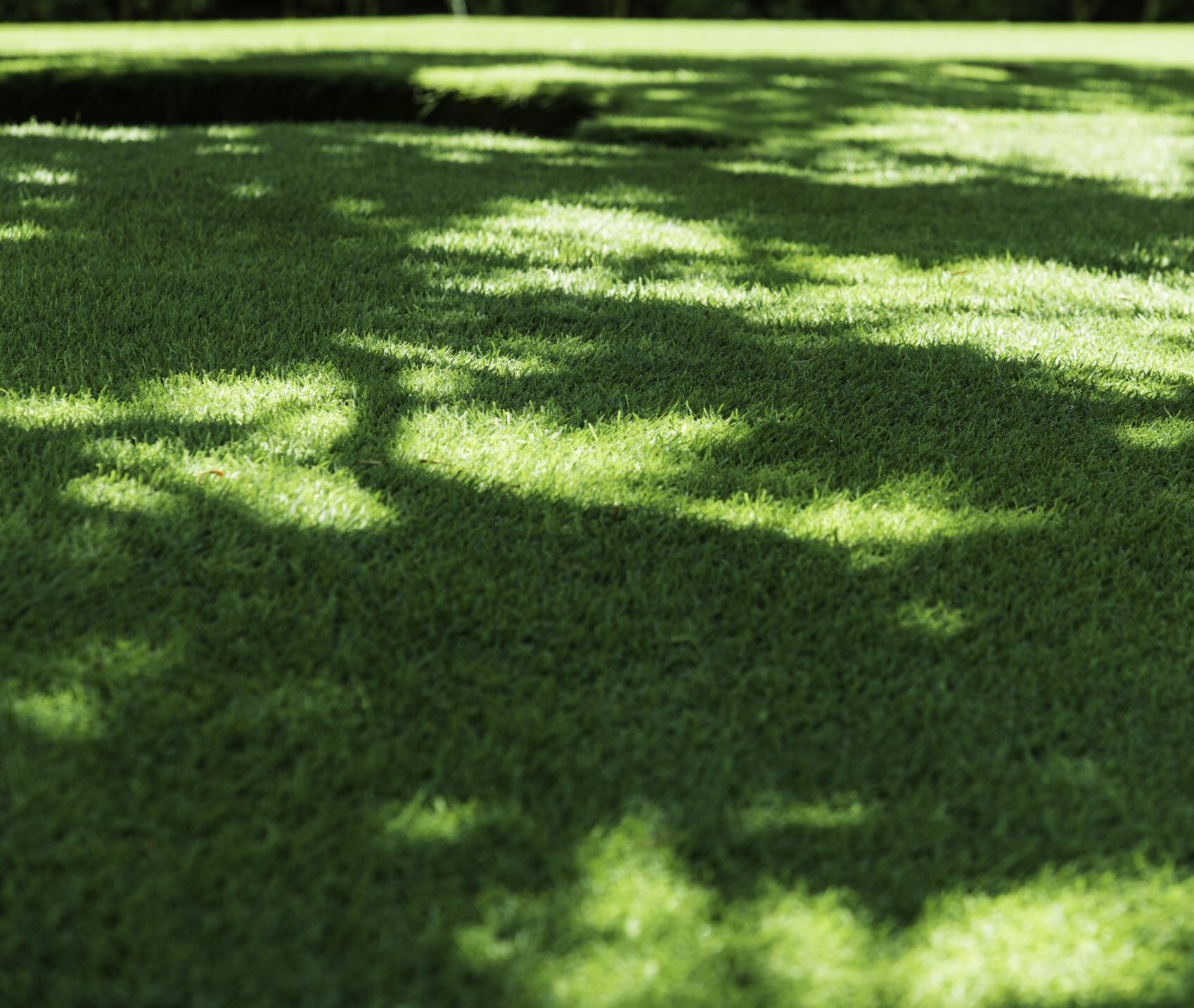
Why grass struggles in shaded areas
Grass depends on light to grow. When light levels are reduced, the grass cannot produce energy as effectively. This slows down growth and limits its ability to recover from wear or stress.
One of the most noticeable effects of shade is reduced density. Grass in low-light areas tends to grow more slowly and less thickly than in full sun. This creates a more open lawn, which is more vulnerable to problems.
Moisture levels are also affected. Shaded areas tend to stay damp for longer because they receive less sunlight and warmth. This can lead to soft, wet ground and slower drying conditions, which puts additional stress on the grass.
Over time, these conditions create an environment where moss can thrive. Moss often appears in shaded lawns because it is better suited to damp, low-light conditions than grass. Once it establishes, it can spread quickly into weaker areas.
Compacted soil can make the situation worse. If the ground is already hard or poorly structured, the grass will struggle even more in shaded conditions. Roots cannot develop properly, and growth becomes weaker over time.
In many gardens, trees and large plants also compete with the lawn for water and nutrients. This can leave the grass undernourished, particularly during dry periods, even if the surface appears damp.
Regular wear and use can add further pressure. Because shaded grass grows more slowly, it takes longer to recover from foot traffic, pets or general use. This can lead to worn areas that do not repair themselves easily.
In most cases, shaded lawns struggle because several of these factors are working together—low light, higher moisture, poor soil conditions and reduced recovery.
Why shaded lawn problems keep coming back and why DIY fixes often fail
This is where many shaded lawns become frustrating.
Homeowners often try to improve these areas by reseeding, feeding or watering more regularly. While these steps can help in the short term, they often do not lead to lasting improvement.
The reason is that the underlying conditions have not changed.
If the lawn is still receiving limited light, the grass will continue to grow slowly. Even if new seed establishes, it may struggle to survive long-term in those conditions.
If the soil is compacted, the roots will remain weak. This limits the lawn’s ability to respond to feeding or recover from wear.
If the area stays damp, moss may continue to return. Even after treatment, it can quickly reappear if the conditions still favour it.
Standard grass seed is often used without considering shade tolerance. In low-light areas, this can lead to poor establishment and disappointing results. The grass may germinate briefly, then thin out again.
This creates a familiar cycle:
- The area is treated or reseeded
- It improves slightly
- Then begins to thin again
- Moss or bare patches return
In some cases, repeated attempts to fix the area can make the problem more noticeable. The stronger parts of the lawn improve, while shaded sections continue to struggle.
The issue is not simply that the grass is in shade. It is that the conditions affecting the lawn have not been properly addressed.
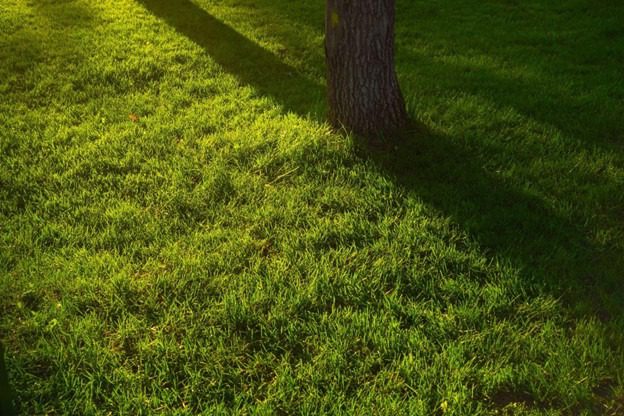
The real solution: improving conditions for shaded growth
Improving a shaded lawn starts with working with the conditions, rather than trying to force the lawn to behave like a sunny area.
If the soil feels hard or drains poorly, aeration is an important first step. Aeration opens up the soil, allowing air, water and nutrients to move more freely into the rootzone. This helps improve root development and overall lawn health.
If the lawn is thin, overseeding can help restore coverage. In shaded areas, it is important to use grass seed that is suited to lower light conditions. This improves the chances of successful establishment and longer-term growth.
Managing moisture is also key. While shaded lawns tend to stay damp, improving soil structure can help water move through the ground more effectively rather than sitting on the surface.
Where possible, increasing light levels can make a noticeable difference. Trimming back trees or hedges to allow more light through can improve growth, even if only slightly. Small improvements in light can have a significant impact over time.
In areas where trees compete with the lawn, additional support may be needed. This can include more consistent feeding or careful watering to ensure the grass receives what it needs.
Reducing wear and pressure on shaded areas can also help. Because the grass recovers more slowly, limiting use while the lawn improves gives it a better chance to establish.
The aim is not to eliminate shade, but to create the best possible conditions for the lawn to grow within it.
Why professional treatment makes a difference
Shaded lawns can be difficult to improve because the problem is not always obvious from the surface.
A lawn that looks thin or mossy may be affected by low light, compacted soil, poor drainage, competition from surrounding plants or a combination of these factors.
Treating only one of these issues often leads to limited results.
A professional lawn survey helps identify what is really affecting the lawn. Instead of guessing, the area is assessed properly so the right approach can be taken.
Professional aeration improves soil structure and supports root development. Overseeding with suitable grass types helps improve coverage in shaded conditions. Seasonal treatments provide the nutrients needed to support steady growth.
Where moss is present, it can be treated as part of a wider plan rather than as a one-off solution.
This approach focuses on improving the lawn as a whole, rather than applying short-term fixes that do not last.
Moving towards a healthier shaded lawn
If your lawn struggles in shaded areas, it does not mean it cannot be improved.
The key is understanding what the grass is working against and creating the right conditions to support stronger growth.
By improving soil structure, choosing the right approach and managing how the lawn is used, shaded areas can become healthier and more consistent over time.
If the same areas continue to struggle despite your efforts, it may be time to look beneath the surface.
A professional lawn survey can help identify what is limiting growth and provide a clear plan to improve your lawn properly.










 Made with love by: