
 Established 2016
A healthy lawn should have a consistent, even green colour. When that colour starts to change—whether it becomes pale, yellow, patchy or uneven—it is usually a sign that something is not quite right.
Discolouration can appear in different ways. Some lawns develop light yellow areas, others look dull or washed out, and some show uneven colouring across different sections. You may notice certain parts looking greener than others, while nearby areas appear weak, faded or tired.
At first, this can seem like a minor issue. But in most cases, changes in colour are an early warning sign. The grass is under stress, and if the cause is not addressed, the lawn can become thinner, weaker and more vulnerable to problems such as moss, weeds or bare patches.
Colour is often one of the first indicators that something beneath the surface is affecting the health of the lawn. Understanding why that change is happening is the first step towards restoring it properly.
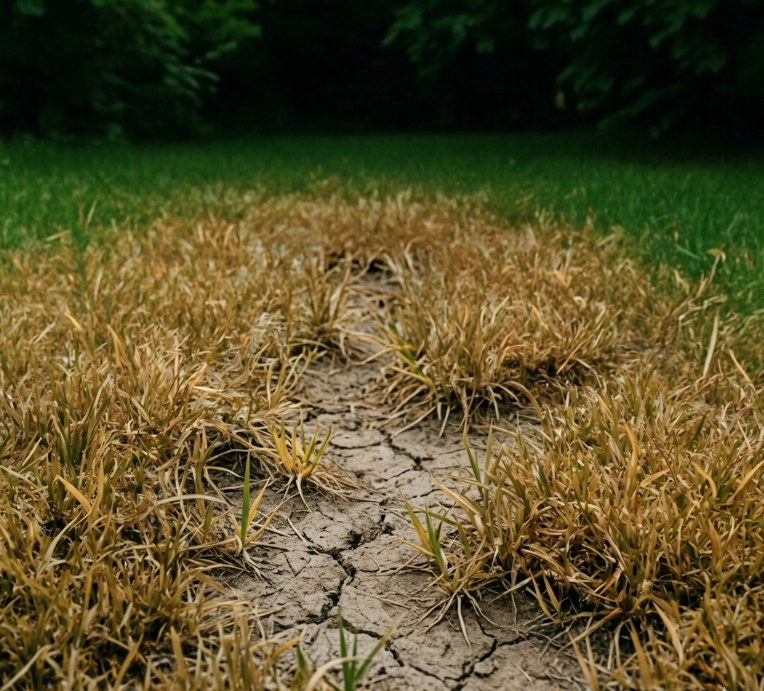
Why does a lawn become discoloured?
Grass loses its colour when it is not getting what it needs to grow properly. This can be due to nutrient imbalance, poor soil conditions, moisture issues or general stress.
One of the most common causes is lack of nutrients, particularly nitrogen. Grass relies on a steady supply of nutrients to maintain a healthy green colour. When this supply is inconsistent or insufficient, the lawn can begin to look pale or yellow. This often happens when feeding is irregular or not suited to the lawn’s needs.
Uneven feeding can also create visible differences across the lawn. Some areas may respond well and become greener, while others remain weak and discoloured. This can make the lawn appear patchy even if the issue is not immediately obvious.
Compacted soil is another key factor. When the soil becomes hard and dense, it restricts the movement of air, water and nutrients. Even if the lawn is being fed, the grass may not be able to access what it needs. This often results in dull, uneven growth that lacks colour.
Moisture imbalance also plays a major role. Lawns that are too dry may lose colour and appear faded or straw-like, particularly in warmer periods. On the other hand, lawns that stay too wet can become stressed, with roots sitting in poor conditions and struggling to function properly.
In some gardens, dog urine can cause localised discolouration. This often appears as yellow or brown patches, sometimes surrounded by darker green edges due to uneven nutrient concentration.
Shade can also affect colour. Grass growing in shaded areas tends to be slower growing and less dense, which can make it appear duller or less vibrant compared to the rest of the lawn.
In most cases, discolouration is not caused by a single issue. It is usually the result of several factors affecting the overall health and strength of the lawn.
Why does discolouration keep coming back and why DIY fixes often fall short?
This is where many homeowners become frustrated.
It is natural to try to improve lawn colour by watering more or applying feed. These steps can help in the short term, but they often do not provide lasting results.
The reason is that the visible colour change is only the surface symptom. The underlying conditions have not been resolved.
If the soil is compacted, the grass may not be able to absorb nutrients properly, even after feeding. The lawn may respond slightly, but the improvement is limited and short-lived.
If drainage is poor, the lawn may remain under stress regardless of how much care is applied. Roots sitting in wet or poorly structured soil cannot function properly, which affects growth and colour.
If the grass is already thin or weak, it may not have the strength to recover fully. Even when nutrients are added, the lawn may struggle to respond evenly.
In some cases, feeding can actually make the problem more noticeable. Stronger areas respond quickly and become greener, while weaker areas remain pale. This creates a more uneven appearance rather than solving the issue.
Watering alone can also be misleading. While it may temporarily improve colour, it does not address problems such as compaction, poor root development or weak soil structure.
This is why discoloured lawns often follow a repeating pattern. The colour improves slightly after treatment, then fades again. The same areas continue to struggle because the underlying cause has not been addressed.
In many cases, the issue is not a lack of care—it is that the lawn needs a different type of treatment.
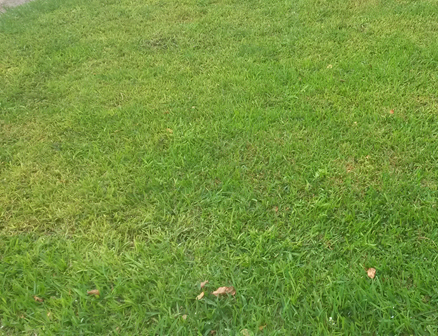
The real solution: improving lawn health from the ground up
To restore lawn colour properly, the focus needs to be on improving the condition of the lawn as a whole, not just its appearance.
If the soil feels hard or the lawn drains poorly, aeration is often one of the most important steps. Aeration opens up the soil, allowing air, water and nutrients to move more freely into the rootzone. This supports stronger root development and helps the grass recover.
If the lawn is thin or uneven, overseeding can help restore coverage. A denser lawn not only looks better but also supports a more consistent colour across the surface. Thicker grass is better able to absorb nutrients and respond evenly.
Regular and balanced feeding is also essential. Providing the right nutrients at the right time supports steady, healthy growth. Consistency is key—irregular feeding often leads to uneven results.
Managing moisture levels is equally important. The lawn should receive enough water to support growth, but not so much that the soil becomes saturated. Where drainage is an issue, improving soil structure can make a significant difference.
In areas affected by pets, simple adjustments such as watering after use can help reduce repeat damage and limit visible discolouration.
The aim is not to create a quick improvement in colour, but to build a lawn that can maintain that colour consistently.
Why professional treatment makes a difference
Discoloured lawns can be difficult to assess because the symptoms often look similar, even when the causes are different.
A lawn that appears pale or uneven may be affected by nutrient imbalance, compaction, drainage issues, wear, shade or a combination of these factors. Treating the wrong issue can lead to disappointing results.
A professional lawn survey helps identify what is actually happening beneath the surface. Instead of guessing, the lawn is assessed properly so the right treatment plan can be applied.
Professional aeration improves soil structure and allows roots to access what they need. Overseeding restores density where the lawn has become thin or uneven. Seasonal treatments ensure the lawn receives the right nutrients at the right time of year.
This approach focuses on improving the lawn’s overall health, not just its appearance.
Over time, this leads to stronger growth, better resilience and a more consistent green colour across the lawn.
Moving towards a healthier, greener lawn
If your lawn is looking pale, patchy or uneven in colour, it is usually a sign that the grass is under stress.
The good news is that most discoloured lawns can be improved once the cause is understood. By improving soil conditions, restoring grass strength and applying the right care at the right time, the lawn can recover its natural colour.
If the problem keeps returning despite watering or feeding, it may be time to look beyond surface treatments.
A professional lawn survey can help identify what your lawn needs and give you a clear plan to restore its health and appearance properly.










 Made with love by: