
 Established 2016
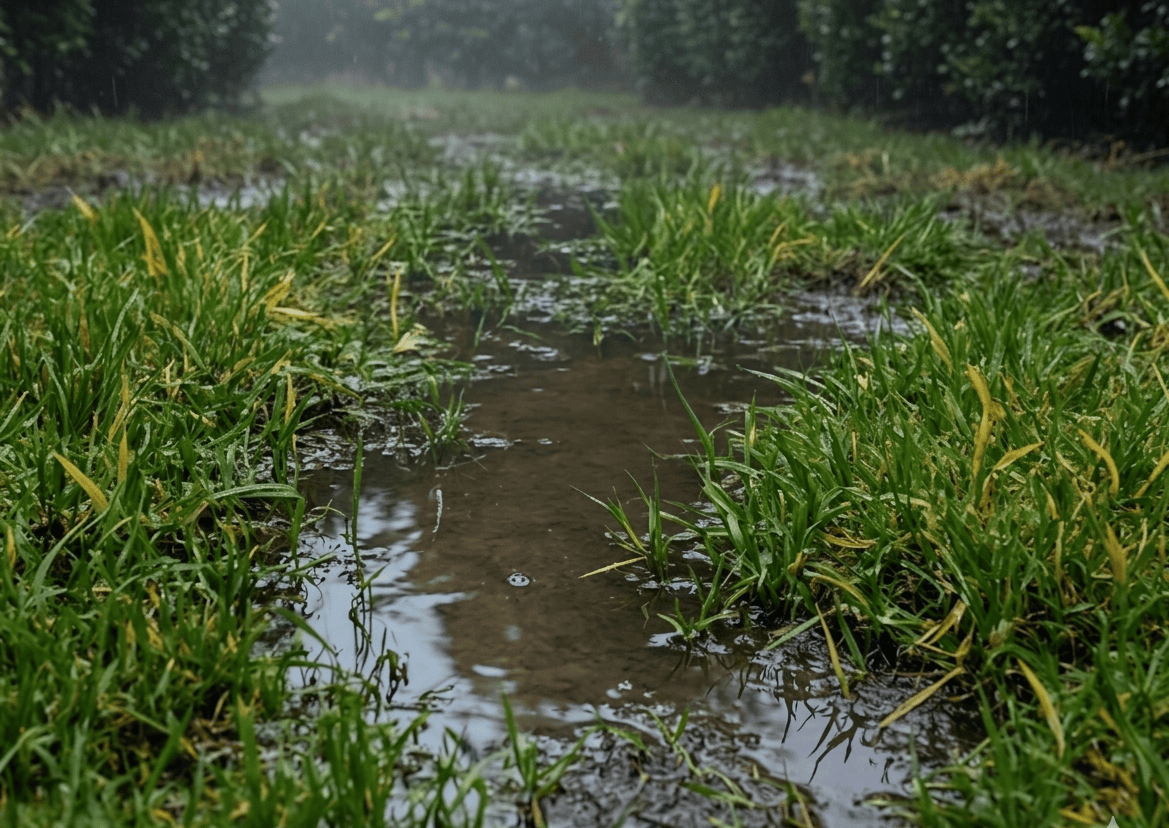
A waterlogged lawn can be one of the most frustrating lawn problems to deal with. After heavy rain, the grass may stay wet for days. You may notice puddles sitting on the surface, soft areas underfoot, muddy patches, thinning grass or moss spreading through the lawn.
At first, it can seem like the problem is simply too much rain. In the UK, wet weather is part of garden life, so many homeowners assume the lawn will recover once conditions improve. Sometimes it does. But if your lawn regularly holds water, feels spongy, turns muddy or struggles to grow back strongly, there is usually something deeper happening underneath.
A healthy lawn should be able to cope with normal rainfall. Water should move down through the soil, reach the roots and drain away naturally. When this does not happen, the grass can quickly become stressed. Roots are left sitting in wet, airless soil, the lawn becomes weaker, and other problems such as moss, bare patches and mud can start to appear.
Waterlogging is not just a surface issue. It is often a sign that the soil, drainage or lawn structure needs attention.
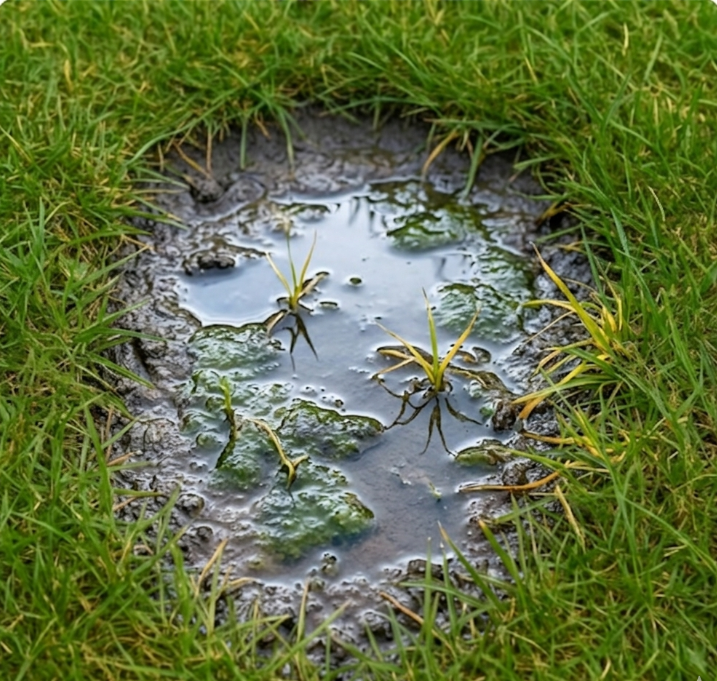
Why Does a Lawn Become Waterlogged?
A lawn becomes waterlogged when water cannot drain through the soil properly. Instead of soaking away, it sits on the surface or remains trapped in the upper layer of the ground.
One of the most common causes is compacted soil. When the soil is pressed down too tightly, the small spaces that should allow air and water to move through the ground become blocked. Rainwater then struggles to drain away, leaving the lawn wet for longer than it should.
Heavy soil can also contribute to the problem. Some gardens naturally have soil that holds more moisture. When this is combined with regular rain, poor airflow or heavy use, the lawn can remain damp for long periods.
Low spots in the garden can make waterlogging worse. If part of the lawn sits lower than the surrounding area, rainwater may collect there. These sections often become soft, muddy or patchy first because the grass is under more stress.
Shade is another factor. Shaded lawns dry more slowly because they receive less sunlight and warmth. If the area is also compacted or poorly drained, water can linger for much longer, creating the kind of damp conditions that moss enjoys.
Thatch can also play a part. A thick layer of dead grass and organic matter can stop water moving properly into the soil. Instead of draining evenly, water may sit near the surface, leaving the lawn feeling spongy and unhealthy.
In many cases, waterlogging is caused by a combination of these issues rather than one single reason.
Why Waiting for It to Dry Out Does Not Always Work
It is natural to wait and hope the lawn improves once the rain stops. If the waterlogging is occasional and the lawn is otherwise healthy, it may recover well. But if the same areas become wet again and again, waiting will not solve the root cause.
The problem is not only the water you can see. It is the condition that allows the water to remain there.
If the soil is compacted, the lawn will still struggle to drain after the next rainfall. If the grass is thin, the surface will remain more exposed and vulnerable. If moss has already started to spread, it may continue to take advantage of the damp conditions. If low areas collect water, those patches will keep suffering unless the cause is properly understood.
Waterlogged soil also affects the roots. Grass roots need oxygen as well as water. When the ground stays saturated, air cannot move through the soil properly. This creates poor growing conditions and can cause the roots to weaken over time.
Weak roots lead to weak grass. The lawn becomes less able to recover from wear, weather and seasonal stress. This is why a waterlogged lawn often becomes a thin lawn, then a patchy lawn, and eventually a muddy lawn if nothing changes.
How Waterlogging Leads to Moss, Bare Patches and Mud
Waterlogged lawns rarely stay as just wet lawns. Once the grass begins to struggle, other problems often follow.
Moss is one of the most common. Moss thrives in damp, weak and shaded areas where the grass is not growing strongly. If your lawn stays wet for long periods, especially through autumn and winter, moss can quickly spread into thin areas.
Bare patches can also develop when the grass dies back or becomes too weak to maintain good coverage. These exposed areas are more likely to turn muddy in wet weather and dry out unevenly when conditions improve.
Mud often appears when the lawn has lost density. Once the grass has thinned, there is less protection for the soil underneath. Walking across the lawn, children playing, pets running or regular garden use can quickly turn exposed wet soil into mud.
This can become a cycle. Wet soil weakens the grass. Weak grass exposes the soil. Exposed soil becomes muddy. Walking on the mud compacts the ground further, which then makes drainage even worse.
This is why waterlogged lawns need to be approached carefully. The aim is not just to dry the lawn out for a short time. The aim is to improve the conditions so the grass can grow more strongly and the soil can cope better with rainfall.
Why DIY Fixes Often Give Disappointing Results
Many homeowners try to repair a waterlogged lawn by adding seed, applying feed or staying off the grass until spring. These steps may help in some situations, but they often do not fix the main problem.
Reseeding can be difficult when the soil is too wet, compacted or cold. Seed needs good contact with the soil, enough warmth, enough moisture and the right conditions to establish. If the ground is saturated or airless, new grass may struggle before it has a chance to grow properly.
Feeding the lawn can support healthy growth, but it cannot correct poor drainage or compacted soil on its own. If the roots are sitting in wet, dense ground, they may not be able to make proper use of the nutrients.
Adding topsoil or covering muddy areas may make the lawn look better temporarily, but if the water still has nowhere to go, the same problem can return. The new surface may become wet, compacted or muddy again.
Trying to treat moss without improving the lawn conditions can also lead to frustration. Moss treatment may remove or reduce the moss, but if the area remains damp, shaded, compacted and weak, moss is likely to come back.
Waterlogged lawns need more than surface repair. They need the underlying cause to be identified.
The Right Way to Improve a Waterlogged Lawn
The right solution depends on why the lawn is holding water in the first place.
If compaction is part of the problem, aeration can help open up the soil. Aeration creates channels that allow air, water and nutrients to move more freely into the root area. This can improve the growing conditions for the grass and help the soil drain more effectively.
If the lawn is thin or patchy, overseeding may be needed once the ground has been prepared properly. New seed should not simply be thrown onto a wet, compacted surface. The lawn needs the right conditions so the seed can make good contact with the soil and establish strong roots.
If moss is present, it may need to be treated as part of the recovery process. But moss control should be supported by improvements to the lawn itself. A thicker, healthier lawn is better able to compete with moss and reduce the chance of it spreading again.
In some lawns, thatch may also need to be addressed. If organic matter is building up and stopping water moving properly, removing some of that layer can help the lawn breathe and drain more effectively.
If the issue is linked to a low area or a more serious drainage problem, the lawn may need further assessment. Some gardens require more than standard lawn treatment, especially where water is collecting from surrounding areas or the ground naturally holds moisture for long periods.
The important point is that waterlogged lawns should be treated according to the cause, not just the symptom.
Why Professional Lawn Treatment Makes a Difference
A waterlogged lawn can be difficult to diagnose correctly because several problems can look similar from the surface. Wet grass, moss, mud, bare patches and weak growth may all appear together, but the cause could be compaction, shade, poor drainage, thatch, soil type or a combination of these.
A professional lawn survey helps identify what is really happening. Instead of guessing, the lawn can be assessed properly so the right treatment can be recommended.
Professional aeration can help relieve compaction and improve soil conditions. Overseeding can help restore thin areas once the ground is ready. Seasonal treatments can support stronger grass growth, helping the lawn become thicker and more resilient. Where moss is present, it can be treated as part of a wider plan rather than as a one-off surface issue.
Timing also matters. Working on a waterlogged lawn at the wrong time can cause more harm than good. If the soil is too wet, heavy work or too much traffic can make compaction worse. A professional approach considers the condition of the lawn and chooses the right treatment at the right stage.
The goal is not simply to make the lawn look better for a few weeks. The goal is to improve the lawn’s ability to recover, drain and grow well over time.
How to Help Prevent Waterlogging from Getting Worse
There are practical steps that can help protect a wet lawn.
Try to avoid walking on the lawn when it is very wet. Wet soil compacts more easily, so repeated foot traffic can make drainage worse. If pets or children use the same routes across the grass, those areas may need extra attention once conditions improve.
Mowing should also be handled carefully. Cutting wet grass can damage the lawn and create an uneven finish. It is better to wait until the lawn is firm enough and the grass is dry enough to cut cleanly.
Keeping the lawn healthy through the year also helps. A thicker lawn with stronger roots will cope better with wet weather than a thin, weak lawn. Good mowing, seasonal feeding, aeration where needed and proper overseeding can all support better lawn strength.
However, if your lawn regularly holds water, prevention alone may not be enough. The lawn may need proper treatment to improve the soil and restore healthy grass coverage.
Take the First Step Towards a Healthier Lawn
If your lawn stays wet long after rain, feels soft underfoot, develops moss or turns muddy each winter, waterlogging may be a sign of a deeper lawn problem.
The good news is that many waterlogged lawns can be improved once the cause is properly understood. By relieving compaction, improving soil conditions, treating moss where needed and restoring thin areas with overseeding, the lawn has a better chance of becoming stronger, healthier and more resilient.
If the same wet patches keep returning, a professional lawn survey can help identify what is happening beneath the surface and what your lawn needs next.














 Made with love by: