
 Established 2016
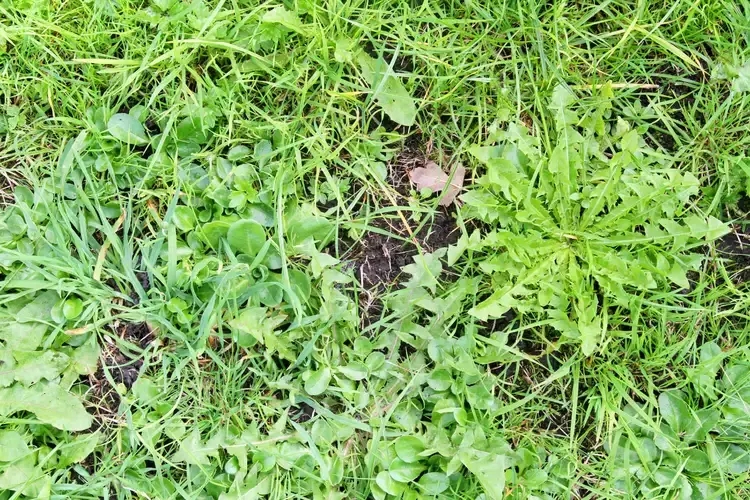
A lawn full of weeds can quickly lose its clean, even appearance. What should be a thick, green space starts to look mixed, patchy and inconsistent. You may notice different plant types spreading across the lawn, areas where weeds dominate, or sections where the grass looks weaker and more open.
For many homeowners, weeds feel like something that simply keeps coming back. You remove them, treat them or cut them down, but the problem never fully goes away. In some cases, it gradually gets worse, with more weeds appearing each season.
What’s important to understand is that weeds are not usually the root problem. They are a sign of it.
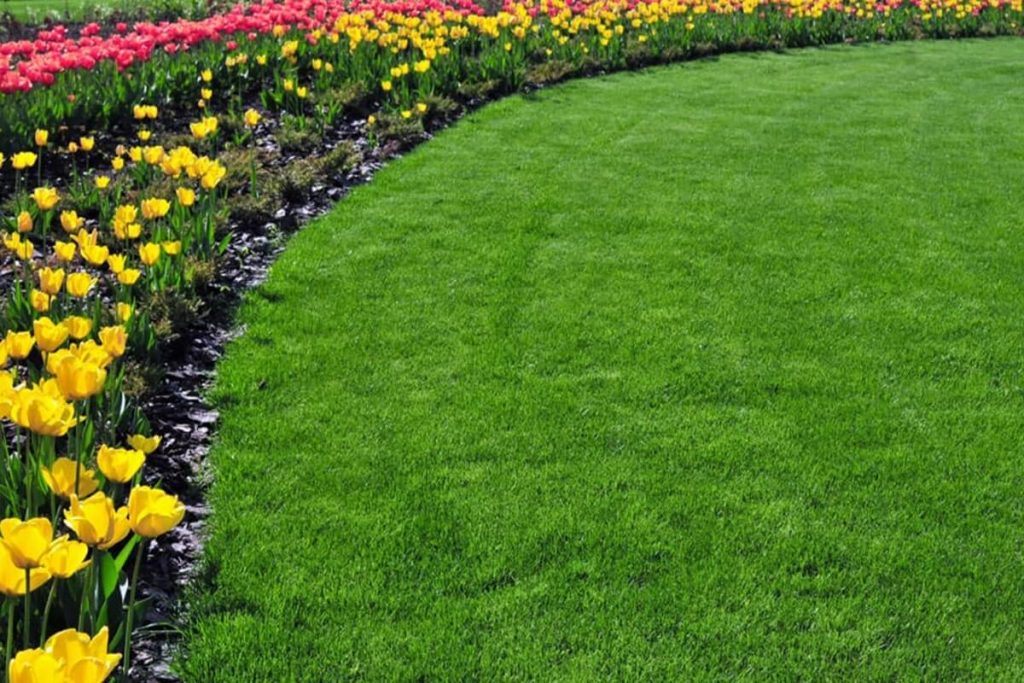
A healthy, dense lawn naturally resists weeds. When the grass is strong, it fills the space, competes for nutrients and prevents other plants from establishing. But when the lawn becomes thin or stressed, gaps begin to appear—and those gaps are exactly where weeds take hold.
To deal with a weedy lawn properly, you need to understand why the grass has weakened in the first place, and why weeds are able to keep returning.
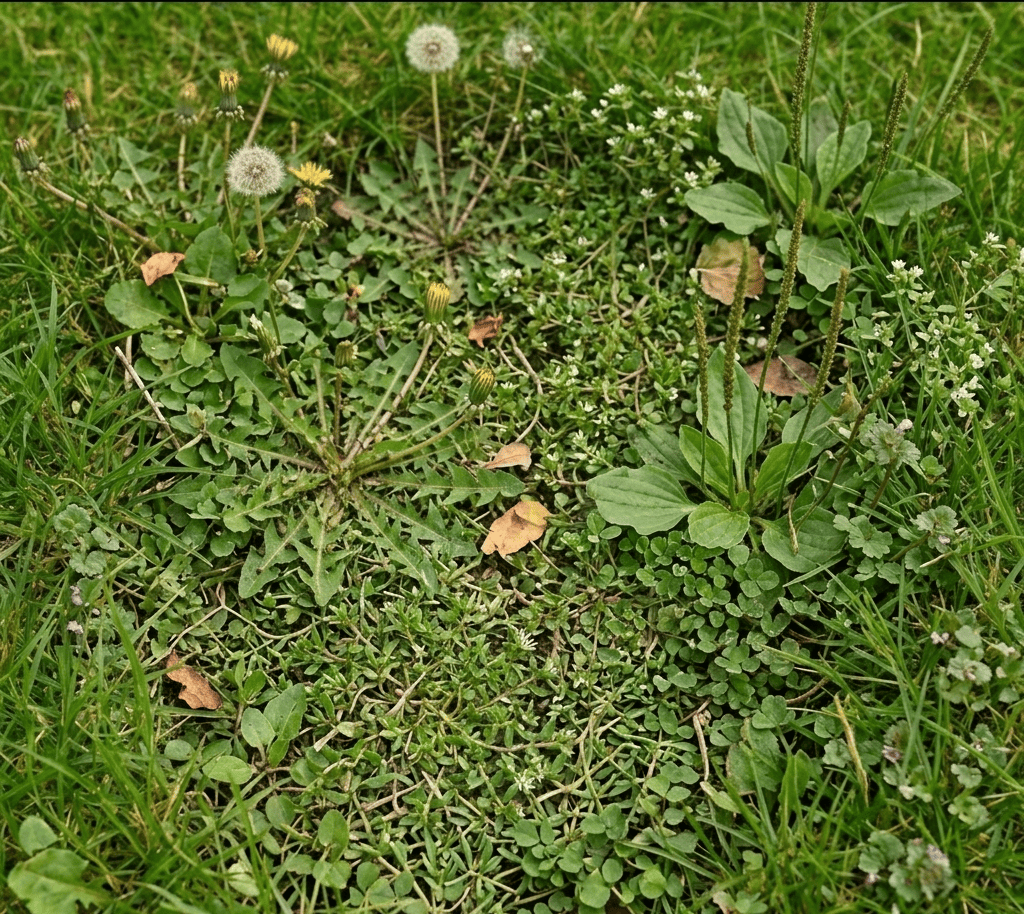
Why weedy lawns develop
Weeds establish themselves when there is space for them to grow. In a thick lawn, grass plants sit closely together, covering the soil and limiting opportunities for anything else to establish.
When that coverage starts to break down, the balance changes.
One of the most common causes is thin or patchy grass. This can happen gradually due to wear, seasonal stress, or general decline in lawn health. As the grass thins, small gaps open up across the surface, allowing weed seeds to settle and grow.
Compacted soil is another major factor. When the ground becomes hard and dense, it restricts the movement of air, water and nutrients. Grass roots struggle to grow properly, leaving the lawn weaker over time. Weeds, however, are often more tolerant of these conditions, allowing them to establish where grass cannot.
Poor drainage or waterlogging can also contribute. Lawns that stay wet for long periods tend to develop weaker grass. Over time, this creates vulnerable areas where weeds can spread more easily.
Inconsistent lawn care can also play a role. Grass that is not fed regularly or cut properly may struggle to maintain strong growth. When the lawn is not growing well, weeds are given the opportunity to take over.
Shade can make things worse. In areas that receive less sunlight, grass grows more slowly and less densely. These thinner sections are more likely to become weedy over time.
In most cases, a weedy lawn is not caused by one single issue. It is usually the result of several factors working together—weak grass, poor soil conditions, moisture imbalance and general wear.
Why weeds keep coming back and why DIY fixes often fail
This is the part that causes the most frustration.
Most homeowners try to fix weeds by treating what they can see. You might remove them by hand, apply a weed treatment, or mow more frequently to keep them under control.
These approaches can make the lawn look better for a short time. But often, the improvement doesn’t last.
The reason is simple: the conditions that allowed the weeds to grow are still there.
If the lawn is still thin, new weeds will quickly fill the gaps. If the soil remains compacted, the grass will continue to struggle. If drainage is poor, the lawn will stay weak and open.
Even when weeds are successfully removed, they leave behind space. If that space is not filled with strong, healthy grass, weeds will return to occupy it.
This is why many lawns fall into a repeating cycle:
- Weeds appear
- They are removed or treated
- The lawn looks better briefly
- Then the same weeds return
In some cases, DIY treatment can actually make the situation worse.
Applying weed control without improving the lawn can leave areas even more open than before. The weeds are gone, but the grass has not been strengthened, so the space is quickly taken over again.
Scattering seed over a weedy lawn often produces poor results as well. If the soil is compacted or the lawn is still under stress, the seed may not establish properly. It can sit on the surface, dry out, or fail to develop strong roots.
Feeding the lawn can help healthy grass grow, but it will not solve deeper issues on its own. If the roots are weak or the soil is in poor condition, the grass may not be able to make proper use of the nutrients.
This is why so many weedy lawns never fully improve. The visible problem is treated, but the underlying conditions remain unchanged.











 Made with love by: