
 Established 2016
There is something frustrating about a lawn weed. You did not plant it, you do not want it, and no matter how many times you remove it, it seems to find its way back. Part of what makes lawn weeds so persistent is that most homeowners treat them as a single problem with a single solution, when in reality the weeds growing in your lawn are several distinct plants with different growth habits, different root structures, and in some cases very different responses to the same treatment.
🎧 Prefer to listen? Get the full weed identification guide in your ears
The Most Common Lawn Weeds in the UK: Identification Guide
Identifying which weeds are actually in your lawn is the starting point for managing them effectively. Applying the wrong product, or using the right product at the wrong time, produces partial results at best. Understanding what you are dealing with changes that.
This guide covers the most common lawn weeds found in UK gardens across Hampshire, Surrey, West Sussex, and Berkshire, how to identify each one, why it establishes in lawns, and what makes it difficult to control.
Why Weeds Establish in Lawns
Before covering individual species, it is worth understanding the conditions that allow weeds to take hold in the first place. Healthy, dense grass is an extremely effective competitor. A thick, well-fed sward with a continuous canopy of leaf blades shades the soil surface, limits the light available for weed seed germination, and gives establishing grass seedlings a significant competitive advantage.
Weeds do not invade healthy lawns. They move into the gaps. Thin grass, bare patches, compacted areas, poorly fed turf, and sections recovering from drought, pest damage, or heavy wear all present the open ground that weed seeds require to germinate and establish. The most effective long-term weed control is a lawn so dense and healthy that weeds simply cannot find the foothold they need.
Dandelion (Taraxacum officinale)
How to identify it
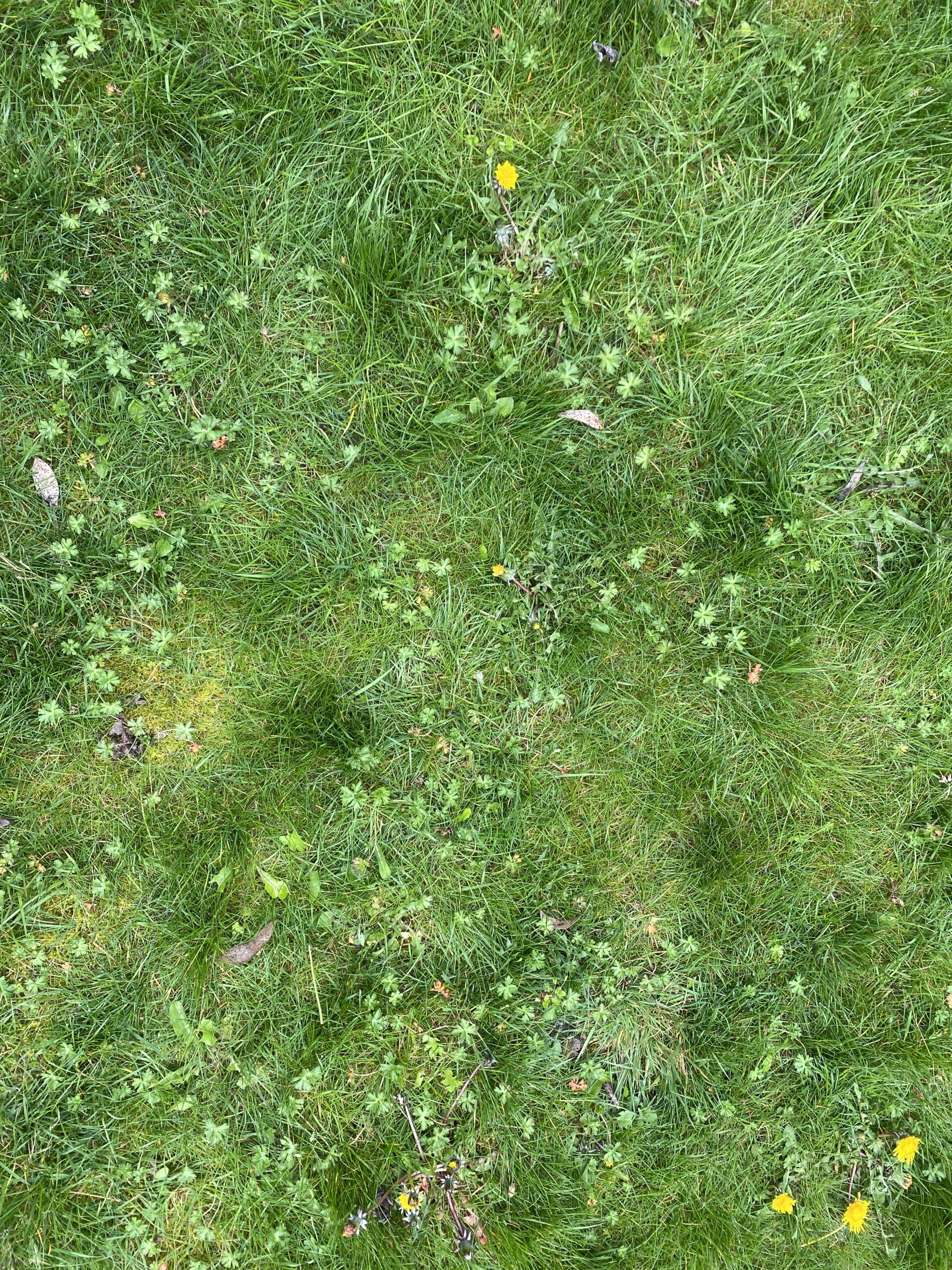
Dandelions are one of the most recognisable plants in any UK garden. The leaves form a flat rosette directly at ground level, with deeply toothed or lobed edges that give them a jagged, irregular outline. In spring and early summer they produce the familiar bright yellow flower heads on hollow stems, followed by the spherical seed heads that disperse on the wind.
In a lawn, the flat rosette growth habit is particularly problematic. The leaves spread outward at ground level and smother the grass beneath, creating dead patches in the shape of the rosette. In a fine ornamental lawn, a single established dandelion can suppress an area of grass ten to fifteen centimetres across.
Why it is difficult to control
The dandelion has a long, fleshy taproot that can reach twenty centimetres or more into the soil. Mechanical removal, pulling or digging, must extract the entire root to be effective. Any fragment left in the soil will regenerate a new plant. Hand removal is practical for isolated dandelions on a small lawn but becomes impractical at scale.
Selective broadleaf herbicides are effective on dandelions when applied during active growth in spring. The flat rosette growth habit, however, means the leaf surface presents at a low angle, and product can run off or be poorly absorbed if application technique is not correct. Professional application using calibrated equipment and appropriate adjuvants produces more consistent results than consumer products applied by watering can or hand-held sprayer.
Dandelion seeds are highly mobile and can travel significant distances on the wind, meaning a lawn cleared of dandelions can be recolonised from neighbouring gardens or verges within a single season. This is why ongoing management rather than a single treatment produces lasting results.
White Clover (Trifolium repens)
How to identify it
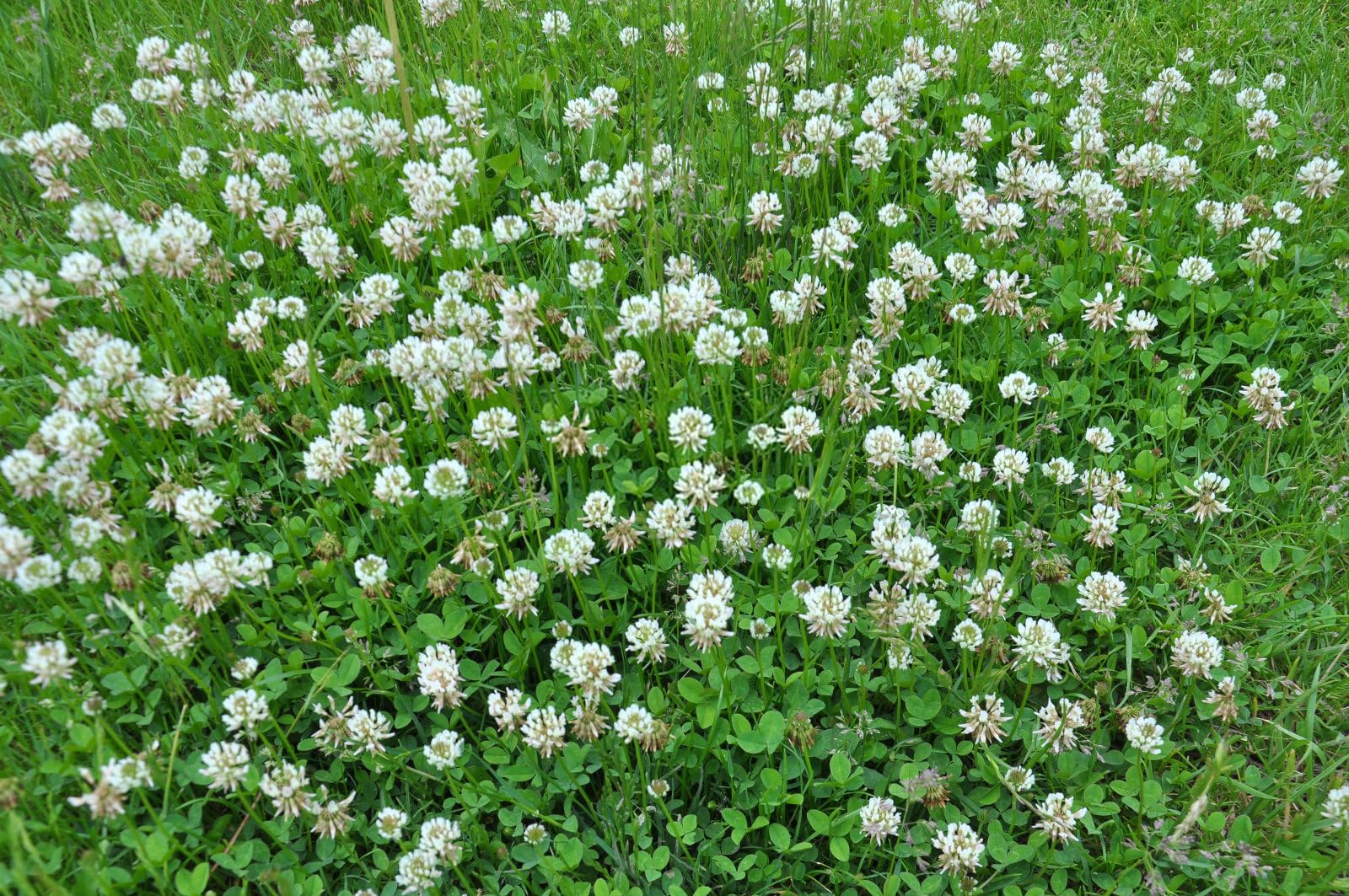
White clover is immediately recognisable by its three-part leaves, each leaflet typically bearing a pale chevron marking. It grows as a low, spreading mat with stems that root at nodes as they creep along the soil surface. In summer it produces small white or pink-tinged flower heads that are attractive to bees and other pollinators.
In a lawn, clover spreads aggressively by stolons, the creeping surface stems, and can colonise large areas quickly once established. It tends to be most vigorous in areas of low soil fertility, because unlike grass, clover can fix nitrogen from the air and does not depend on soil nitrogen to thrive.
Why it is difficult to control
White clover is one of the most challenging lawn weeds to control with selective herbicide. The waxy surface coating on the leaves repels many standard broadleaf herbicide formulations, reducing absorption and producing incomplete results. Standard over-the-counter products are often ineffective on clover, which is why homeowners find themselves repeatedly treating the same areas without lasting success.
Professional treatment uses formulations containing active ingredients specifically matched to clover, including mecoprop-P or clopyralid, applied with wetting agents that break down the waxy leaf surface and improve uptake. Timing also matters: clover is most susceptible to treatment during active growth in spring and early summer, and considerably harder to control in summer drought or autumn dormancy.
Improving soil fertility through regular feeding reduces clover’s competitive advantage. A well-fed lawn with strong grass growth crowds out clover more effectively than a nitrogen-deficient lawn where clover thrives precisely because the grass cannot compete.
Broadleaf Plantain (Plantago major)
How to identify it
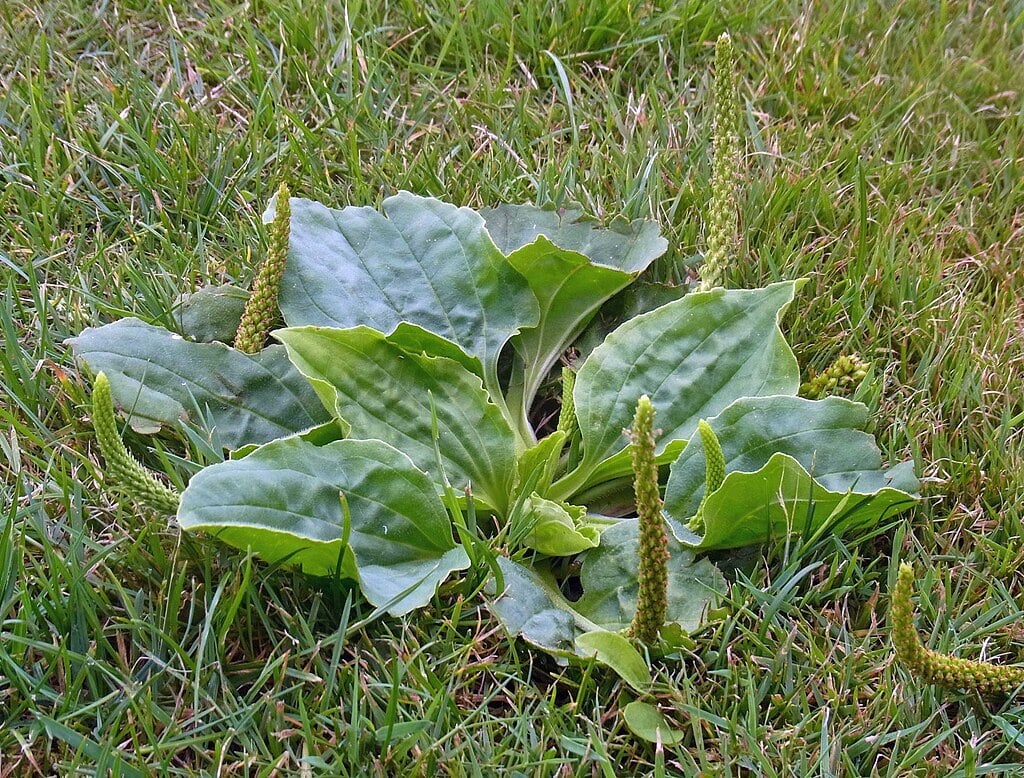
Broadleaf plantain has large, oval leaves with prominent parallel veins running from base to tip. The leaves are thick, tough, and slightly waxy, forming a flat, spreading rosette. In summer it produces tall, slender seed spikes rising above the lawn that disperse large quantities of seed.
Plantain is extremely tolerant of compaction and foot traffic, which is why it is particularly common along pathways, the edges of lawns, and areas that receive regular wear. It can survive mowing because the flat rosette growth habit keeps the growing point below the mower blade.
Why it is difficult to control
The thick, waxy leaf surface makes plantain relatively resistant to some herbicide formulations, and the flat rosette means treatment must be applied carefully to ensure adequate coverage of the leaf surface. Like dandelion, plantain has a substantial root system that makes hand removal impractical at scale.
Selective broadleaf herbicides are effective when applied correctly during active growth. Addressing the underlying compaction in areas where plantain consistently reappears reduces the conditions that favour it. A well-aerated, well-fed lawn with dense grass growth is a poor environment for plantain establishment.
Creeping Buttercup (Ranunculus repens)
How to identify it
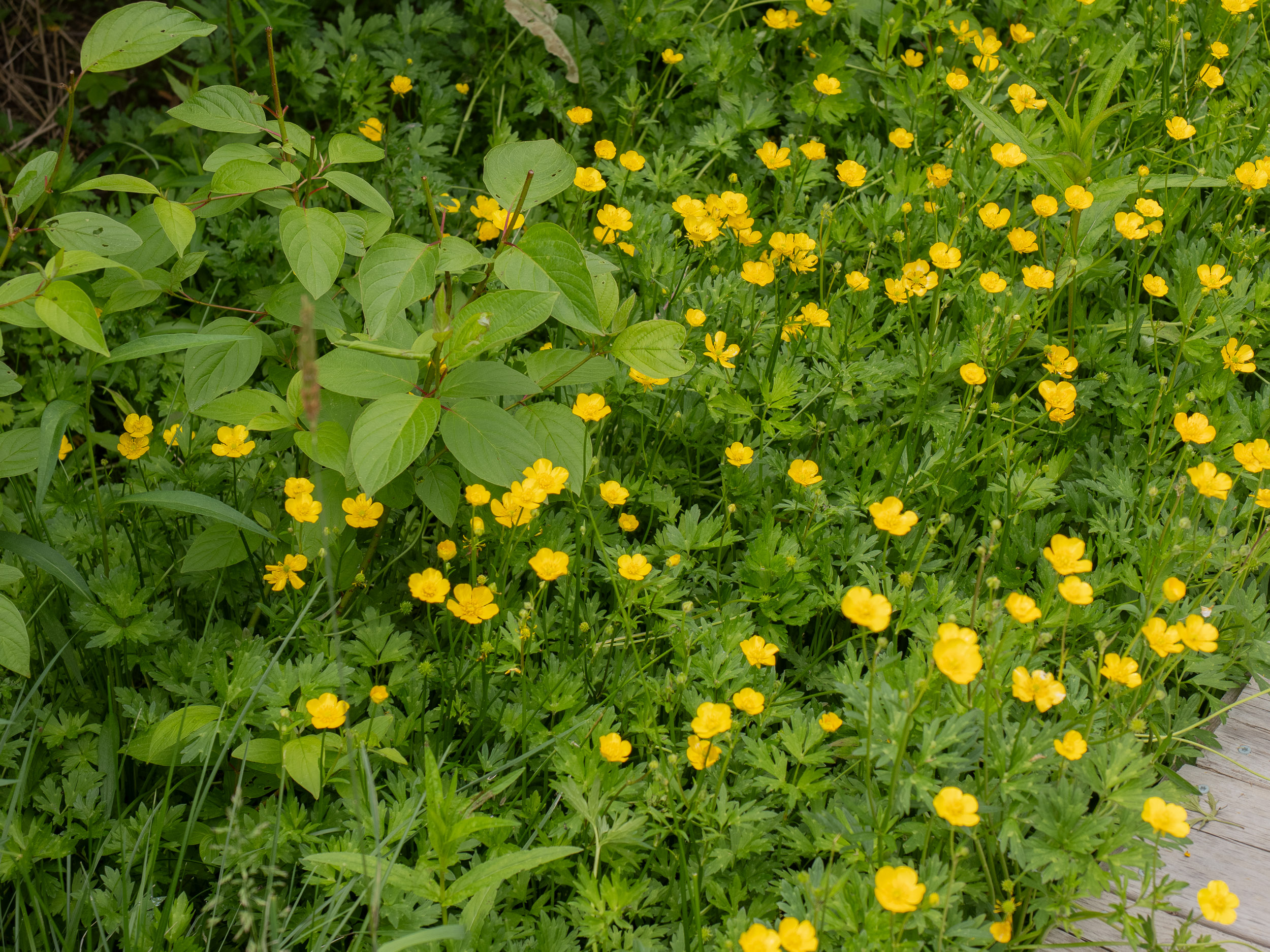
Creeping buttercup spreads by runners that root at nodes as they trail across the soil surface, forming dense mats of three-lobed, deeply divided leaves. The leaves are typically shiny and may have pale markings on the surface. In spring and summer it produces the familiar small, bright yellow flowers with glossy petals.
It is most common in damp, heavy soils and shaded areas of the lawn. Lawns with poor drainage, clay soils, or persistent shade are particularly prone to creeping buttercup, and it thrives in conditions that suppress grass growth, particularly waterlogged or compacted ground.
Why it is difficult to control
The creeping growth habit means even a small fragment of stem with a rooted node can regenerate a new plant, making mechanical removal unreliable without great care. Selective herbicides are effective but multiple treatments are often required because the creeping stems can root extensively and re-establish from sections not fully contacted by the spray.
Addressing the underlying drainage and compaction issues that favour creeping buttercup produces better long-term results than repeated herbicide treatment on unchanged ground. Improving drainage through hollow-tine aeration and, on persistently wet lawns, addressing the structural drainage issue reduces the competitive advantage that buttercup holds in those conditions.
Speedwell (Veronica filiformis and related species)
How to identify it
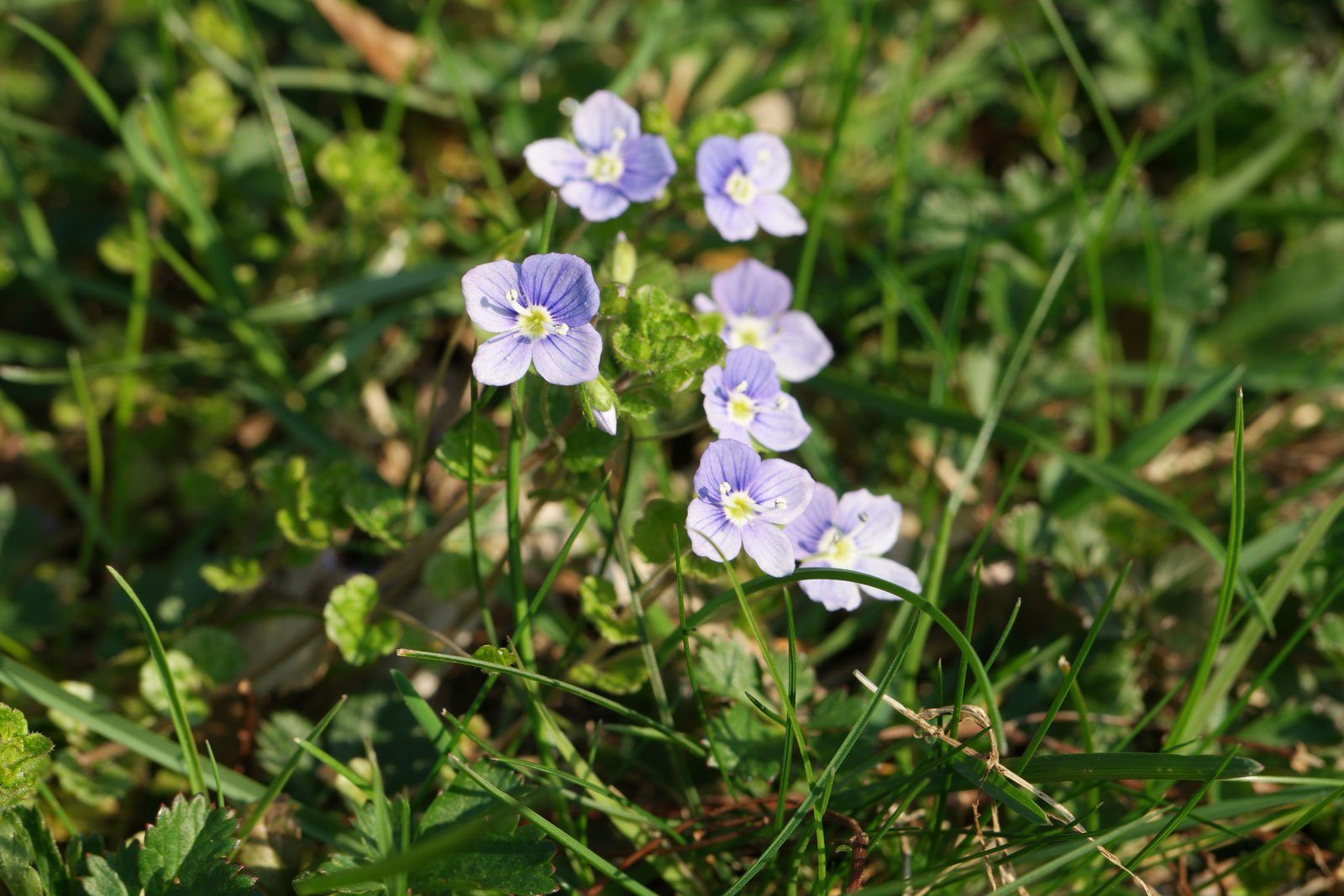
Speedwell is a low-growing, mat-forming weed with small, rounded or kidney-shaped leaves with slightly scalloped edges. In spring it produces tiny flowers, most commonly pale blue or lilac with four petals. It spreads very rapidly by stem fragments, meaning it can colonise a large area of lawn quickly, particularly after mowing distributes fragments across the surface.
Slender speedwell (Veronica filiformis) is the most common species in UK lawns and is immediately recognisable by its thread-like stems and delicate blue-lilac flowers in spring. It forms dense mats that can smother grass in affected areas and is particularly common in fine ornamental lawns and in shaded, moist conditions.
Why it is difficult to control
Speedwell is notoriously difficult to control with selective herbicide. Most standard broadleaf formulations have limited effect on speedwell, and it is one of the weeds most commonly cited by homeowners as failing to respond to consumer weed control products. Professional formulations containing specific active ingredients combined with appropriate adjuvants produce considerably better results, but even professional treatment of speedwell often requires repeat applications.
The most effective long-term approach combines professional herbicide treatment with improving grass density through overseeding and feeding. Dense, vigorous grass reduces the open ground that speedwell requires to establish and spread.
Selfheal (Prunella vulgaris)
How to identify it
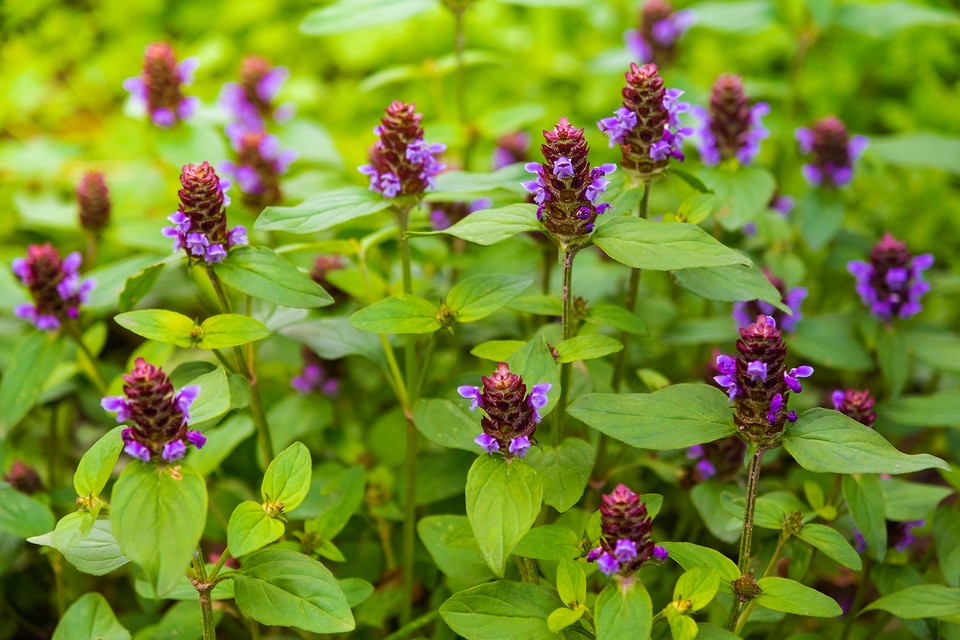
Selfheal is a low-growing perennial with oval, slightly toothed leaves and distinctive square stems. In summer it produces compact spikes of purple-violet flowers close to ground level. It spreads by both seed and short creeping stems and is most common in lawns on moist, reasonably fertile soils.
Selfheal is well adapted to lawn conditions because it can flower and set seed at very low cutting heights, meaning regular mowing does not prevent it from reproducing. It tends to be most visible in early to midsummer when the flower spikes appear above the mown surface.
Why it is difficult to control
Selfheal responds to selective broadleaf herbicides but may require more than one application for complete control. It is generally more tractable than speedwell or clover and is susceptible to professional-grade formulations applied during active spring growth. As with most broadleaf weeds, improving grass density and maintaining consistent feeding reduces the conditions that allow it to establish.
Lesser Trefoil (Trifolium dubium)
How to identify it
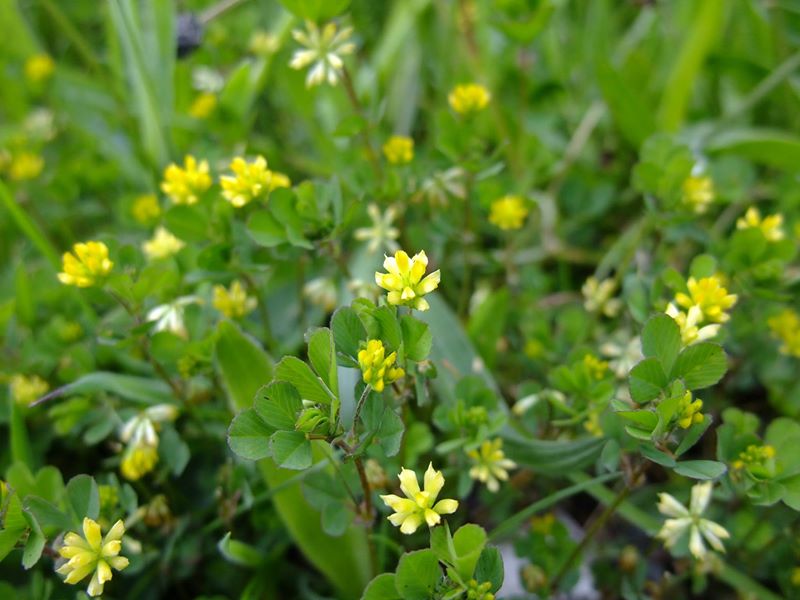
Lesser trefoil is often confused with white clover but is smaller and more delicate in appearance. It has three small, rounded leaflets without the pale chevron markings characteristic of white clover, and produces tiny yellow flower heads rather than white. It grows as a low annual or short-lived perennial and is common in dry, low-fertility soils.
Like white clover, it can fix atmospheric nitrogen, meaning it thrives where grass is nitrogen-deficient. It is often found in thin, dry areas of the lawn and along edges where grass growth is weak.
Why it is difficult to control
The same challenges that apply to white clover broadly apply to lesser trefoil, although it is somewhat more susceptible to standard herbicide formulations. Improving soil fertility and grass density remains the most effective combination of responses alongside targeted treatment.
Using Identification to Inform Treatment
The value of identifying the specific weeds in your lawn goes beyond simply knowing their names. It directly informs treatment decisions.
Dandelion and plantain respond well to standard broadleaf herbicide formulations applied in spring. Clover and speedwell require specific active ingredients and professional-grade formulations to produce reliable results. Creeping buttercup benefits from addressing the underlying drainage and compaction as much as from chemical treatment. Selfheal and lesser trefoil are generally more tractable but still benefit from professional timing and product selection.
Applying a single generic consumer product to a lawn containing several of these species will produce partial results at best. Some weeds will respond; others will not. The lawn looks better briefly, then the resistant species recolonise the gaps. This cycle is why homeowners repeatedly treat the same lawn and wonder why the result is never quite what they hoped for.
Why Professional Weed Identification and Treatment Makes a Difference
At Shrekfeet, every lawn assessment includes a proper identification of the weed species present before any treatment is planned. This matters because the products and timing that produce good results on one species may have limited effect on another. Our technicians hold NPTC qualifications and are trained in the identification and appropriate treatment of the full range of broadleaf lawn weeds common in UK gardens.
We use professional-grade formulations applied through calibrated spray equipment, matched to the specific weeds identified in your lawn. Where difficult species such as clover, speedwell, or creeping buttercup are present, we use the active ingredient combinations that professional experience tells us produce the most reliable results. We carry BASIS Lawn Assured accreditation and cover Hampshire, Surrey, West Sussex, and Berkshire.
If your lawn has weeds you cannot identify, or weeds you have treated repeatedly without lasting success, a professional assessment will give you a clear picture of what is growing, why it keeps coming back, and what the most effective course of action is.
Frequently Asked Questions
The most reliable approach is a close visual inspection in spring or early summer when most broadleaf weeds are actively growing and many are flowering. Get down to ground level and look at the leaf shape, growth habit, and any flowers present. The key distinguishing features are leaf shape, whether the plant spreads by runners or rosettes, and the flower colour and form. If you are unsure, a professional lawn assessment will identify the species present and advise on appropriate treatment.
No. While most broadleaf lawn weeds respond to selective herbicides, the specific active ingredients required vary considerably between species. Clover and speedwell require different formulations to dandelion and plantain. Applying the wrong product, or a product that does not contain the right active ingredient for the species present, produces incomplete results. This is one of the clearest reasons why professional treatment consistently outperforms consumer product applications.
Because those areas have specific conditions that favour weed establishment over grass growth. Common causes include compaction, poor drainage, shade, thin or nutrient-deficient grass, or proximity to an external seed source such as a hedge or boundary. Treating the weed without addressing the underlying condition allows the next generation of the same weed to recolonise the same area. Lasting results come from addressing both.
It is a sign of nitrogen-deficient turf. Clover can fix atmospheric nitrogen and does not depend on soil nitrogen to thrive. Grass does. When soil nitrogen levels are low, grass growth is weak and sparse, and clover gains a significant competitive advantage. A consistent feeding programme that maintains adequate nitrogen levels in the soil makes the lawn considerably less hospitable to clover over time.
For isolated individual weeds such as dandelions or plantain on a small lawn, hand removal using a daisy grubber or narrow trowel can be effective, provided the full root is extracted. Any fragment of dandelion taproot left in the soil will regenerate. For spreading weeds such as clover, speedwell, or creeping buttercup, hand removal is impractical because the creeping stems and rooted nodes are too extensive to extract reliably. Herbicide treatment is the more practical approach for these species.
Yes, in several ways. Broadleaf weeds compete directly with grass for water, nutrients, and light. Species such as dandelion and plantain have flat rosette growth habits that physically smother the grass beneath them. Clover and speedwell can form dense mats that crowd out grass entirely in affected areas. Weed-dominated patches are also more susceptible to further colonisation by additional weed species because the grass beneath is suppressed and thin.
Not sure what is growing in your lawn?
Our technicians cover Hampshire, Surrey, West Sussex, and Berkshire. We will identify the weeds present, explain why they keep coming back, and put together a treatment plan matched to your specific lawn.







 Made with love by: