
 Established 2016
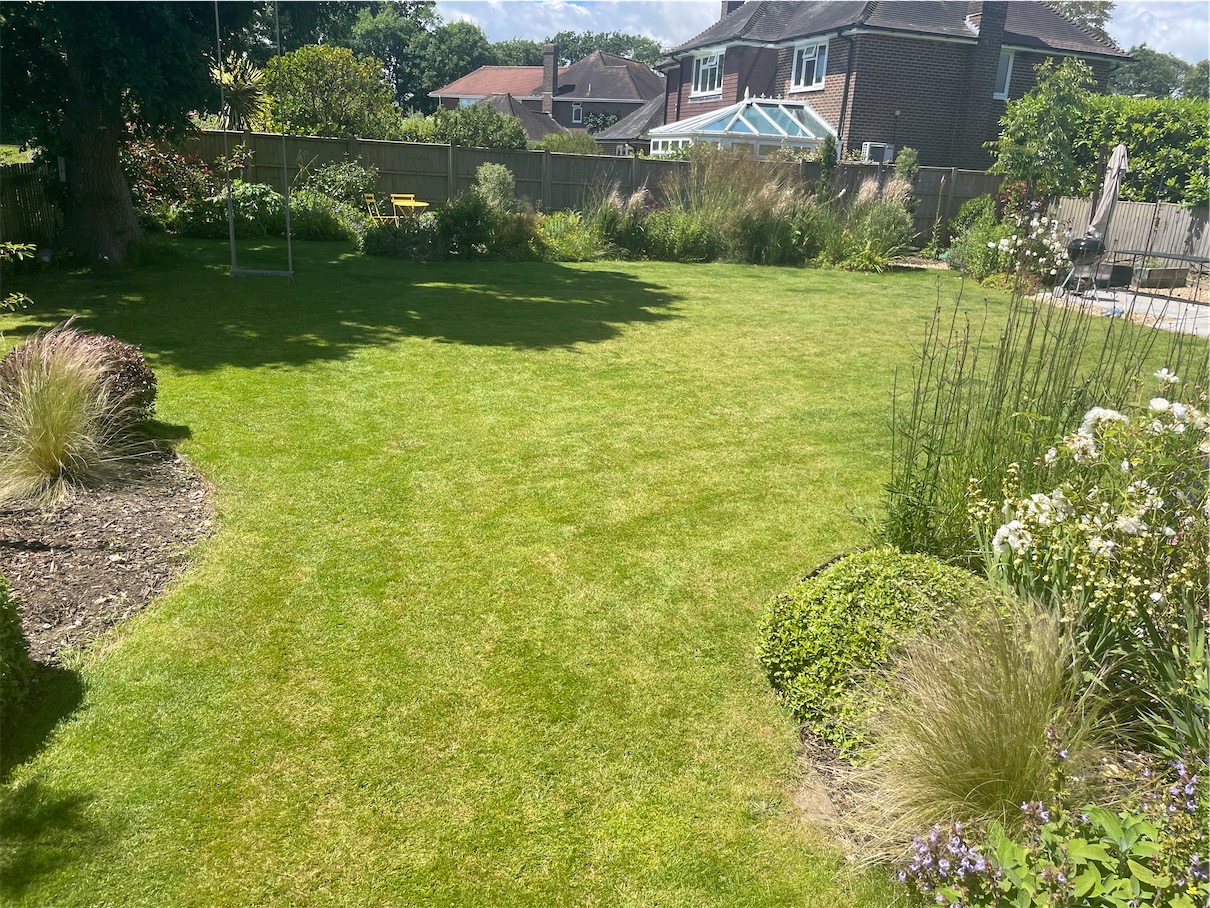
June arrives and the garden looks good. The borders are coming into colour, the hedges have been clipped, and the lawn is green and reasonably lush after a decent spring. Then the weeks roll on, the temperature climbs, and you start noticing something going wrong. The colour starts fading. A few patches turn straw-coloured. The grass feels thin underfoot. The whole thing seems to be fighting a losing battle with the weather.
🎧 Prefer to listen? Get the full summer lawn guide in your ears
Why Does My Lawn Struggle in Summer?
If this sounds familiar, you are far from alone. Summer is the season that exposes every weakness in a lawn. The combination of heat, reduced rainfall, increased use, and biological activity creates pressures that a poorly prepared or poorly fed lawn simply cannot absorb. Understanding what is actually happening is the first step towards doing something about it.
Summer Is the Season That Exposes Every Weakness
Lawns struggle in summer for several reasons, and they rarely operate in isolation. A lawn with compacted soil holds less water and is slower to recover from heat stress. A lawn that has not been fed properly has limited resources to draw on when conditions deteriorate. A lawn cut too short going into summer has reduced leaf area and takes every blow harder.
This is why two lawns in the same street, in similar conditions, can look completely different by August. One is holding its colour and recovering between dry spells. The other has gone straw-coloured, sparse, and looks like it might not come back. The difference is almost never luck. It is the cumulative result of decisions made through winter, spring, and early summer.
The Most Common Reasons Lawns Fail in Summer
Drought Stress and Soil Moisture Loss
The most obvious summer pressure is water. UK summers vary enormously, but periods of dry weather lasting two to four weeks are common across Hampshire, Surrey, West Sussex, and Berkshire, and in those conditions grass begins to show stress within days rather than weeks.
Grass responds to drought by slowing growth, pulling resources away from leaf tissue and towards root survival, and in more prolonged dry spells, going into a state of dormancy. The lawn goes yellow or straw-coloured and the grass feels crisp underfoot. This looks alarming, but on a reasonably healthy lawn it is a survival response rather than death. The grass will recover when moisture returns.
The lawns that do not recover well are those where the soil beneath the dormant grass is already compromised. Compacted, poorly structured soil holds very little water. The small amount of moisture from light rain or irrigation drains off the surface or evaporates quickly rather than penetrating through to the root zone. The grass is sitting on soil that cannot give it what it needs even when water is available.
Soil Compaction and Poor Rooting
Compaction builds up through the normal use of a lawn across spring and summer. Every footstep, every game of football, every garden chair being dragged across the surface pushes soil particles more tightly together. The spaces between those particles, which carry water, oxygen, and nutrients down to the roots, get progressively smaller.
Grass roots in compacted soil are shallow and restricted. They cannot reach the moisture held deeper in the soil profile during dry spells, and they struggle to absorb nutrients effectively even when those nutrients are present. The result is a lawn that looks fine in spring when conditions are favourable but begins to fade and thin as soon as the summer puts it under pressure.
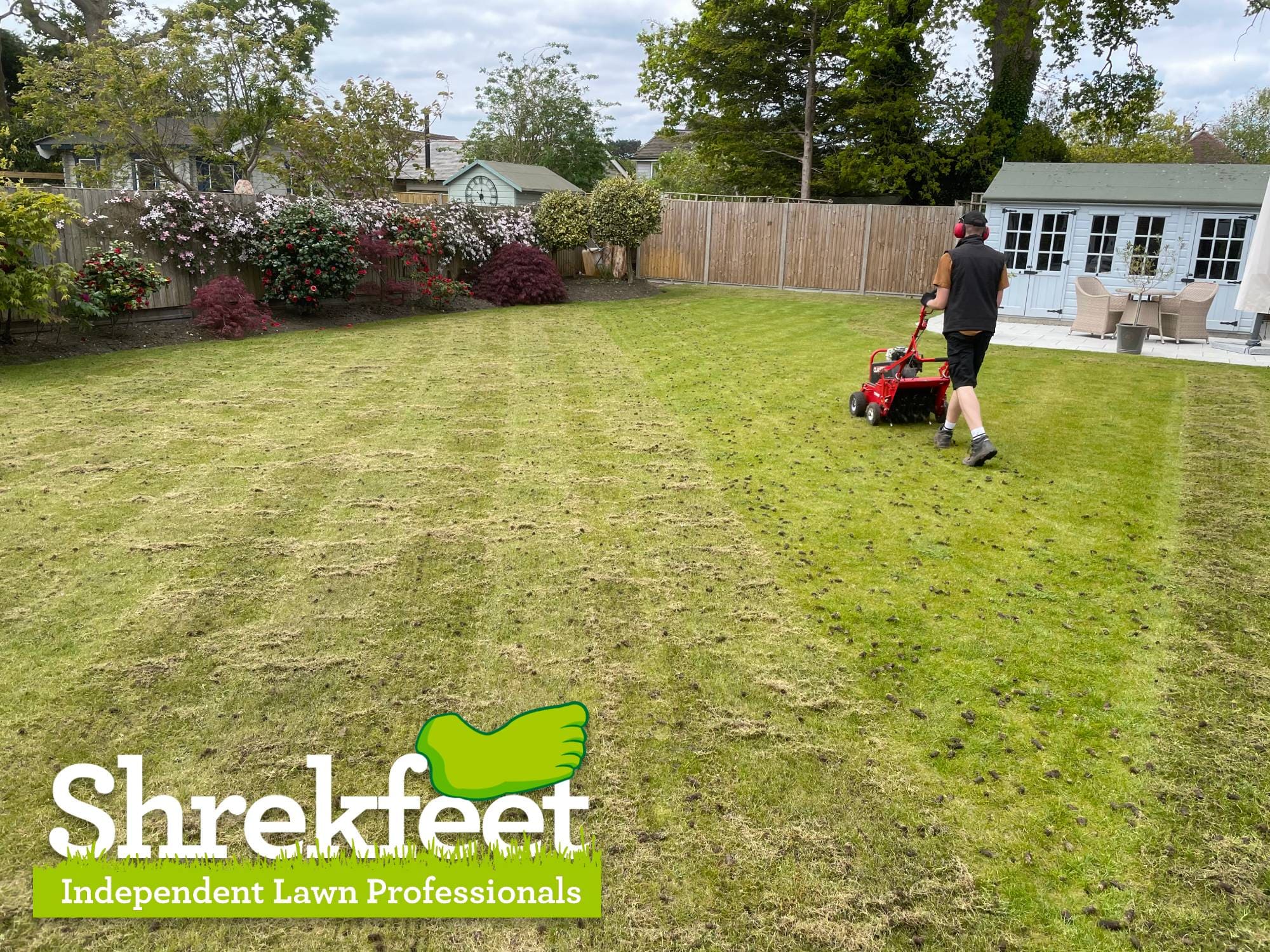
Hollow-tine aeration, the process of removing small cores of soil to open up the profile, is the primary remedy for compaction. On a lawn that suffers noticeably in summer, autumn aeration is one of the most meaningful long-term interventions available. It relieves the compaction built up through the season and allows the lawn to absorb water and nutrients more effectively going into winter and the following year.
Nutritional Depletion Through the Season
Grass is a growing plant that requires a steady supply of nutrients to maintain its density, colour, and root depth. Nitrogen supports green leaf growth. Potassium strengthens cell walls and improves resistance to heat and drought stress. Iron supports colour and general plant health.
A lawn that received a good spring feed but nothing through summer is running on depleted reserves by July and August. The grass cannot maintain its density or recover quickly from periods of heat and dryness when the nutritional support it needs simply is not there.
Summer feeding should be moderate rather than aggressive. A high-nitrogen summer fertiliser applied during a dry spell will scorch rather than help, pushing the grass into growth it cannot sustain without adequate moisture. A properly balanced summer treatment applied at the right time, with appropriate iron content and lower nitrogen, keeps the lawn ticking over without creating additional stress.
Disease Activity in Warm, Humid Conditions
Summer weather is not uniformly dry and hot. The UK frequently delivers spells of warmth followed by humidity, overcast days, and overnight moisture. These conditions are ideal for the development of fungal diseases in turf.
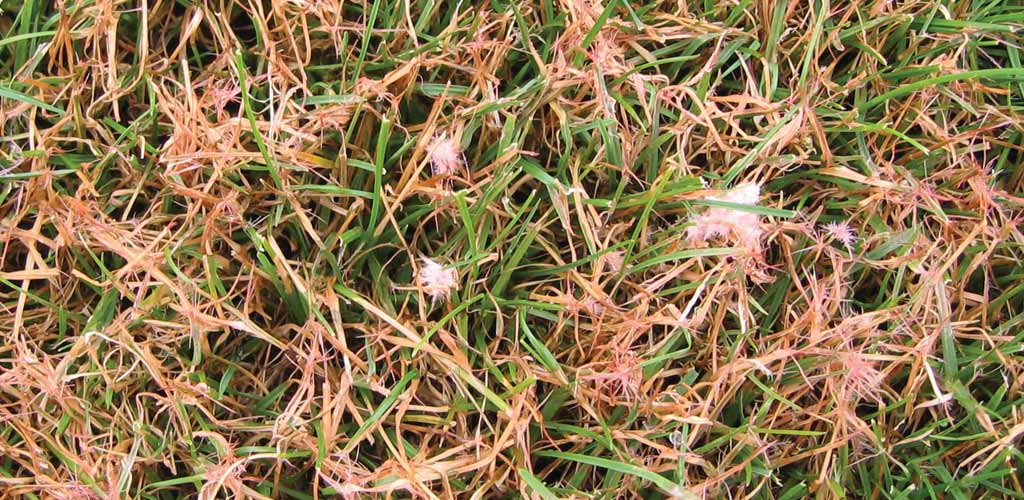
Red thread is one of the most common summer diseases in UK lawns and is frequently mistaken for drought damage. It appears as pinkish, bleached patches of grass, typically in a loose circular or irregular pattern, and is caused by the fungus Laetisaria fuciformis. It is most active in warm, humid conditions and is associated with nitrogen-deficient turf.
Fusarium patch can also appear in late summer and early autumn as conditions cool slightly and overnight dew becomes more prevalent. It presents as small yellow patches that merge and turn a characteristic salmon-pink colour in active phases.
Neither disease typically kills the grass permanently, but both cause visible damage and create thin, open areas that weeds can exploit. Keeping the lawn well fed and not cutting too short reduces susceptibility. Persistent or severe outbreaks benefit from professional treatment.
Mowing Too Short During the Hottest Months
Cutting height has more impact on summer performance than most homeowners realise. Grass cut very short has a reduced leaf area for photosynthesis, lower capacity to shade and cool the soil surface, and less stored resource to draw on during stress periods. Every dry day hits it harder.
Raising the cutting height by ten to fifteen millimetres during June, July, and August reduces the physiological stress on the grass significantly. Taller leaf blades shade the soil, retain more moisture near the surface, and allow the grass to keep photosynthesising effectively even when conditions are difficult. It is one of the simplest and most effective adjustments available, and it costs nothing.
Lawn Pest Activity
Two soil-living pests are particularly relevant in summer and late summer in UK lawns: chafer grubs and leatherjackets.
Chafer grubs are the larvae of chafer beetles and spend their early life feeding on grass roots through summer and into autumn. The feeding severs the connection between roots and soil, and affected areas of lawn lift like loose carpet and die off in patches. Secondary damage from birds, badgers, and foxes digging for the grubs can be considerable.
Leatherjacket larvae, the grubs of crane flies, hatch in late summer and autumn and feed on grass roots through into spring. Damage typically becomes most visible in late summer as larvae grow and feeding intensifies.
Both pests are treatable with nematodes, microscopic biological control organisms that are watered into the soil and target the larvae specifically. Treatment timing is important: nematodes for chafer grubs are applied in June and July when larvae are small, while leatherjacket nematodes are applied in late summer and autumn. Professional application ensures the correct product, correct timing, and sufficient soil moisture for nematode survival.
What a Well-Prepared Lawn Does Differently
A lawn that holds up well through summer is not simply lucky. It has structural advantages built up through the preceding months.
Good root depth, developed through autumn and spring aeration and consistent feeding, allows the grass to access moisture held lower in the soil profile during dry spells. Dense grass, achieved through overseeding any thin areas in autumn and maintaining correct cutting height, keeps the sward competitive and resilient. Balanced nutrition through spring reduces the depletion that leaves summer grass with nothing in reserve.
None of these things requires extraordinary effort. They are the result of consistent, seasonal management applied at the right times.
What to Do If Your Lawn Is Already Struggling
If your lawn is already showing summer stress, the first consideration is whether the problem is drought dormancy or something more permanent.
A dormant lawn will look yellow or straw-coloured but the grass crowns, the growing points just above soil level, will still be alive. Bend the grass back and look at the base. If it is still firm and white or pale yellow, the plant is dormant but not dead. It will recover when moisture and cooler temperatures return in late summer and autumn.
If patches are pulling away from the soil surface or the grass feels spongy and the roots are rotting, pest damage may be involved and warrants investigation.
In either case, the most productive response to summer damage is to plan well for the autumn. Scarifying to remove dead material, aerating to relieve compaction, overseeding to fill thinned areas, and applying a quality autumn feed gives the lawn the best possible platform to recover and enter the following spring in good condition.
Why Professional Treatment Makes a Difference
Managing a lawn through summer is not simply a matter of applying water and hoping for the best. The combination of nutritional management, pest monitoring, disease awareness, and correctly timed treatments is what separates a lawn that holds up well from one that deteriorates season after season.
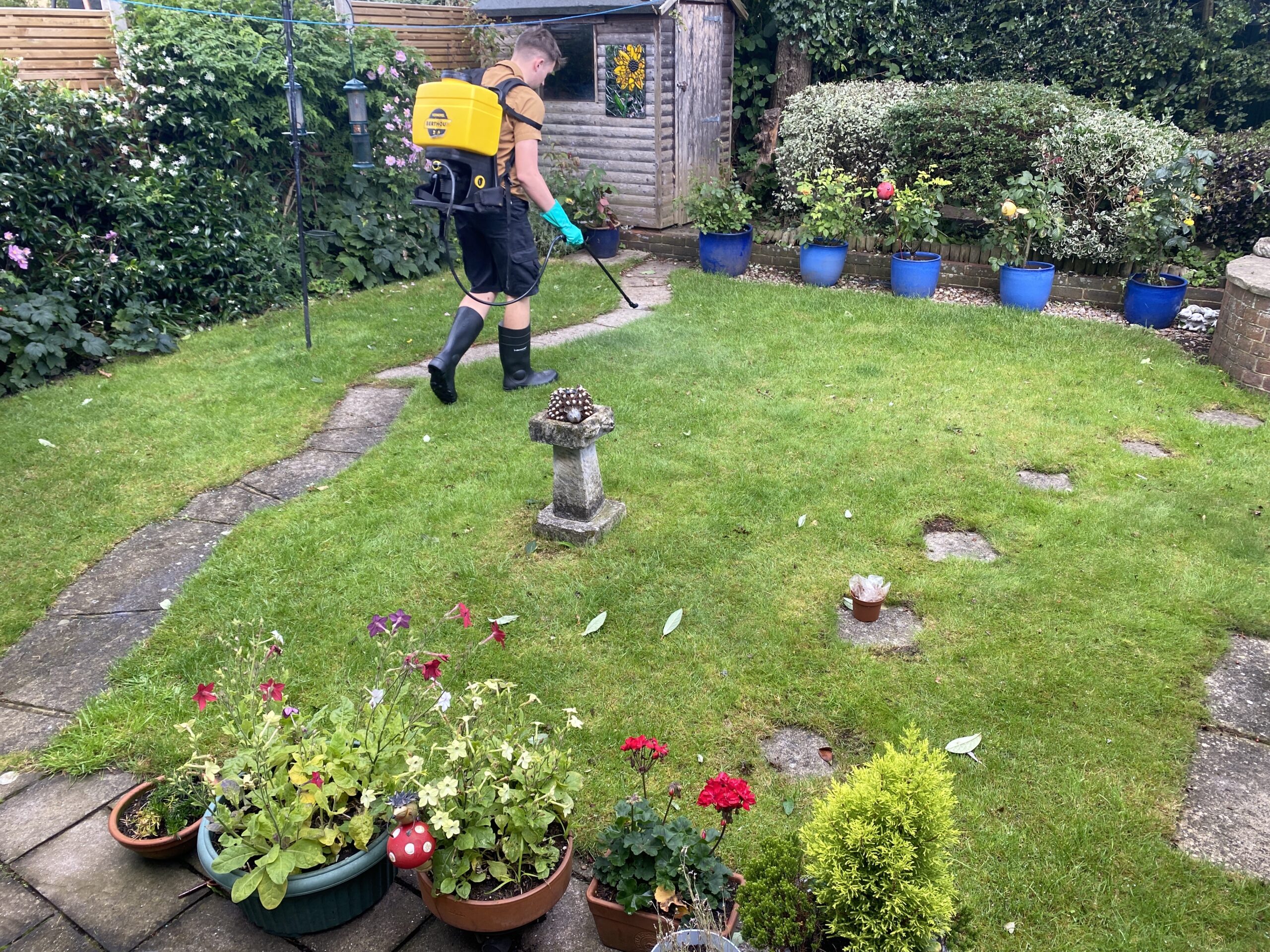
At Shrekfeet, we design treatment programmes that run through the full year, not just the high-visibility spring and autumn windows. Summer visits from our technicians include appropriate fertiliser applications, spot treatments where relevant, assessment of pest and disease risk, and practical advice on mowing height and watering. We are BASIS Lawn Assured accredited and our City and Guilds trained technicians know the specific pressures that lawns in Hampshire, Surrey, West Sussex, and Berkshire face through the warmer months.
If your lawn has been struggling through summer for more than a season, the pattern is telling you something about the underlying health of the turf. A professional assessment looks at what is actually driving the deterioration and designs a programme that addresses it properly.
Frequently Asked Questions
In most cases, no. Yellowing during a dry spell is a dormancy response, a protective mechanism that keeps the grass plant alive by reducing activity and diverting resources to the roots. The grass will recover when moisture and lower temperatures return. If the yellowing is accompanied by patches lifting away from the surface or a spongy, rotten texture at the roots, that suggests pest damage and warrants investigation.
Light watering does more harm than good. Frequent light watering keeps moisture in the top layer of soil and encourages shallow roots that are even more vulnerable to heat and drought. If you are going to water, do it infrequently but thoroughly, applying enough to penetrate well into the soil profile. Early morning is the best time to avoid evaporation and reduce fungal disease risk. On an established lawn in a normal UK summer, allowing the lawn to go into dormancy during dry spells is perfectly acceptable.
Irregular brown patches that do not correspond neatly with dry spells are often caused by something other than drought. Fungal disease, pet urine, pest damage from chafer grubs or leatherjackets, or localised compaction are all common causes of patchy browning in summer. If the pattern does not change when rain arrives, it is worth investigating further.
Yes, but with the right product and at the right time. A high-nitrogen feed applied during a dry spell will cause scorch rather than improvement. A properly balanced summer fertiliser with moderate nitrogen, good potassium, and iron content, applied when rain is expected or the lawn has been watered first, supports the grass without creating additional stress. Professional summer treatments are calibrated for the season.
Autumn, specifically September and October, is the most effective window for repair work in the UK. Soil temperatures are still warm enough for seed germination, moisture levels increase, and growth slows enough that the grass can focus on establishment rather than competing with rapid summer growth. Any areas thinned or damaged through summer should be scarified, overseeded, and fed as part of the autumn renovation programme.
This pattern points to underlying soil issues rather than surface-level problems. Compacted soil with restricted root depth looks acceptable when spring conditions are mild and moisture is plentiful, but as summer dries and heats the soil, grass with shallow roots has nothing to fall back on. Addressing compaction through annual hollow-tine aeration and building root depth through consistent feeding will gradually improve summer resilience year on year.
Is your lawn struggling this summer?
Our technicians cover Hampshire, Surrey, West Sussex, and Berkshire. We will assess your lawn, identify what is driving the problem, and design a programme that builds resilience through summer and beyond.







 Made with love by: